
Your attention span holds a secret

… and the 'switch cost' of multitasking is draining it
I was 15 minutes into pitching my startup to a prominent VC when I noticed his eyes weren't on my deck, but on his phone. He'd check it, look up with a performative nod, then return to whatever was more important than the company I'd spent three years building. When I finished,he looked up and said, "Great stuff. Send me the deck."
He had no idea what I'd said, but must have believed he was multitasking.
He isn't unique because I wasn't any different. My entire identity was built around how responsive I was. I prided myself on being wired 24 hours. Then the lending business pushed me to my limits, forcing me to look for any raft possible to keep myself afloat. What followed wasan eye-opening experiment that changed how I work. I learnt that the notion of ‘focused multitasking’ is a comforting illusion.
The question isn't whether you're working enough hours. It's whether you're building anything permanent with those hours.
… and the 'switch cost' of multitasking is draining it
I was 15 minutes into pitching my startup to a prominent VC when I noticed his eyes weren't on my deck, but on his phone. He'd check it, look up with a performative nod, then return to whatever was more important than the company I'd spent three years building. When I finished,he looked up and said, "Great stuff. Send me the deck."
He had no idea what I'd said, but must have believed he was multitasking.
He isn't unique because I wasn't any different. My entire identity was built around how responsive I was. I prided myself on being wired 24 hours. Then the lending business pushed me to my limits, forcing me to look for any raft possible to keep myself afloat. What followed wasan eye-opening experiment that changed how I work. I learnt that the notion of ‘focused multitasking’ is a comforting illusion.
The question isn't whether you're working enough hours. It's whether you're building anything permanent with those hours.

The arithmetic of focus is exponential Research shows that a single 60-minute uninterrupted work block produces 225% more deep work output than four 15-minute fragments. Context switching costs 23 minutes of recovery time per interruption. It depletes glucose reserves 40% faster. It elevates cortisol to chronic stress levels and prevents access to flow states that typically require 15-20 minutes to enter. For knowledge workers and founders, fragmented hours are the silent killer of competitive advantage, decision-making quality, and meaningful output. The average knowledge worker achieves only 2.8 hours of meaningful work in an 8-hour day, interrupted every 3 minutes, switching between apps 1,200 times daily. This isn't just inefficiency. It's cognitive devastation with measurable costs: $450 billion annually in lost productivity, 50% higher error rates, and burnout timelines extending to 12 months for recovery.

When the numbers force a reckoning When we incorporated the lending business, I started tracking how much of my "work day" was actually productive work. I kept a brutally honest log for two weeks.Out of 70 hours logged, maybe four hours were genuine deep thinking that moved our business forward. The rest? Coordination theatre. A 94% waste rate. I had a choice: keep grinding harder, or completely rebuild how I worked. I chose to experiment.
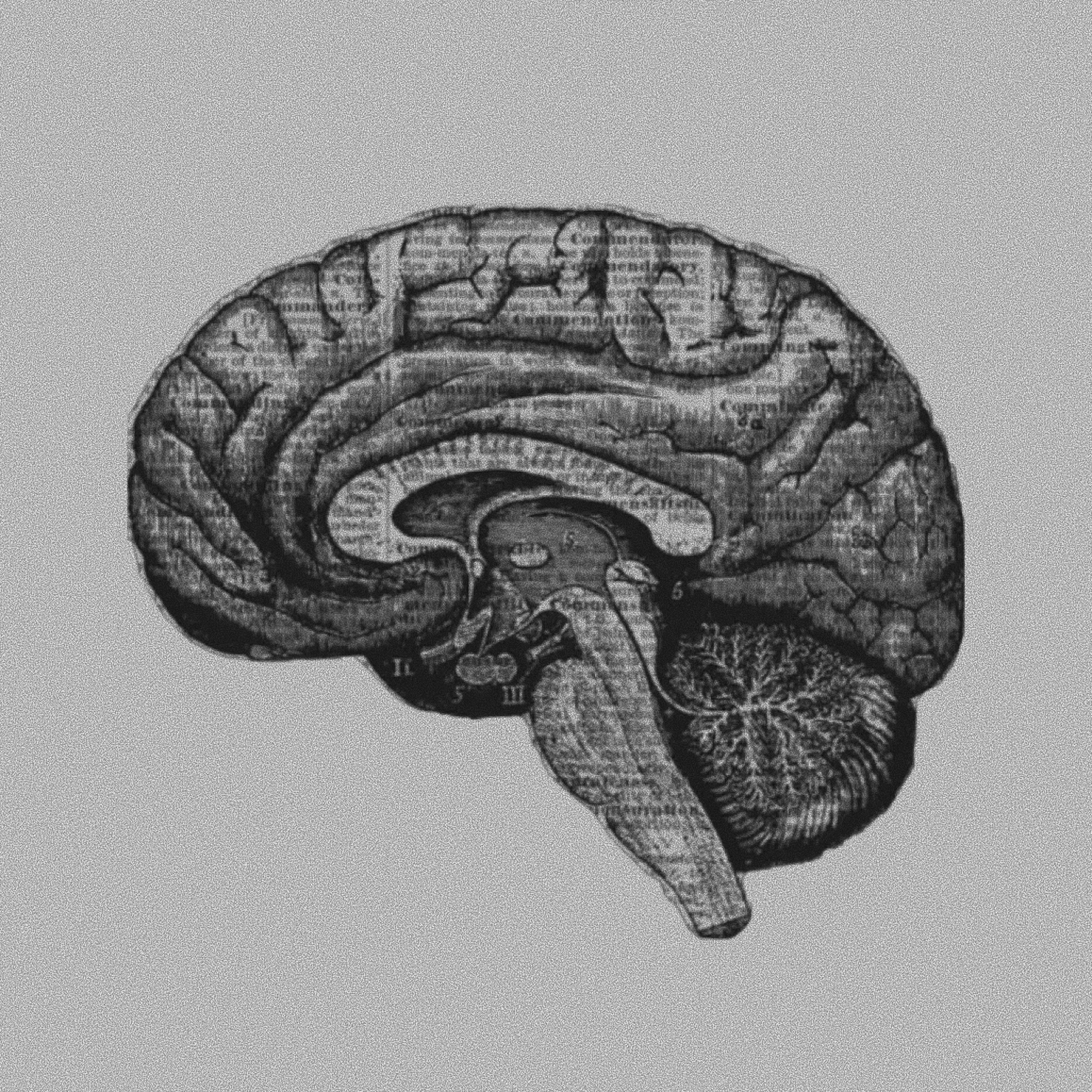
Our brain has its limits Here's the counterintuitive insight that changes everything: Our brain isn't designed to multitaskon complex problems, and trying to force it does, in fact, make us temporarily dumber.
University of London researchers found that multitasking dropped men's IQ by 15 points and women's by 5 points. Our prefrontal cortex can only hold one complex task at a time. When you force it to switch, you're systematically destroying the very cognitive capacity that makes youvaluable.
The metabolic cost compounds the damage. The frontoparietal networks that enable executive function consume glucose faster than other brain regions. Frequent task switching accelerates glucose depletion in the prefrontal cortex, creating cognitive fatigue that feels like physical exhaustion. After approximately 14 complex decisions without rest, the efficiency of the prefrontal cortex drops 23%.
Your brain isn't lazy. It's out of fuel. Dr. Sophie Leroy at the University of Washington calls this "attention residue", the cognitive fog that lingers when you switch tasks. When you stop working on Task A and shift to Task B, your mind doesn't fully leave Task A behind. Part of your attention remains stuck, simultaneously trying to hold the old context while loading the new one. Gloria Mark's research at UC Irvinefound that it takes an average of 23 minutes and 15 seconds to fully refocus after an interruption. For complex cognitive work, that window extends to 45 minutes.
Charles Darwin published 19 books in 73 years, including On the Origin of Species. His total daily work time? Four to four-and-a-half hours, structured in three 90-minute blocks. At the end of it, Darwin used to declare, "I've done a good day's work" and walked the Sandwalk, his thinking path, for uninterrupted reflection. The universal pattern: three to five hours of deep work daily beats 12-16 hours of fragmented work, because those value hours access cognitive states that fragmented time cannot reach.

The ancient practice that rebuilds attention During those two weeks of brutal self-tracking, a friend who'd successfully exited his startup asked me: "Have you ever tried Dharana?"
"Like... meditation?" I said, with all the scepticism of someone who'd built a company on speed and execution."Dharana is the sixth limb of Patanjali's Yoga Sutras, " he explained. "It's the practice of holding attention to a single point - your breath, a candle flame, a word. The yogis figured out 2,500 years ago that sustained attention is trainable. It's a muscle."
I wanted to dismiss it. But I was staring at a 94% waste rate and a lending business that required every decision to be razor-sharp. I didn't have the luxury of ideology.
The practice was humbling. I committed to 20 minutes every morning for six weeks. The first two weeks were torture. My mind rioted against the stillness. But around week three, something shifted. I'd hit moments - brief at first, then longer - where my attention genuinely settled. The urgency that had driven me for years started to feel optional rather than inevitable.
By week six, I noticed something that changed everything: the strategic thinking I used to forceduring fragmented hours was happening naturally during these quiet periods. Problems I'd been wrestling with for months would suddenly reveal solutions. Not because I was trying to solve them, but because I'd finally created space for my unconscious mind to work.
The yogis called this "ekagrata" - one-pointedness of mind. Six months in, I was working four focused hours daily and producing more valuable work than my previous 12-hour fragmented marathons.
With the lending business demanding perfect decisions and Dharana rebuilding my attention capacity, I restructured my work life around two sacred 90-minute blocks daily: 8:00-9:30 AM for strategic thinking, 10:30 AM-12:00 PM for complex problem-solving.
Why rest became my competitive advantage This was my hardest lesson. I'd always viewed rest as weakness, breaks as wasted time. Hustle culture had trained me that productivity meant constant motion.
But both neuroscience and the yogic philosophy told a different story. In the Yoga Sutras, there's a principle called "abhyasa and vairagya" - practice and detachment. You engage fully, then release completely.
Elite violinists in Anders Ericsson's studies practised 4-5 hours daily in focused blocks, but they also napped an average of 24 minutes daily and slept more than average performers. The naps weren't indulgence - they were part of the performance system.
Between my deep work blocks, I walk outside, without a phone, for 10-15 minutes, letting my mind wander. The ideas that emerge during these walks often exceed what I forced during the focus block. Some days I do what Andrew Huberman calls "Non-Sleep Deep Rest" - a 20 minute protocol that restores depleted dopamine and acetylcholine without actual sleep. The yogis understood something modern productivity culture forgot: the quality of your rest determines the quality of your next period of focus. Shabby rest produces shabby work. Deep rest enables deep work.
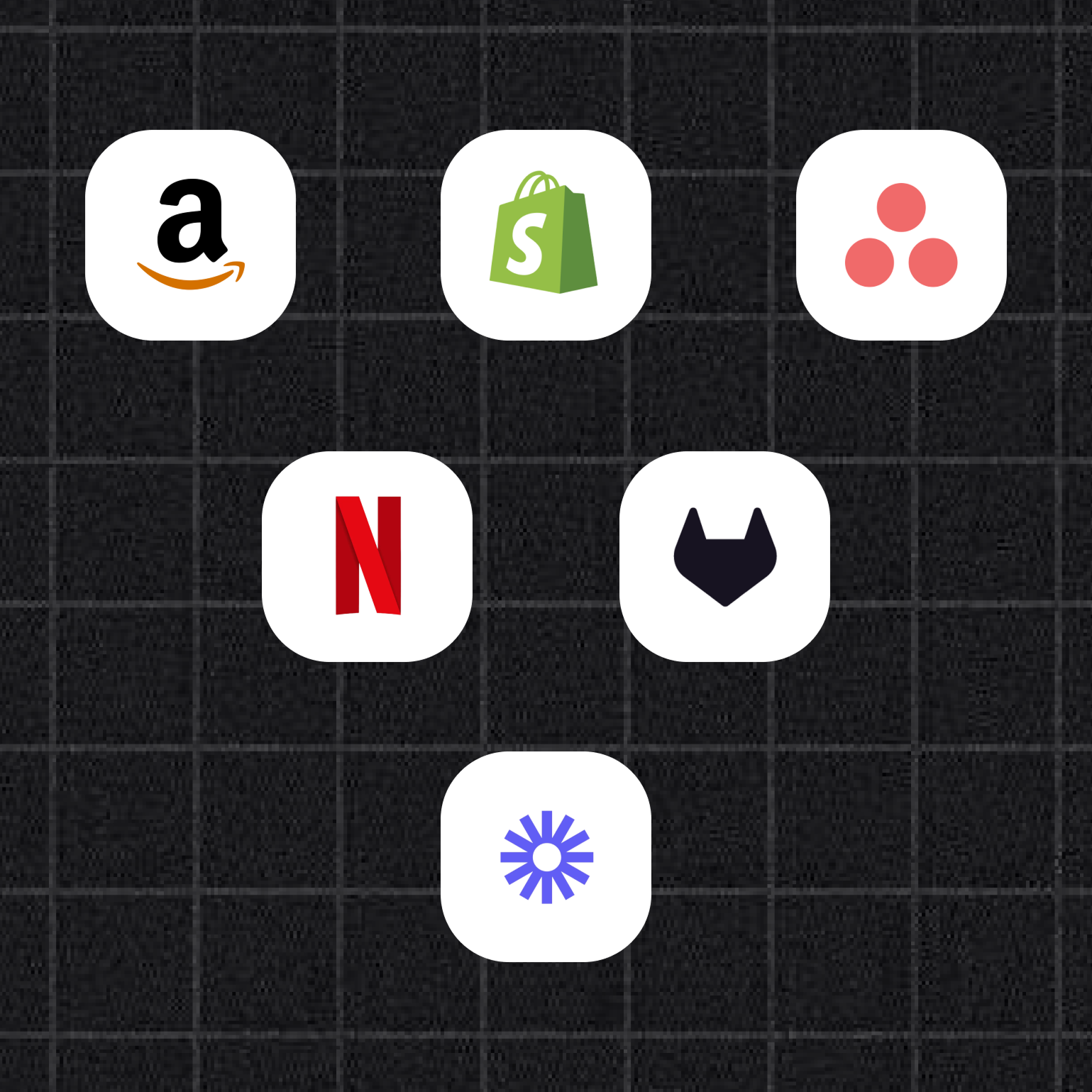
The organisations that figured it out first The companies that will win in the next decade aren't those with the longest working hours or the most responsive cultures. They're the ones who systematically eliminate fragmentation and protect the cognitive states where disproportionate value is created.
When Loom implemented "No Meeting Wednesdays," they achieved 97% employee participation, and 85% wanted it to be permanent. MIT Sloan research across 76 companies found that implementing 1-3 no-meeting days weekly produced 35-71% productivity boosts. Asana saw immediate productivity spikes - teams shipping features faster, fewer project delays, and higher employee satisfaction scores. Shopify credits some of its most innovative features to its Wednesday "passion project time. " Basecamp operates on 4-day workweeks during summer and maintains full productivity because the compressed schedule forces ruthless prioritisationand elimination of shallow work. Netflix reduced meetings by 65% and capped remaining ones at 30 minutes maximum, achieving 85%+ employee approval.
Amazon's six-page memo culture forces clear thinking before meetings. Leaders write detailed narratives that everyone reads silently for the first 30 minutes. No PowerPoint. No performance. Just clear thinking captured on paper, then discussed with full context loaded. Meetings become where decisions are made, not where information is shared.
Gitlab, a fully remote company with 2,000+ employees, operates on "handbook-first" documentation. The default answer to any question is "it's in the handbook" knowledge capture and eliminating repetitive coordination overhead.
The pattern is consistent: organisations that protect deep work time innovate faster, make better decisions, and retain the talent that produces breakthrough work. These aren't perks. They're strategic advantages.

The opportunity cost we never calculate We track hours worked, not actually what matters. The time lost to context switching is quantifiable - 23 minutes per interruption, 40% productivity drain. But the opportunity cost is incalculable. What breakthroughs didn't happen because fragmented hours prevented thecognitive depth required to see them? What strategic pivots were missed because founders never protected time to think at the systems level? What innovative solutions remained undiscovered because teams never entered the collaborative flow state where magic happens?
I spent years being furious at VCs who checked their phones during my pitches, treating my life's work as background noise to their Slack threads. Then I went back to my office and did the exact same thing to my team during their presentations. The difference between good companies and great ones isn't strategy, capital, or even talent. It's whether people feel genuinely heard and whether complex problems get the sustained thinking they deserve. Both require the same thing: protected attention.

The architecture you choose Three years after that experiment began, we got acquired by CRED. It's not that I worked more. I worked completely differently.
For anyone trying to build something meaningful, the choice is between fragmented grinding that destroys your capacity over time and structured focus that compounds your ability to solve increasingly complex problems. Darwin's four-hour day produced the theory of evolution. Bill Gates' Think Weeks produced billion-dollar strategic pivots. Your fragmented 12-hour day produces exhaustion and diminishing returns.
The architecture of attention is the architecture of achievement because the quality of your thinking determines the quality of your outcomes. And the structure of your time determines which cognitive states you can access.
The arithmetic of focus is exponential Research shows that a single 60-minute uninterrupted work block produces 225% more deep work output than four 15-minute fragments. Context switching costs 23 minutes of recovery time per interruption. It depletes glucose reserves 40% faster. It elevates cortisol to chronic stress levels and prevents access to flow states that typically require 15-20 minutes to enter. For knowledge workers and founders, fragmented hours are the silent killer of competitive advantage, decision-making quality, and meaningful output. The average knowledge worker achieves only 2.8 hours of meaningful work in an 8-hour day, interrupted every 3 minutes, switching between apps 1,200 times daily. This isn't just inefficiency. It's cognitive devastation with measurable costs: $450 billion annually in lost productivity, 50% higher error rates, and burnout timelines extending to 12 months for recovery.
When the numbers force a reckoning When we incorporated the lending business, I started tracking how much of my "work day" was actually productive work. I kept a brutally honest log for two weeks.Out of 70 hours logged, maybe four hours were genuine deep thinking that moved our business forward. The rest? Coordination theatre. A 94% waste rate. I had a choice: keep grinding harder, or completely rebuild how I worked. I chose to experiment.
Our brain has its limits Here's the counterintuitive insight that changes everything: Our brain isn't designed to multitaskon complex problems, and trying to force it does, in fact, make us temporarily dumber.
University of London researchers found that multitasking dropped men's IQ by 15 points and women's by 5 points. Our prefrontal cortex can only hold one complex task at a time. When you force it to switch, you're systematically destroying the very cognitive capacity that makes youvaluable.
The metabolic cost compounds the damage. The frontoparietal networks that enable executive function consume glucose faster than other brain regions. Frequent task switching accelerates glucose depletion in the prefrontal cortex, creating cognitive fatigue that feels like physical exhaustion. After approximately 14 complex decisions without rest, the efficiency of the prefrontal cortex drops 23%.
Your brain isn't lazy. It's out of fuel. Dr. Sophie Leroy at the University of Washington calls this "attention residue", the cognitive fog that lingers when you switch tasks. When you stop working on Task A and shift to Task B, your mind doesn't fully leave Task A behind. Part of your attention remains stuck, simultaneously trying to hold the old context while loading the new one. Gloria Mark's research at UC Irvinefound that it takes an average of 23 minutes and 15 seconds to fully refocus after an interruption. For complex cognitive work, that window extends to 45 minutes.
Charles Darwin published 19 books in 73 years, including On the Origin of Species. His total daily work time? Four to four-and-a-half hours, structured in three 90-minute blocks. At the end of it, Darwin used to declare, "I've done a good day's work" and walked the Sandwalk, his thinking path, for uninterrupted reflection. The universal pattern: three to five hours of deep work daily beats 12-16 hours of fragmented work, because those value hours access cognitive states that fragmented time cannot reach.
The ancient practice that rebuilds attention During those two weeks of brutal self-tracking, a friend who'd successfully exited his startup asked me: "Have you ever tried Dharana?"
"Like... meditation?" I said, with all the scepticism of someone who'd built a company on speed and execution."Dharana is the sixth limb of Patanjali's Yoga Sutras, " he explained. "It's the practice of holding attention to a single point - your breath, a candle flame, a word. The yogis figured out 2,500 years ago that sustained attention is trainable. It's a muscle."
I wanted to dismiss it. But I was staring at a 94% waste rate and a lending business that required every decision to be razor-sharp. I didn't have the luxury of ideology.
The practice was humbling. I committed to 20 minutes every morning for six weeks. The first two weeks were torture. My mind rioted against the stillness. But around week three, something shifted. I'd hit moments - brief at first, then longer - where my attention genuinely settled. The urgency that had driven me for years started to feel optional rather than inevitable.
By week six, I noticed something that changed everything: the strategic thinking I used to forceduring fragmented hours was happening naturally during these quiet periods. Problems I'd been wrestling with for months would suddenly reveal solutions. Not because I was trying to solve them, but because I'd finally created space for my unconscious mind to work.
The yogis called this "ekagrata" - one-pointedness of mind. Six months in, I was working four focused hours daily and producing more valuable work than my previous 12-hour fragmented marathons.
With the lending business demanding perfect decisions and Dharana rebuilding my attention capacity, I restructured my work life around two sacred 90-minute blocks daily: 8:00-9:30 AM for strategic thinking, 10:30 AM-12:00 PM for complex problem-solving.
Why rest became my competitive advantage This was my hardest lesson. I'd always viewed rest as weakness, breaks as wasted time. Hustle culture had trained me that productivity meant constant motion.
But both neuroscience and the yogic philosophy told a different story. In the Yoga Sutras, there's a principle called "abhyasa and vairagya" - practice and detachment. You engage fully, then release completely.
Elite violinists in Anders Ericsson's studies practised 4-5 hours daily in focused blocks, but they also napped an average of 24 minutes daily and slept more than average performers. The naps weren't indulgence - they were part of the performance system.
Between my deep work blocks, I walk outside, without a phone, for 10-15 minutes, letting my mind wander. The ideas that emerge during these walks often exceed what I forced during the focus block. Some days I do what Andrew Huberman calls "Non-Sleep Deep Rest" - a 20 minute protocol that restores depleted dopamine and acetylcholine without actual sleep. The yogis understood something modern productivity culture forgot: the quality of your rest determines the quality of your next period of focus. Shabby rest produces shabby work. Deep rest enables deep work.
The organisations that figured it out first The companies that will win in the next decade aren't those with the longest working hours or the most responsive cultures. They're the ones who systematically eliminate fragmentation and protect the cognitive states where disproportionate value is created.
When Loom implemented "No Meeting Wednesdays," they achieved 97% employee participation, and 85% wanted it to be permanent. MIT Sloan research across 76 companies found that implementing 1-3 no-meeting days weekly produced 35-71% productivity boosts. Asana saw immediate productivity spikes - teams shipping features faster, fewer project delays, and higher employee satisfaction scores. Shopify credits some of its most innovative features to its Wednesday "passion project time. " Basecamp operates on 4-day workweeks during summer and maintains full productivity because the compressed schedule forces ruthless prioritisationand elimination of shallow work. Netflix reduced meetings by 65% and capped remaining ones at 30 minutes maximum, achieving 85%+ employee approval.
Amazon's six-page memo culture forces clear thinking before meetings. Leaders write detailed narratives that everyone reads silently for the first 30 minutes. No PowerPoint. No performance. Just clear thinking captured on paper, then discussed with full context loaded. Meetings become where decisions are made, not where information is shared.
Gitlab, a fully remote company with 2,000+ employees, operates on "handbook-first" documentation. The default answer to any question is "it's in the handbook" knowledge capture and eliminating repetitive coordination overhead.
The pattern is consistent: organisations that protect deep work time innovate faster, make better decisions, and retain the talent that produces breakthrough work. These aren't perks. They're strategic advantages.
The opportunity cost we never calculate We track hours worked, not actually what matters. The time lost to context switching is quantifiable - 23 minutes per interruption, 40% productivity drain. But the opportunity cost is incalculable. What breakthroughs didn't happen because fragmented hours prevented thecognitive depth required to see them? What strategic pivots were missed because founders never protected time to think at the systems level? What innovative solutions remained undiscovered because teams never entered the collaborative flow state where magic happens?
I spent years being furious at VCs who checked their phones during my pitches, treating my life's work as background noise to their Slack threads. Then I went back to my office and did the exact same thing to my team during their presentations. The difference between good companies and great ones isn't strategy, capital, or even talent. It's whether people feel genuinely heard and whether complex problems get the sustained thinking they deserve. Both require the same thing: protected attention.
The architecture you choose Three years after that experiment began, we got acquired by CRED. It's not that I worked more. I worked completely differently.
For anyone trying to build something meaningful, the choice is between fragmented grinding that destroys your capacity over time and structured focus that compounds your ability to solve increasingly complex problems. Darwin's four-hour day produced the theory of evolution. Bill Gates' Think Weeks produced billion-dollar strategic pivots. Your fragmented 12-hour day produces exhaustion and diminishing returns.
The architecture of attention is the architecture of achievement because the quality of your thinking determines the quality of your outcomes. And the structure of your time determines which cognitive states you can access.
The arithmetic of focus is exponential Research shows that a single 60-minute uninterrupted work block produces 225% more deep work output than four 15-minute fragments. Context switching costs 23 minutes of recovery time per interruption. It depletes glucose reserves 40% faster. It elevates cortisol to chronic stress levels and prevents access to flow states that typically require 15-20 minutes to enter. For knowledge workers and founders, fragmented hours are the silent killer of competitive advantage, decision-making quality, and meaningful output. The average knowledge worker achieves only 2.8 hours of meaningful work in an 8-hour day, interrupted every 3 minutes, switching between apps 1,200 times daily. This isn't just inefficiency. It's cognitive devastation with measurable costs: $450 billion annually in lost productivity, 50% higher error rates, and burnout timelines extending to 12 months for recovery.
When the numbers force a reckoning When we incorporated the lending business, I started tracking how much of my "work day" was actually productive work. I kept a brutally honest log for two weeks.Out of 70 hours logged, maybe four hours were genuine deep thinking that moved our business forward. The rest? Coordination theatre. A 94% waste rate. I had a choice: keep grinding harder, or completely rebuild how I worked. I chose to experiment.
Our brain has its limits Here's the counterintuitive insight that changes everything: Our brain isn't designed to multitaskon complex problems, and trying to force it does, in fact, make us temporarily dumber.
University of London researchers found that multitasking dropped men's IQ by 15 points and women's by 5 points. Our prefrontal cortex can only hold one complex task at a time. When you force it to switch, you're systematically destroying the very cognitive capacity that makes youvaluable.
The metabolic cost compounds the damage. The frontoparietal networks that enable executive function consume glucose faster than other brain regions. Frequent task switching accelerates glucose depletion in the prefrontal cortex, creating cognitive fatigue that feels like physical exhaustion. After approximately 14 complex decisions without rest, the efficiency of the prefrontal cortex drops 23%.
Your brain isn't lazy. It's out of fuel. Dr. Sophie Leroy at the University of Washington calls this "attention residue", the cognitive fog that lingers when you switch tasks. When you stop working on Task A and shift to Task B, your mind doesn't fully leave Task A behind. Part of your attention remains stuck, simultaneously trying to hold the old context while loading the new one. Gloria Mark's research at UC Irvinefound that it takes an average of 23 minutes and 15 seconds to fully refocus after an interruption. For complex cognitive work, that window extends to 45 minutes.
Charles Darwin published 19 books in 73 years, including On the Origin of Species. His total daily work time? Four to four-and-a-half hours, structured in three 90-minute blocks. At the end of it, Darwin used to declare, "I've done a good day's work" and walked the Sandwalk, his thinking path, for uninterrupted reflection. The universal pattern: three to five hours of deep work daily beats 12-16 hours of fragmented work, because those value hours access cognitive states that fragmented time cannot reach.
The ancient practice that rebuilds attention During those two weeks of brutal self-tracking, a friend who'd successfully exited his startup asked me: "Have you ever tried Dharana?"
"Like... meditation?" I said, with all the scepticism of someone who'd built a company on speed and execution."Dharana is the sixth limb of Patanjali's Yoga Sutras, " he explained. "It's the practice of holding attention to a single point - your breath, a candle flame, a word. The yogis figured out 2,500 years ago that sustained attention is trainable. It's a muscle."
I wanted to dismiss it. But I was staring at a 94% waste rate and a lending business that required every decision to be razor-sharp. I didn't have the luxury of ideology.
The practice was humbling. I committed to 20 minutes every morning for six weeks. The first two weeks were torture. My mind rioted against the stillness. But around week three, something shifted. I'd hit moments - brief at first, then longer - where my attention genuinely settled. The urgency that had driven me for years started to feel optional rather than inevitable.
By week six, I noticed something that changed everything: the strategic thinking I used to forceduring fragmented hours was happening naturally during these quiet periods. Problems I'd been wrestling with for months would suddenly reveal solutions. Not because I was trying to solve them, but because I'd finally created space for my unconscious mind to work.
The yogis called this "ekagrata" - one-pointedness of mind. Six months in, I was working four focused hours daily and producing more valuable work than my previous 12-hour fragmented marathons.
With the lending business demanding perfect decisions and Dharana rebuilding my attention capacity, I restructured my work life around two sacred 90-minute blocks daily: 8:00-9:30 AM for strategic thinking, 10:30 AM-12:00 PM for complex problem-solving.
Why rest became my competitive advantage This was my hardest lesson. I'd always viewed rest as weakness, breaks as wasted time. Hustle culture had trained me that productivity meant constant motion.
But both neuroscience and the yogic philosophy told a different story. In the Yoga Sutras, there's a principle called "abhyasa and vairagya" - practice and detachment. You engage fully, then release completely.
Elite violinists in Anders Ericsson's studies practised 4-5 hours daily in focused blocks, but they also napped an average of 24 minutes daily and slept more than average performers. The naps weren't indulgence - they were part of the performance system.
Between my deep work blocks, I walk outside, without a phone, for 10-15 minutes, letting my mind wander. The ideas that emerge during these walks often exceed what I forced during the focus block. Some days I do what Andrew Huberman calls "Non-Sleep Deep Rest" - a 20 minute protocol that restores depleted dopamine and acetylcholine without actual sleep. The yogis understood something modern productivity culture forgot: the quality of your rest determines the quality of your next period of focus. Shabby rest produces shabby work. Deep rest enables deep work.
The organisations that figured it out first The companies that will win in the next decade aren't those with the longest working hours or the most responsive cultures. They're the ones who systematically eliminate fragmentation and protect the cognitive states where disproportionate value is created.
When Loom implemented "No Meeting Wednesdays," they achieved 97% employee participation, and 85% wanted it to be permanent. MIT Sloan research across 76 companies found that implementing 1-3 no-meeting days weekly produced 35-71% productivity boosts. Asana saw immediate productivity spikes - teams shipping features faster, fewer project delays, and higher employee satisfaction scores. Shopify credits some of its most innovative features to its Wednesday "passion project time. " Basecamp operates on 4-day workweeks during summer and maintains full productivity because the compressed schedule forces ruthless prioritisationand elimination of shallow work. Netflix reduced meetings by 65% and capped remaining ones at 30 minutes maximum, achieving 85%+ employee approval.
Amazon's six-page memo culture forces clear thinking before meetings. Leaders write detailed narratives that everyone reads silently for the first 30 minutes. No PowerPoint. No performance. Just clear thinking captured on paper, then discussed with full context loaded. Meetings become where decisions are made, not where information is shared.
Gitlab, a fully remote company with 2,000+ employees, operates on "handbook-first" documentation. The default answer to any question is "it's in the handbook" knowledge capture and eliminating repetitive coordination overhead.
The pattern is consistent: organisations that protect deep work time innovate faster, make better decisions, and retain the talent that produces breakthrough work. These aren't perks. They're strategic advantages.
The opportunity cost we never calculate We track hours worked, not actually what matters. The time lost to context switching is quantifiable - 23 minutes per interruption, 40% productivity drain. But the opportunity cost is incalculable. What breakthroughs didn't happen because fragmented hours prevented thecognitive depth required to see them? What strategic pivots were missed because founders never protected time to think at the systems level? What innovative solutions remained undiscovered because teams never entered the collaborative flow state where magic happens?
I spent years being furious at VCs who checked their phones during my pitches, treating my life's work as background noise to their Slack threads. Then I went back to my office and did the exact same thing to my team during their presentations. The difference between good companies and great ones isn't strategy, capital, or even talent. It's whether people feel genuinely heard and whether complex problems get the sustained thinking they deserve. Both require the same thing: protected attention.
The architecture you choose Three years after that experiment began, we got acquired by CRED. It's not that I worked more. I worked completely differently.
For anyone trying to build something meaningful, the choice is between fragmented grinding that destroys your capacity over time and structured focus that compounds your ability to solve increasingly complex problems. Darwin's four-hour day produced the theory of evolution. Bill Gates' Think Weeks produced billion-dollar strategic pivots. Your fragmented 12-hour day produces exhaustion and diminishing returns.
The architecture of attention is the architecture of achievement because the quality of your thinking determines the quality of your outcomes. And the structure of your time determines which cognitive states you can access.
Your attention span holds a secret
… and the 'switch cost' of multitasking is draining it
I was 15 minutes into pitching my startup to a prominent VC when I noticed his eyes weren't on my deck, but on his phone. He'd check it, look up with a performative nod, then return to whatever was more important than the company I'd spent three years building. When I finished,he looked up and said, "Great stuff. Send me the deck."
He had no idea what I'd said, but must have believed he was multitasking.
He isn't unique because I wasn't any different. My entire identity was built around how responsive I was. I prided myself on being wired 24 hours. Then the lending business pushed me to my limits, forcing me to look for any raft possible to keep myself afloat. What followed wasan eye-opening experiment that changed how I work. I learnt that the notion of ‘focused multitasking’ is a comforting illusion.
The question isn't whether you're working enough hours. It's whether you're building anything permanent with those hours.

Resonating with this philosophy?
Join the smartest founders mastering the inner game to face the unknown. Read by YC & Sequoia.


To be continued…
A small favor...
I don't run ads. If this brought clarity, the biggest favor you can do is subscribe below.



.svg)

.svg)