
Until Death,
All Defeat Is Psychological
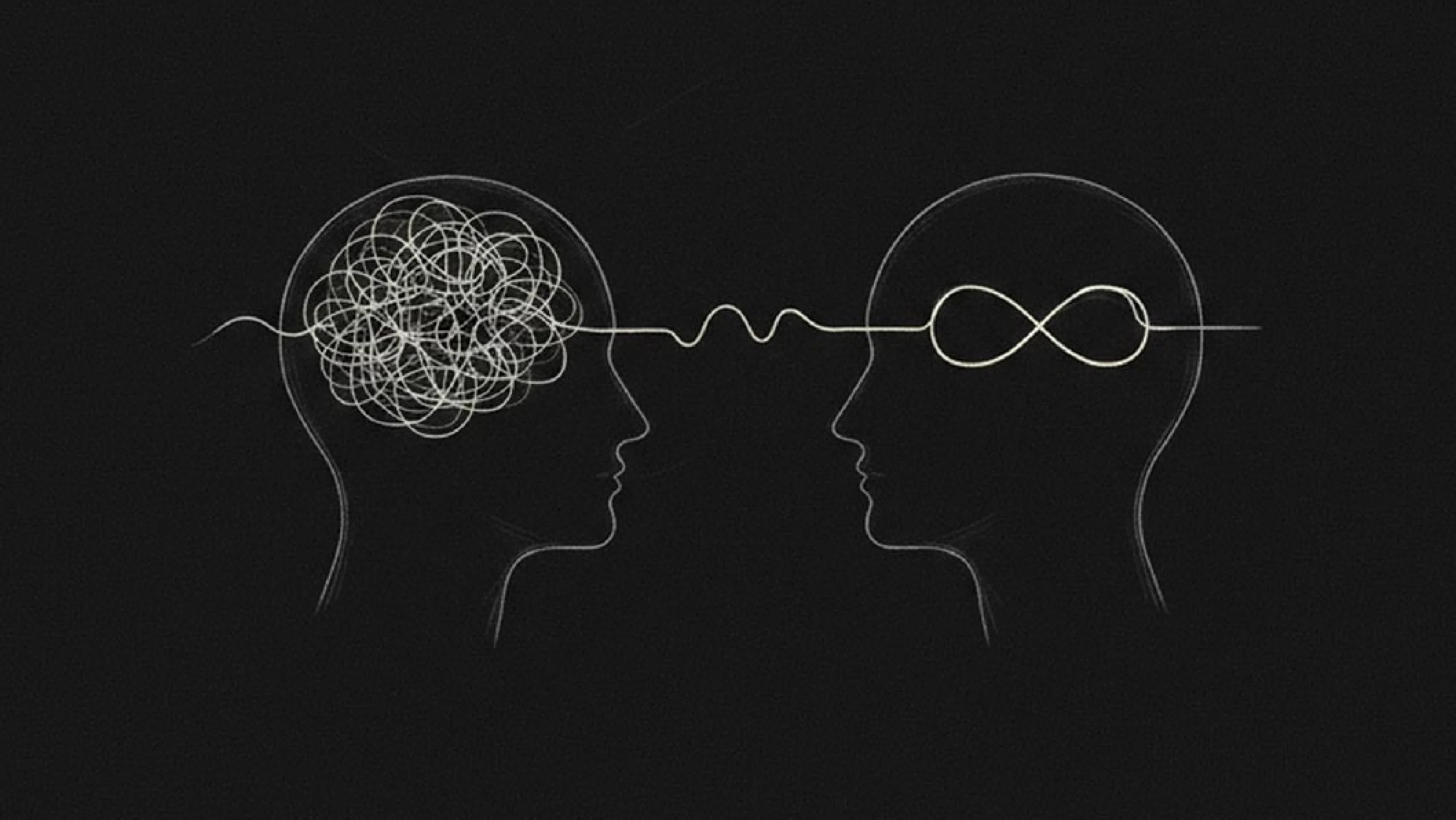
Why Winners Quit To Survive (And Losers Don't)
It was June 2019. Ten of us sat around the conference room table at CreditVidya, staring at a spreadsheet projected on the wall. The numbers told a story I didn't want to hear. We were going to die. Not dramatically, nor in a blaze of glory that would make TechCrunch. Just slowly, predictably, as the Indian B2B SaaS market's brutal pricing pressure and microscopic TAM bled us dry, one quarter at a time.
We had two options:
Persevere: Move overseas, compete in unfamiliar markets, and burn through our remaining capital trying to crack geographies we didn't understand.
Withdraw Strategically: Quit the SaaS business entirely and preserve our agency to build a fintech lending stack by abandoning the product roadmap, market positioning, and company identity we'd spent three years building.
Every founder's instinct I had screamed the same thing: "Winners never quit."
The startup mythology reinforced it. Every Medium post, every investor deck celebrated the same mantra: Grit is everything. Real founders push through. They find a way.
I had two lessons in the fintech space where I could have learned from: Perfios persevered (also made inroads in the international market), and MoneyView strategically withdrew from an SMS Money Management app and built a full-scale lending business.
But I was blinded by the dogma.
Here's what I've learned since then, backed by neuroscience, military history, and evolutionary biology. Winners don't persevere endlessly. Winners quit to survive.
In fact, the ability to quit - to execute strategic withdrawal - is the specific biological marker of high-functioning intelligence. Until death, all defeat is psychological. But the psychology we've been sold is backwards.

Darwin Favoured the Quitter
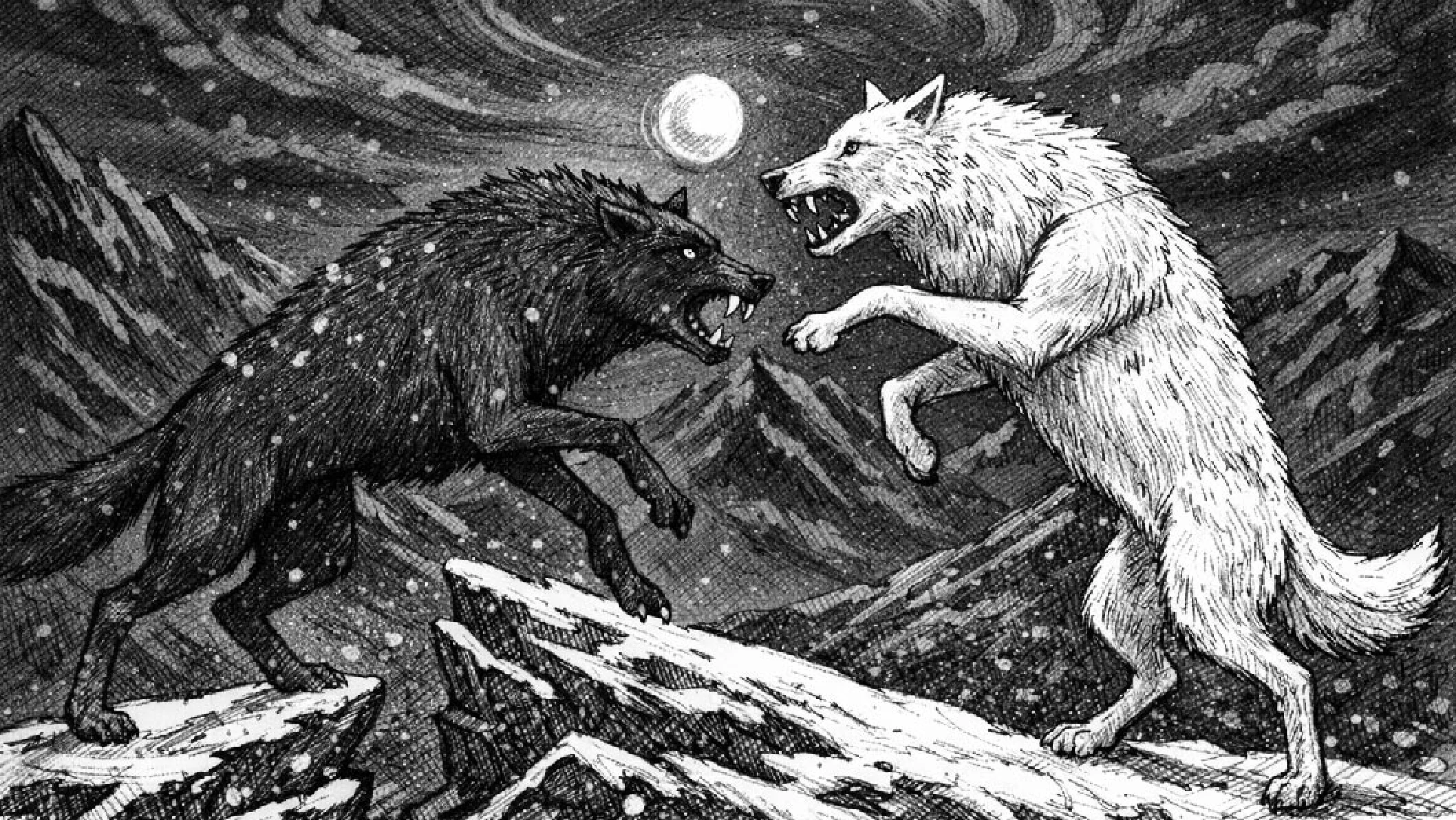
Watch what happens when two wolves fight over territory. The combat is vicious but brief. Within seconds, the losing wolf does something that looks like total surrender. It exposes its throat, the most vulnerable part of its body, to the victor's jaws.
We look at this moment with pity. We think: "He gave up."
Biology says: "He just made a winning move."
He didn't surrender. He executed a Strategic Withdrawal.
When the wolf exposes its throat, it triggers what neuroscientists call the Involuntary Defeat Strategy (IDS). This isn't a bug in the wolf's programming, but the feature that kept wolves alive for millions of years while more "persistent" species went extinct.
Here's the mechanics of the move:
- The Signal: The throat exposure sends a neurochemical signal that inhibits the winner's aggression.
- The Result: The fight ends immediately. The loser retreats, injured but alive.
- The Preservation: Critically, the loser preserves what biologists call Resource Holding Potential (RHP), the physical capacity to survive, hunt, breed, and fight again tomorrow.
The wolf that strategically withdrew from the battle survives to pass on its genes. The wolf that refuses to withdraw? It dies defending a meal it was going to lose anyway.
Strategic withdrawal isn't cowardice. It's a survival instinct.
For founders, the equivalent of RHP is Agency Holding Potential (AHP). Every hour you grind on an unwinnable situation, you're burning your agency. You're depleting the money, sanity, and reputation you need for the next fight.
The wolf knows that Survival > Ego.
True resilience isn't the refusal to quit. It's the discipline to preserve your agency for a game you can actually win.
The Kutuzov Principle: Burn Your Own City
In 1812, as Napoleon's Grand Army marched toward Moscow, Russian General Mikhail Kutuzov made a decision that looked like the ultimate defeat. He ordered the evacuation and burning of Moscow, the symbolic heart of the nation. To every outside observer, Kutuzov had surrendered Russia's most important city without a fight. Napoleon walked into the Kremlin and declared victory. But, by burning his own capital, Kutuzov denied Napoleon the resources needed to survive the Russian winter. With no supplies and no shelter, the Grand Army was forced to retreat. The withdrawal destroyed them. Of the 600,000 soldiers who invaded Russia, fewer than 40,000 made it home.
Kutuzov's "defeat" destroyed Napoleon's empire.
The Lesson: Military doctrine teaches that "choosing not to fight may be as important to strategic success as fighting."
This is what Strategic Withdrawal looks like at scale: The most aggressive move you can make is being willing to look like a loser today to preserve the resources you need to win tomorrow.
Founders often refuse to "burn the city" (kill a feature, fire a client, pivot the product) because they fear the social shame of the retreat. They view the city as their identity.
Your Brain Knows When to Quit (Your Ego Doesn't)
Quitting is the default. Persistence is the override.
Deep in your brainstem sits the Dorsal Raphe Nucleus - your biological "quit switch." When you face an unwinnable fight, it fires serotonin that makes you freeze and withdraw. This isn't a defect. It is a metabolic conservation strategy that kept our ancestors alive.
Resilience happens when your Medial Prefrontal Cortex (mPFC) detects control - the sense that your actions can change the outcome. When your mPFC believes the fight is winnable, it zaps the brainstem and overrides the quit signal. You keep going.
But when you can't control the outcome and persist anyway, something breaks.
When you keep investing because you've already invested, your brain mistakes sunk costs for strategy. The brain suppresses production of dopamine, and without dopamine, you lose the biological fuel for motivation, clarity, and judgment. You can't feel it happening. You just notice you're exhausted, irritable, making worse decisions, lying awake at 3 AM replaying the same problems.
That's your brain screaming: "This fight is unwinnable. Strategically withdraw."
The wolf listens to this signal. The founder doesn't.
When to Strategically Withdraw?
To distinguish between "The Dip" (where you persist) and "The Dead End" (where you quit), I ask myself three questions:
1. Can I change the fundamental constraint?
For our B2B SaaS model, the constraint was market size and pricing pressure. No amount of optimization would change the Indian market's ability to pay SaaS prices. The constraint was structural, not tactical.
If you can't change the constraint through better execution, you're not facing a challenge. You're facing reality.
- Tactical problems have solutions: hire better salespeople, improve the product, fix the positioning.
- Structural problems have no solutions within your current model: the market is too small, the economics don't work, or the regulatory environment won't allow it.
If the constraint is structural and outside your control, persistence isn't grit. It's an expensive fantasy.
2. Am I burning resources on a dead end?
Resources aren't just money. They are team morale, your own mental health, opportunity cost, and time.
We were burning all of them defending a business model that couldn't scale in our geography. Every quarter we persisted was a quarter we could have spent building something that actually worked.
The Science of Stopping:
- Martin Seligman's research on learned helplessness shows that persistence in uncontrollable situations doesn't build resilience; it breeds depression.
- Carol Dweck's growth mindset research is often misunderstood: having a growth mindset doesn't mean grinding forever. It means being intelligent about which growth vectors actually exist.
Ask yourself: Is my persistence depleting my Agency Holding Potential?
3. Is my persistence preserving or destroying future optionality?
Biologists call this "Resource Holding Potential." Wolves that submit in unwinnable fights maintain their capacity to hunt tomorrow. Wolves that fight to the death lose all future potential.
Founders must ask: Does continuing this fight increase or decrease my ability to fight the next one?
If persistence is destroying your runway, your reputation, or your sanity, you are not being resilient. You are being stubborn.
The data: Founders who identify uncontrollable constraints and pivot within 18 months have a 63% higher success rate than those who persist beyond 24 months on the same approach.
Why Winners Quit To Survive (And Losers Don't)
It was June 2019. Ten of us sat around the conference room table at CreditVidya, staring at a spreadsheet projected on the wall. The numbers told a story I didn't want to hear. We were going to die. Not dramatically, nor in a blaze of glory that would make TechCrunch. Just slowly, predictably, as the Indian B2B SaaS market's brutal pricing pressure and microscopic TAM bled us dry, one quarter at a time.
We had two options:
Persevere: Move overseas, compete in unfamiliar markets, and burn through our remaining capital trying to crack geographies we didn't understand.
Withdraw Strategically: Quit the SaaS business entirely and preserve our agency to build a fintech lending stack by abandoning the product roadmap, market positioning, and company identity we'd spent three years building.
Every founder's instinct I had screamed the same thing: "Winners never quit."
The startup mythology reinforced it. Every Medium post, every investor deck celebrated the same mantra: Grit is everything. Real founders push through. They find a way.
I had two lessons in the fintech space where I could have learned from: Perfios persevered (also made inroads in the international market), and MoneyView strategically withdrew from an SMS Money Management app and built a full-scale lending business.
But I was blinded by the dogma.
Here's what I've learned since then, backed by neuroscience, military history, and evolutionary biology. Winners don't persevere endlessly. Winners quit to survive.
In fact, the ability to quit - to execute strategic withdrawal - is the specific biological marker of high-functioning intelligence. Until death, all defeat is psychological. But the psychology we've been sold is backwards.
Darwin Favoured the Quitter
Watch what happens when two wolves fight over territory. The combat is vicious but brief. Within seconds, the losing wolf does something that looks like total surrender. It exposes its throat, the most vulnerable part of its body, to the victor's jaws.
We look at this moment with pity. We think: "He gave up."
Biology says: "He just made a winning move."
He didn't surrender. He executed a Strategic Withdrawal.
When the wolf exposes its throat, it triggers what neuroscientists call the Involuntary Defeat Strategy (IDS). This isn't a bug in the wolf's programming, but the feature that kept wolves alive for millions of years while more "persistent" species went extinct.
Here's the mechanics of the move:
- The Signal: The throat exposure sends a neurochemical signal that inhibits the winner's aggression.
- The Result: The fight ends immediately. The loser retreats, injured but alive.
- The Preservation: Critically, the loser preserves what biologists call Resource Holding Potential (RHP), the physical capacity to survive, hunt, breed, and fight again tomorrow.
The wolf that strategically withdrew from the battle survives to pass on its genes. The wolf that refuses to withdraw? It dies defending a meal it was going to lose anyway.
Strategic withdrawal isn't cowardice. It's a survival instinct.
For founders, the equivalent of RHP is Agency Holding Potential (AHP). Every hour you grind on an unwinnable situation, you're burning your agency. You're depleting the money, sanity, and reputation you need for the next fight.
The wolf knows that Survival > Ego.
True resilience isn't the refusal to quit. It's the discipline to preserve your agency for a game you can actually win.
The Kutuzov Principle: Burn Your Own City
In 1812, as Napoleon's Grand Army marched toward Moscow, Russian General Mikhail Kutuzov made a decision that looked like the ultimate defeat. He ordered the evacuation and burning of Moscow, the symbolic heart of the nation. To every outside observer, Kutuzov had surrendered Russia's most important city without a fight. Napoleon walked into the Kremlin and declared victory. But, by burning his own capital, Kutuzov denied Napoleon the resources needed to survive the Russian winter. With no supplies and no shelter, the Grand Army was forced to retreat. The withdrawal destroyed them. Of the 600,000 soldiers who invaded Russia, fewer than 40,000 made it home.
Kutuzov's "defeat" destroyed Napoleon's empire.
The Lesson: Military doctrine teaches that "choosing not to fight may be as important to strategic success as fighting."
This is what Strategic Withdrawal looks like at scale: The most aggressive move you can make is being willing to look like a loser today to preserve the resources you need to win tomorrow.
Founders often refuse to "burn the city" (kill a feature, fire a client, pivot the product) because they fear the social shame of the retreat. They view the city as their identity.
Your Brain Knows When to Quit (Your Ego Doesn't)
Quitting is the default. Persistence is the override.
Deep in your brainstem sits the Dorsal Raphe Nucleus - your biological "quit switch." When you face an unwinnable fight, it fires serotonin that makes you freeze and withdraw. This isn't a defect. It is a metabolic conservation strategy that kept our ancestors alive.
Resilience happens when your Medial Prefrontal Cortex (mPFC) detects control - the sense that your actions can change the outcome. When your mPFC believes the fight is winnable, it zaps the brainstem and overrides the quit signal. You keep going.
But when you can't control the outcome and persist anyway, something breaks.
When you keep investing because you've already invested, your brain mistakes sunk costs for strategy. The brain suppresses production of dopamine, and without dopamine, you lose the biological fuel for motivation, clarity, and judgment. You can't feel it happening. You just notice you're exhausted, irritable, making worse decisions, lying awake at 3 AM replaying the same problems.
That's your brain screaming: "This fight is unwinnable. Strategically withdraw."
The wolf listens to this signal. The founder doesn't.
When to Strategically Withdraw?
To distinguish between "The Dip" (where you persist) and "The Dead End" (where you quit), I ask myself three questions:
1. Can I change the fundamental constraint?
For our B2B SaaS model, the constraint was market size and pricing pressure. No amount of optimization would change the Indian market's ability to pay SaaS prices. The constraint was structural, not tactical.
If you can't change the constraint through better execution, you're not facing a challenge. You're facing reality.
- Tactical problems have solutions: hire better salespeople, improve the product, fix the positioning.
- Structural problems have no solutions within your current model: the market is too small, the economics don't work, or the regulatory environment won't allow it.
If the constraint is structural and outside your control, persistence isn't grit. It's an expensive fantasy.
2. Am I burning resources on a dead end?
Resources aren't just money. They are team morale, your own mental health, opportunity cost, and time.
We were burning all of them defending a business model that couldn't scale in our geography. Every quarter we persisted was a quarter we could have spent building something that actually worked.
The Science of Stopping:
- Martin Seligman's research on learned helplessness shows that persistence in uncontrollable situations doesn't build resilience; it breeds depression.
- Carol Dweck's growth mindset research is often misunderstood: having a growth mindset doesn't mean grinding forever. It means being intelligent about which growth vectors actually exist.
Ask yourself: Is my persistence depleting my Agency Holding Potential?
3. Is my persistence preserving or destroying future optionality?
Biologists call this "Resource Holding Potential." Wolves that submit in unwinnable fights maintain their capacity to hunt tomorrow. Wolves that fight to the death lose all future potential.
Founders must ask: Does continuing this fight increase or decrease my ability to fight the next one?
If persistence is destroying your runway, your reputation, or your sanity, you are not being resilient. You are being stubborn.
The data: Founders who identify uncontrollable constraints and pivot within 18 months have a 63% higher success rate than those who persist beyond 24 months on the same approach.
Until Death,
All Defeat Is Psychological
Why Winners Quit To Survive (And Losers Don't)
It was June 2019. Ten of us sat around the conference room table at CreditVidya, staring at a spreadsheet projected on the wall. The numbers told a story I didn't want to hear. We were going to die. Not dramatically, nor in a blaze of glory that would make TechCrunch. Just slowly, predictably, as the Indian B2B SaaS market's brutal pricing pressure and microscopic TAM bled us dry, one quarter at a time.
We had two options:
Persevere: Move overseas, compete in unfamiliar markets, and burn through our remaining capital trying to crack geographies we didn't understand.
Withdraw Strategically: Quit the SaaS business entirely and preserve our agency to build a fintech lending stack by abandoning the product roadmap, market positioning, and company identity we'd spent three years building.
Every founder's instinct I had screamed the same thing: "Winners never quit."
The startup mythology reinforced it. Every Medium post, every investor deck celebrated the same mantra: Grit is everything. Real founders push through. They find a way.
I had two lessons in the fintech space where I could have learned from: Perfios persevered (also made inroads in the international market), and MoneyView strategically withdrew from an SMS Money Management app and built a full-scale lending business.
But I was blinded by the dogma.
Here's what I've learned since then, backed by neuroscience, military history, and evolutionary biology. Winners don't persevere endlessly. Winners quit to survive.
In fact, the ability to quit - to execute strategic withdrawal - is the specific biological marker of high-functioning intelligence. Until death, all defeat is psychological. But the psychology we've been sold is backwards.
Darwin Favoured the Quitter
Watch what happens when two wolves fight over territory. The combat is vicious but brief. Within seconds, the losing wolf does something that looks like total surrender. It exposes its throat, the most vulnerable part of its body, to the victor's jaws.
We look at this moment with pity. We think: "He gave up."
Biology says: "He just made a winning move."
He didn't surrender. He executed a Strategic Withdrawal.
When the wolf exposes its throat, it triggers what neuroscientists call the Involuntary Defeat Strategy (IDS). This isn't a bug in the wolf's programming, but the feature that kept wolves alive for millions of years while more "persistent" species went extinct.
Here's the mechanics of the move:
- The Signal: The throat exposure sends a neurochemical signal that inhibits the winner's aggression.
- The Result: The fight ends immediately. The loser retreats, injured but alive.
- The Preservation: Critically, the loser preserves what biologists call Resource Holding Potential (RHP), the physical capacity to survive, hunt, breed, and fight again tomorrow.
The wolf that strategically withdrew from the battle survives to pass on its genes. The wolf that refuses to withdraw? It dies defending a meal it was going to lose anyway.
Strategic withdrawal isn't cowardice. It's a survival instinct.
For founders, the equivalent of RHP is Agency Holding Potential (AHP). Every hour you grind on an unwinnable situation, you're burning your agency. You're depleting the money, sanity, and reputation you need for the next fight.
The wolf knows that Survival > Ego.
True resilience isn't the refusal to quit. It's the discipline to preserve your agency for a game you can actually win.
The Kutuzov Principle: Burn Your Own City
In 1812, as Napoleon's Grand Army marched toward Moscow, Russian General Mikhail Kutuzov made a decision that looked like the ultimate defeat. He ordered the evacuation and burning of Moscow, the symbolic heart of the nation. To every outside observer, Kutuzov had surrendered Russia's most important city without a fight. Napoleon walked into the Kremlin and declared victory. But, by burning his own capital, Kutuzov denied Napoleon the resources needed to survive the Russian winter. With no supplies and no shelter, the Grand Army was forced to retreat. The withdrawal destroyed them. Of the 600,000 soldiers who invaded Russia, fewer than 40,000 made it home.
Kutuzov's "defeat" destroyed Napoleon's empire.
The Lesson: Military doctrine teaches that "choosing not to fight may be as important to strategic success as fighting."
This is what Strategic Withdrawal looks like at scale: The most aggressive move you can make is being willing to look like a loser today to preserve the resources you need to win tomorrow.
Founders often refuse to "burn the city" (kill a feature, fire a client, pivot the product) because they fear the social shame of the retreat. They view the city as their identity.
Your Brain Knows When to Quit (Your Ego Doesn't)
Quitting is the default. Persistence is the override.
Deep in your brainstem sits the Dorsal Raphe Nucleus - your biological "quit switch." When you face an unwinnable fight, it fires serotonin that makes you freeze and withdraw. This isn't a defect. It is a metabolic conservation strategy that kept our ancestors alive.
Resilience happens when your Medial Prefrontal Cortex (mPFC) detects control - the sense that your actions can change the outcome. When your mPFC believes the fight is winnable, it zaps the brainstem and overrides the quit signal. You keep going.
But when you can't control the outcome and persist anyway, something breaks.
When you keep investing because you've already invested, your brain mistakes sunk costs for strategy. The brain suppresses production of dopamine, and without dopamine, you lose the biological fuel for motivation, clarity, and judgment. You can't feel it happening. You just notice you're exhausted, irritable, making worse decisions, lying awake at 3 AM replaying the same problems.
That's your brain screaming: "This fight is unwinnable. Strategically withdraw."
The wolf listens to this signal. The founder doesn't.
When to Strategically Withdraw?
To distinguish between "The Dip" (where you persist) and "The Dead End" (where you quit), I ask myself three questions:
1. Can I change the fundamental constraint?
For our B2B SaaS model, the constraint was market size and pricing pressure. No amount of optimization would change the Indian market's ability to pay SaaS prices. The constraint was structural, not tactical.
If you can't change the constraint through better execution, you're not facing a challenge. You're facing reality.
- Tactical problems have solutions: hire better salespeople, improve the product, fix the positioning.
- Structural problems have no solutions within your current model: the market is too small, the economics don't work, or the regulatory environment won't allow it.
If the constraint is structural and outside your control, persistence isn't grit. It's an expensive fantasy.
2. Am I burning resources on a dead end?
Resources aren't just money. They are team morale, your own mental health, opportunity cost, and time.
We were burning all of them defending a business model that couldn't scale in our geography. Every quarter we persisted was a quarter we could have spent building something that actually worked.
The Science of Stopping:
- Martin Seligman's research on learned helplessness shows that persistence in uncontrollable situations doesn't build resilience; it breeds depression.
- Carol Dweck's growth mindset research is often misunderstood: having a growth mindset doesn't mean grinding forever. It means being intelligent about which growth vectors actually exist.
Ask yourself: Is my persistence depleting my Agency Holding Potential?
3. Is my persistence preserving or destroying future optionality?
Biologists call this "Resource Holding Potential." Wolves that submit in unwinnable fights maintain their capacity to hunt tomorrow. Wolves that fight to the death lose all future potential.
Founders must ask: Does continuing this fight increase or decrease my ability to fight the next one?
If persistence is destroying your runway, your reputation, or your sanity, you are not being resilient. You are being stubborn.
The data: Founders who identify uncontrollable constraints and pivot within 18 months have a 63% higher success rate than those who persist beyond 24 months on the same approach.

Resonating with this philosophy?
Join the smartest founders mastering the inner game to face the unknown. Read by YC & Sequoia.

The City I Had to Burn
When I looked at that spreadsheet in June 2019, I realised I was Kutuzov.
The B2B SaaS model was my Moscow. Three years of building, and all of it was to become instantly worthless if we pivoted. The sunk cost fallacy would have made us defend a burning city because we had spent three years building it. However, the question wasn’t whether we had invested time and resources. The question was: Could we have actually managed to hold on to that position?
For us, the answer was no.
The Indian B2B SaaS market couldn't support our pricing. The TAM was microscopic. Competition was driving margins toward zero. No amount of optimisation would have changed these structural constraints.
We could have kept grinding while slowly running out of runway.
Or we could strategically withdraw.
Pivoting to fintech lending meant abandoning everything: our value proposition, our target customers, our entire go-to-market strategy. The product we'd built, the brand we'd established, the expertise we'd developed - all worthless in the new business model.
But that strategic withdrawal preserved what mattered: our team, our technical infrastructure, our capital position, and most importantly - our Agency Holding Potential.
We chose to burn the city.
Three years later, CRED acquired us.
We survived because we understood what the wolf knows: Strategic withdrawal is how you stay in the game long enough to win where you can actually win.
Why is Quitting Hard?
Quitting feels like death because, for most of human history, it was.
Terror Management Theory explains why we build companies like immortality projects. Ernest Becker's The Denial of Death reveals that humans construct symbolic vehicles - careers, companies, legacies - to transcend biological mortality.
When founders say they want to "make a dent in the universe," they're not talking about market impact. They're managing death anxiety.
Your company's death feels like you're dying because you've fused your identity with your venture. This is why the sunk cost fallacy has such power. Admitting your business model is dead requires accepting a symbolic death.
Social rejection activates the same neural pathways as physical pain. When you strategically withdraw publicly - when you burn your city - you're triggering ancient survival mechanisms that scream: "The tribe will exile you. You will die alone."
But this is the illusion.
Your company is not you. The failure of one venture is not your failure as a founder.
Wolf is Playing a Different Game Than Founders
James Carse wrote that there are two types of games:
- Finite Games: The goal is to win (Chess, Football).
- Infinite Games: The goal is to keep playing (Business, Life).
When the wolf exposes its throat, it's playing the infinite game of survival.
Every hour grinding on an unwinnable situation depletes your agency. Every dollar defending a dying business model reduces your ability to play the next hand.
You'd make Krishna Proud. The Yoga Sutras understood this 2,500 years ago. Sutra 2.39 on aparigraha (non-grasping) teaches that by letting go of the obsession to hold onto what's dying, you create space for what's possible.
Krishna's instruction to Arjuna wasn't "never retreat." It was: "Understand which battles serve your dharma and which ones serve your ego."
The courage isn't in never quitting. It’s in knowing exactly when to quit.
Your life is an infinite game. Your current venture is one hand in that game. Play it with full intensity. But when the math says fold, fold without shame.
Preserve your agency. The game continues. The wolf that shows its throat lives to hunt again.
And that, in the end, is the only victory that matters.
(And for my gym bros: Don't ever ego lift. It's the same principle.)

To be continued…
A small favor...
I don't run ads. If this brought clarity, the biggest favor you can do is subscribe below.

.svg)

.svg)