
The Dark Side
of Self-Love

Why the most popular advice in the world may be making you miserable - and how to escape the trap
Growing up in a middle-class Indian family, the deal is simple. Get into the right school, get good grades, work harder than everyone else in the room, and make your parents proud. In return, there is an implied sense of belonging. But there is never a moment when someone explains this unwritten contract. You just absorb it - from the relief on your mother's face when the results come in, and from the way your father's voice softens when you win something. Your identity is intertwined with accomplishments.
Jim Carrey captured it perfectly in his famous speech - the moment he introduced himself as "the two-time Golden Globe winner, Jim Carrey!" The joke landed because everyone in that audience recognised the same silent contract: When I get the thing, I'll finally be enough.
I know this because I have lived the full arc. First one in my family to graduate, move to the US, earn an MBA from a top school, start a startup, secure funding, exit…
Weeks after my successful exit from CV, one of my mentors, Bala Srinivasa, casually asked me over coffee, "So what's next?"
I told him I was emotionally exhausted. I told him I needed to start loving myself, and I said it the way founders say everything - as if it were the next project. Little did I know it would take me across India, through ashrams, unlearning in silence, until I found something in a yogashala with a healer called Om Sir.
But before I get to what happened there, let me start with why this project was doomed from the very beginning.
It was doomed because the premise "fall in love with yourself" is entirely the wrong instruction.

Who exactly are you trying to love?
"Fall in love with yourself." Pause on the last word. Your self. Who is that? Because the self you're trying to love isn't the person you were born as. It's the person you were trained to become.
Freud's most enduring insight is that our relationship with ourselves is learned, not innate. Before you had language, you were still absorbing data on social validation, not from books but from micro-expressions on your mother's face, the tone in your father's voice. The precise conditions under which warmth appeared and disappeared. When acceptance is conditional - on achievement, on compliance, on being the "good kid" - the child internalises an operating code that says, "I'm loved when I perform". By age seven, the nervous system internalises it as a reflex. Any story that contradicts it - "you are worthy just as you are" - gets treated as a threat. The body moves into fight or flight.
Now watch what this conditioning produces.
The child who learned "I'm worthy only when I achieve" grows into the adult who can't walk into a room without silently asking: Do I matter here?
Vadim Zeland - a Russian physicist-turned-philosopher - calls this inner importance. The terrified childhood ego demands that it must be flawless to deserve love. The stakes of being you never let up. Then comes outer importance. The child who learned that love is earned by outcomes grows into the adult who inflates the significance of everything around. That importance given to outer outcomes ties the inner self to worldly approval. And when we assign excessive significance to anything - an event, an outcome, or our own ego - we create what Zeland calls excess potential. It's the pressure that reality pushes back against, because, in nature, everything strives for equilibrium. The pushback shows up as anxiety, as impostor syndrome, as the persistent feeling that something is wrong, no matter how much you achieve. The harder you hold on, the more it hurts.
That's what childhood conditioning does. It makes the ordinary act of being alive feel like a test you can never finish. And "fall in love with yourself" doesn't end the test either. It adds another subject. Another goalpost dressed up as healing.
Success amplifies the self.
This trap is worse for high achievers. The more you accomplish, the deeper it pulls you in - until life hits hard enough to make you look at what you've been doing.
Elon Musk tweeted at midnight: "Money can't buy happiness." Set aside your opinions about the man. Look at the data point. The person with the most external validation on the planet - wealth, fame, influence, followers - is still awake at midnight, still reaching for something the scoreboards can't provide. If external worth could settle the question, it would have settled it for him. It didn't. Because the question was never about the scoreboard. It was about a child who learned to look at one.
Consider this: global happiness has been declining for over a decade - from 77% in 2011 to 71% in 2024. The US has fallen from 11th to 24th on the World Happiness Report. Americans under 30 now rank 62nd in the world for life satisfaction. Meanwhile, the global self-improvement industry hit $50 billion in 2024 and is on track to nearly double by 2034. We have never spent more money trying to love ourselves. But, we have never been less happy.
Tending to the self has become our main hobby. Before Instagram and LinkedIn, you checked your reflection in a handful of mirrors - your parents, your boss, your small circle. Now you're checking it in front of thousands, every waking hour. And the more you achieve, the more mirrors appear. When you scroll past twenty success stories before breakfast, your brain doesn't register "good for them." It registers "not me yet." The self-worth system that was trained in childhood to scan for approval is now scanning at scale, without rest.
This is importance compounding. The same mechanism from childhood - worth must be earned, approval must be visible, the self must be validated - except now it runs on infrastructure that never sleeps. Your brain doesn't know the difference between your father's approval and a stranger's like. It processes both as survival data.
No wonder "fall in love with yourself" fails. You're not being asked to love a person. You're being asked to love a scoreboard.
Why the most popular advice in the world may be making you miserable - and how to escape the trap
Growing up in a middle-class Indian family, the deal is simple. Get into the right school, get good grades, work harder than everyone else in the room, and make your parents proud. In return, there is an implied sense of belonging. But there is never a moment when someone explains this unwritten contract. You just absorb it - from the relief on your mother's face when the results come in, and from the way your father's voice softens when you win something. Your identity is intertwined with accomplishments.
Jim Carrey captured it perfectly in his famous speech - the moment he introduced himself as "the two-time Golden Globe winner, Jim Carrey!" The joke landed because everyone in that audience recognised the same silent contract: When I get the thing, I'll finally be enough.
I know this because I have lived the full arc. First one in my family to graduate, move to the US, earn an MBA from a top school, start a startup, secure funding, exit…
Weeks after my successful exit from CV, one of my mentors, Bala Srinivasa, casually asked me over coffee, "So what's next?"
I told him I was emotionally exhausted. I told him I needed to start loving myself, and I said it the way founders say everything - as if it were the next project. Little did I know it would take me across India, through ashrams, unlearning in silence, until I found something in a yogashala with a healer called Om Sir.
But before I get to what happened there, let me start with why this project was doomed from the very beginning.
It was doomed because the premise "fall in love with yourself" is entirely the wrong instruction.
Who exactly are you trying to love?
"Fall in love with yourself." Pause on the last word. Your self. Who is that? Because the self you're trying to love isn't the person you were born as. It's the person you were trained to become.
Freud's most enduring insight is that our relationship with ourselves is learned, not innate. Before you had language, you were still absorbing data on social validation, not from books but from micro-expressions on your mother's face, the tone in your father's voice. The precise conditions under which warmth appeared and disappeared. When acceptance is conditional - on achievement, on compliance, on being the "good kid" - the child internalises an operating code that says, "I'm loved when I perform". By age seven, the nervous system internalises it as a reflex. Any story that contradicts it - "you are worthy just as you are" - gets treated as a threat. The body moves into fight or flight.
Now watch what this conditioning produces.
The child who learned "I'm worthy only when I achieve" grows into the adult who can't walk into a room without silently asking: Do I matter here?
Vadim Zeland - a Russian physicist-turned-philosopher - calls this inner importance. The terrified childhood ego demands that it must be flawless to deserve love. The stakes of being you never let up. Then comes outer importance. The child who learned that love is earned by outcomes grows into the adult who inflates the significance of everything around. That importance given to outer outcomes ties the inner self to worldly approval. And when we assign excessive significance to anything - an event, an outcome, or our own ego - we create what Zeland calls excess potential. It's the pressure that reality pushes back against, because, in nature, everything strives for equilibrium. The pushback shows up as anxiety, as impostor syndrome, as the persistent feeling that something is wrong, no matter how much you achieve. The harder you hold on, the more it hurts.
That's what childhood conditioning does. It makes the ordinary act of being alive feel like a test you can never finish. And "fall in love with yourself" doesn't end the test either. It adds another subject. Another goalpost dressed up as healing.
Success amplifies the self.
This trap is worse for high achievers. The more you accomplish, the deeper it pulls you in - until life hits hard enough to make you look at what you've been doing.
Elon Musk tweeted at midnight: "Money can't buy happiness." Set aside your opinions about the man. Look at the data point. The person with the most external validation on the planet - wealth, fame, influence, followers - is still awake at midnight, still reaching for something the scoreboards can't provide. If external worth could settle the question, it would have settled it for him. It didn't. Because the question was never about the scoreboard. It was about a child who learned to look at one.
Consider this: global happiness has been declining for over a decade - from 77% in 2011 to 71% in 2024. The US has fallen from 11th to 24th on the World Happiness Report. Americans under 30 now rank 62nd in the world for life satisfaction. Meanwhile, the global self-improvement industry hit $50 billion in 2024 and is on track to nearly double by 2034. We have never spent more money trying to love ourselves. But, we have never been less happy.
Tending to the self has become our main hobby. Before Instagram and LinkedIn, you checked your reflection in a handful of mirrors - your parents, your boss, your small circle. Now you're checking it in front of thousands, every waking hour. And the more you achieve, the more mirrors appear. When you scroll past twenty success stories before breakfast, your brain doesn't register "good for them." It registers "not me yet." The self-worth system that was trained in childhood to scan for approval is now scanning at scale, without rest.
This is importance compounding. The same mechanism from childhood - worth must be earned, approval must be visible, the self must be validated - except now it runs on infrastructure that never sleeps. Your brain doesn't know the difference between your father's approval and a stranger's like. It processes both as survival data.
No wonder "fall in love with yourself" fails. You're not being asked to love a person. You're being asked to love a scoreboard.
The Dark Side
of Self-Love
Why the most popular advice in the world may be making you miserable - and how to escape the trap
Growing up in a middle-class Indian family, the deal is simple. Get into the right school, get good grades, work harder than everyone else in the room, and make your parents proud. In return, there is an implied sense of belonging. But there is never a moment when someone explains this unwritten contract. You just absorb it - from the relief on your mother's face when the results come in, and from the way your father's voice softens when you win something. Your identity is intertwined with accomplishments.
Jim Carrey captured it perfectly in his famous speech - the moment he introduced himself as "the two-time Golden Globe winner, Jim Carrey!" The joke landed because everyone in that audience recognised the same silent contract: When I get the thing, I'll finally be enough.
I know this because I have lived the full arc. First one in my family to graduate, move to the US, earn an MBA from a top school, start a startup, secure funding, exit…
Weeks after my successful exit from CV, one of my mentors, Bala Srinivasa, casually asked me over coffee, "So what's next?"
I told him I was emotionally exhausted. I told him I needed to start loving myself, and I said it the way founders say everything - as if it were the next project. Little did I know it would take me across India, through ashrams, unlearning in silence, until I found something in a yogashala with a healer called Om Sir.
But before I get to what happened there, let me start with why this project was doomed from the very beginning.
It was doomed because the premise "fall in love with yourself" is entirely the wrong instruction.
Who exactly are you trying to love?
"Fall in love with yourself." Pause on the last word. Your self. Who is that? Because the self you're trying to love isn't the person you were born as. It's the person you were trained to become.
Freud's most enduring insight is that our relationship with ourselves is learned, not innate. Before you had language, you were still absorbing data on social validation, not from books but from micro-expressions on your mother's face, the tone in your father's voice. The precise conditions under which warmth appeared and disappeared. When acceptance is conditional - on achievement, on compliance, on being the "good kid" - the child internalises an operating code that says, "I'm loved when I perform". By age seven, the nervous system internalises it as a reflex. Any story that contradicts it - "you are worthy just as you are" - gets treated as a threat. The body moves into fight or flight.
Now watch what this conditioning produces.
The child who learned "I'm worthy only when I achieve" grows into the adult who can't walk into a room without silently asking: Do I matter here?
Vadim Zeland - a Russian physicist-turned-philosopher - calls this inner importance. The terrified childhood ego demands that it must be flawless to deserve love. The stakes of being you never let up. Then comes outer importance. The child who learned that love is earned by outcomes grows into the adult who inflates the significance of everything around. That importance given to outer outcomes ties the inner self to worldly approval. And when we assign excessive significance to anything - an event, an outcome, or our own ego - we create what Zeland calls excess potential. It's the pressure that reality pushes back against, because, in nature, everything strives for equilibrium. The pushback shows up as anxiety, as impostor syndrome, as the persistent feeling that something is wrong, no matter how much you achieve. The harder you hold on, the more it hurts.
That's what childhood conditioning does. It makes the ordinary act of being alive feel like a test you can never finish. And "fall in love with yourself" doesn't end the test either. It adds another subject. Another goalpost dressed up as healing.
Success amplifies the self.
This trap is worse for high achievers. The more you accomplish, the deeper it pulls you in - until life hits hard enough to make you look at what you've been doing.
Elon Musk tweeted at midnight: "Money can't buy happiness." Set aside your opinions about the man. Look at the data point. The person with the most external validation on the planet - wealth, fame, influence, followers - is still awake at midnight, still reaching for something the scoreboards can't provide. If external worth could settle the question, it would have settled it for him. It didn't. Because the question was never about the scoreboard. It was about a child who learned to look at one.
Consider this: global happiness has been declining for over a decade - from 77% in 2011 to 71% in 2024. The US has fallen from 11th to 24th on the World Happiness Report. Americans under 30 now rank 62nd in the world for life satisfaction. Meanwhile, the global self-improvement industry hit $50 billion in 2024 and is on track to nearly double by 2034. We have never spent more money trying to love ourselves. But, we have never been less happy.
Tending to the self has become our main hobby. Before Instagram and LinkedIn, you checked your reflection in a handful of mirrors - your parents, your boss, your small circle. Now you're checking it in front of thousands, every waking hour. And the more you achieve, the more mirrors appear. When you scroll past twenty success stories before breakfast, your brain doesn't register "good for them." It registers "not me yet." The self-worth system that was trained in childhood to scan for approval is now scanning at scale, without rest.
This is importance compounding. The same mechanism from childhood - worth must be earned, approval must be visible, the self must be validated - except now it runs on infrastructure that never sleeps. Your brain doesn't know the difference between your father's approval and a stranger's like. It processes both as survival data.
No wonder "fall in love with yourself" fails. You're not being asked to love a person. You're being asked to love a scoreboard.

Resonating with this philosophy?
Join the smartest founders mastering the inner game to face the unknown. Read by YC & Sequoia.

My first glimpse of peace
After the acquisition, I tried to fix myself. I journaled. I meditated. I tried affirmations. And the more I focused on loving myself, the worse I felt. The "self" I was trying to love was the constructed identity - the founder, the achiever, the man who proved everyone wrong. Every time I tried to embrace it, I was making it more real. More important. And as Zeland would say, more importance creates more suffering.
I wasn't failing at self-love. I was succeeding at self-inflation.
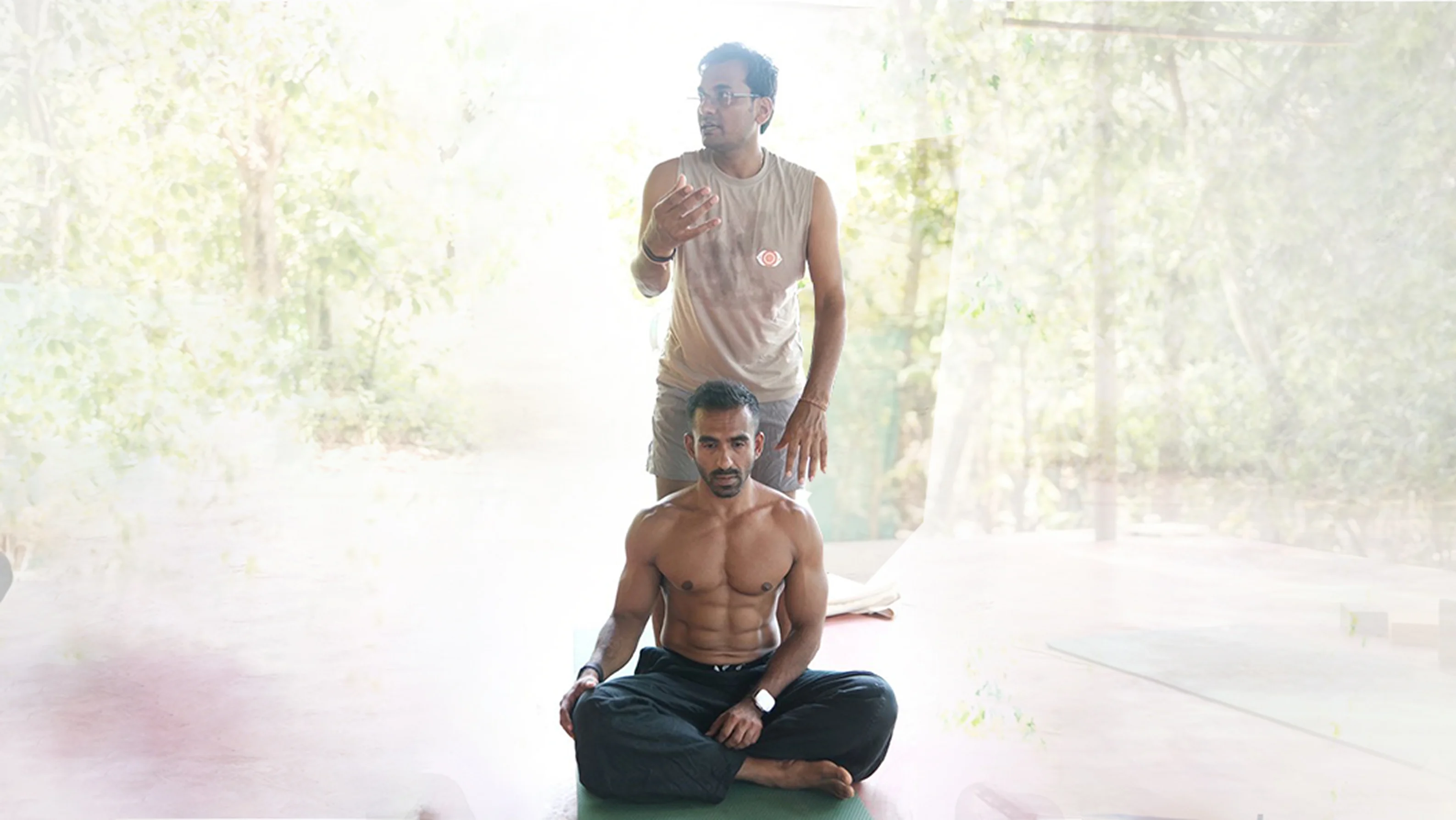
Then I stumbled into a yogashala. Six weeks of training with Om Sir. Practice at 7 AM. Asana, anatomy, philosophy.
He watched me the whole time. He saw everything - the one meal a day, the protein runs, the workouts squeezed between sessions, the work calls taken outside the ashram in the middle of training, the need for black coffee before practice. He saw all of it. And he didn't try to fix a single thing.
No correction. No lecture about surrender. No knowing glance. He understood the kind of person I was without making it a problem to be solved. And in that space appeared something I'd chased for twenty years. I felt accepted. But not because I was finally “enough”. I felt accepted because "enough" had left the room. There was no self being graded. Just a person being seen without a scorecard.
That wasn't love of the self. It was self being released. And it was the first real peace I'd known.
Less self, not more love
If self-love inflates the ego, and an inflated ego is the source of suffering, then the strategy isn't to love harder.
Imagine walking across a log on the ground. Easy. Now place the same log between two skyscrapers. Same log. Same you. But now it's paralysing - not because the challenge changed, but because the importance did.
Start by dropping inner importance. Stop treating yourself as a high-stakes project. Give yourself the profound luxury of having shortcomings. You don't need to love your flaws, and you don't need to hide them. You just need to stop evaluating them. True professional and personal resilience does not come from building an impenetrable, perfectly loved ego. It comes from the quiet, unbreakable realisation that the self doesn't need to be important to be complete. Then drop outer importance. Do the work fully, but stop tying your worth to the result. Zeland's instruction is disarmingly simple: Rent yourself out. Give your head and your hands to the work, your projects, your goals. But don't give your heart to the scoreboard. You can perform at the highest level without making the outcome a measure of who you are.
When you lower the importance on both axes, the log returns to the ground.
Zeland arrived at this through physics. The yogis arrived at the same place 2,500 years earlier. Patanjali identified the root of suffering as avidya - misperception - which gives rise to asmita, the confusion of "who I am" with "what I think and feel and do." The solution isn't to love the ego more. It's to stop mistaking the ego for the self. This is about being the witness - the practice of Sakshi. You step back from being the character on the screen and remember you're the one watching. You don't need to love the character in the movie. You just need to remember it isn't you.
Om Sir didn't teach me to love myself. He showed me what it looks like when someone sees you without keeping a score. And in that absence, I glimpsed what the yogis and the physicists arrived at from opposite ends of the earth - suffering does not arise because we love ourselves too little; it arises because we make too much of ourselves.
The debt of ‘potential’ you thought you owed the world has already been paid. A false goal forces you to keep proving yourself. A true goal makes your life a celebration.
The cure for the modern crisis of the soul isn't more love for the self. The cure is less self to love.
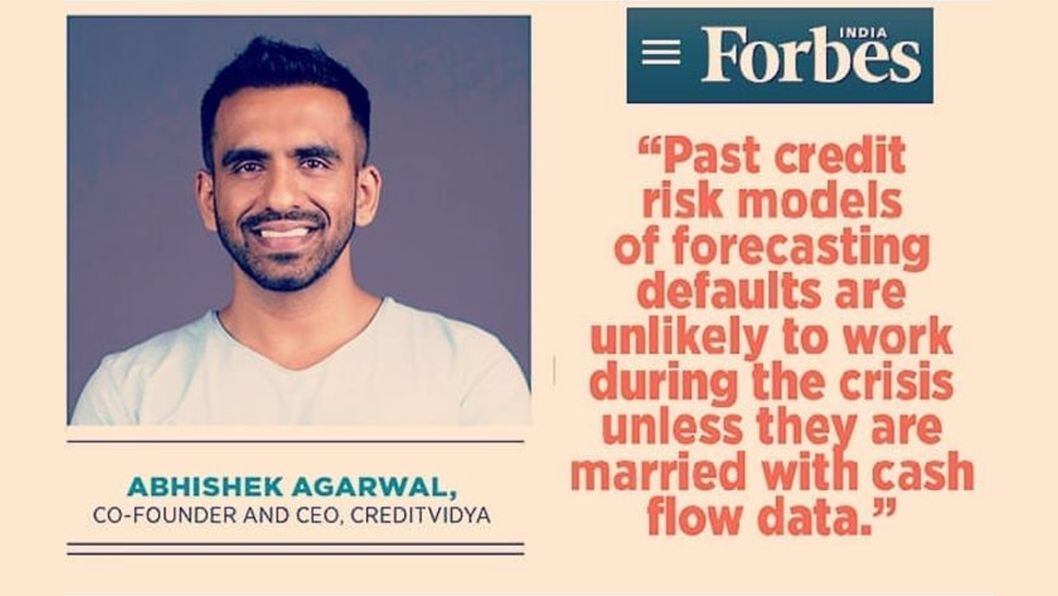
‘Avi is the founder of The Deliberate Pause and the former co-founder of CreditVidya & Prefr (acquired by CRED). He writes about Inner Engineering for Founders—the psychology of sustainable high performance.

To be continued…
A small favor...
I don't run ads. If this brought clarity, the biggest favor you can do is subscribe below.


.webp)
.svg)

.svg)