
Does happiness feel ‘different’?
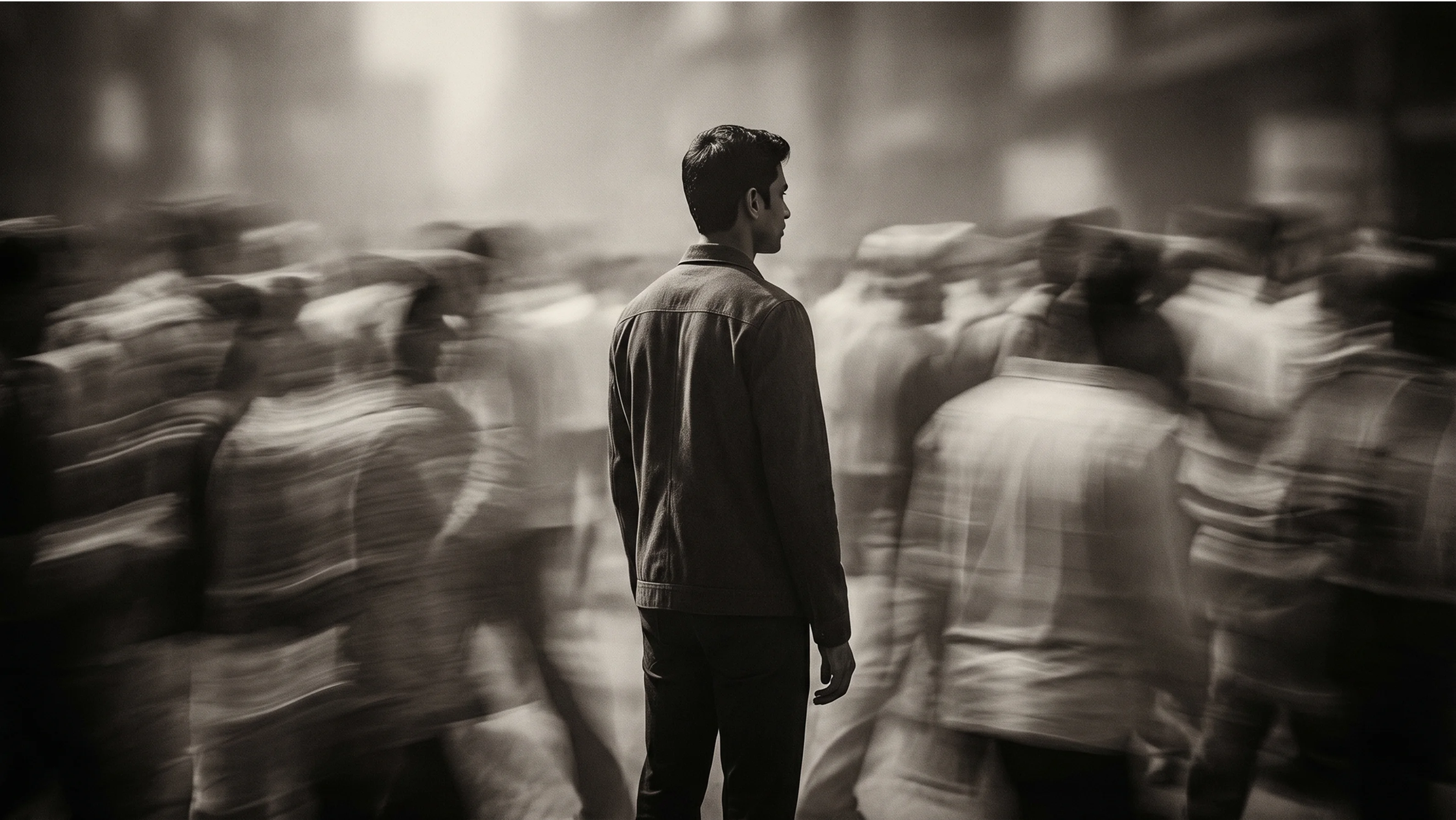
I built the life I wanted. And yet, I still don’t have an answer.
People often ask me if I have been happy for as long as I can remember. I remember building CreditVidya, I remember its acquisition by CRED, I remember riding a motorcycle across India for a year, I remember self-discovery in ashrams and highways and long silences sitting between strangers. But I don’t remember having an answer to feeling happy, and the reason embarrasses me: I genuinely do not know what happiness feels like. I can recognise relief. I can recognise the absence of a crisis. But happiness as a sensation in my body, something warm and specific that I could point to and say this, right here, this is it: I have no memory of it.
For a long time, I assumed something was broken in me. A defect, a flaw. It took a decade, a breakdown, and a line of research I wish I'd found years ago to understand what made me think so. Nothing was broken. The system was working exactly as designed. I had built a life so efficient at suppressing pain that it suppressed everything else as well, including happiness.

You can't win the happiness game
A close friend, someone who adores me, once called me rigid in passing. One word in one conversation. She's said hundreds of kind things across months of friendship. I cannot recite a single one. But "rigid"? I can tell you where I was sitting. I can tell you the light in the room. That word moved into my head and never left.
You know this machinery. Thirty-seven compliments dissolve, but one criticism stays. The ‘perfectionist’ in you treats that one word as the truth, and builds an entire identity around making sure it's never true again. So you work harder. You collect wins. But the wins don't feel like winning. Psychology professor Tal Ben-Shahar calls this the arrival fallacy: the belief that the next milestone will finally make you happy. It never does. You close the round, you land the deal, you ship the product, and what arrives isn't joy. It's just relief. Brief and shallow, before the quiet returns to the question you were trying to outrun.
A sharper mind doesn't protect you from the trap. The smarter you are, the harder you become on yourself. It builds a better mask. And the better the mask, the more your self-worth gets welded to it. Every compliment lands on the image. Every success feeds the persona. The real you, the one behind the performance, gets nothing. Your entire sense of worth now lives inside a version of yourself that isn't you. And you can't take it off, because without it, you don't know who's there.
Therein starts the endless struggle of finite evidence trying to satisfy an infinite demand for worthiness. You set the threshold at infinity early, without knowing what you were doing, and then spent decades believing the next accomplishment would finally clear it. Every success is attributed to the external persona, whereas "You're enough" is filtered through "They don't really know me." Patanjali named this loop ‘asmita’ twenty-five centuries ago: the confusion of the costume for the face. You don't just wear the competent, polished persona, but start believing you are that persona. Your identity fuses with it. Any threat - critical feedback, a visible mistake, a moment of uncertainty - registers as annihilation. You don't just fear looking incompetent, but fear ceasing to exist if the next accomplishment does not materialise. With that, the very idea of happiness evaporates because happiness is always in the future.
Be deeply seen
For most of my adult life, I didn't understand that self-worth doesn't get built by accomplishments. It gets built by being seen - fully, without the performance - and discovering that what's underneath the mask is enough. You can collect wins for decades, but the verdict on happiness won’t shift a bit. That’s because the verdict was never about what you could do. It was about who you are when you're not doing anything for the mask. And that person, the one behind the facade, has never been tested. You've never let anyone meet him.
This is why approval never converts into belonging. You can be admired from a distance and yet be starved up close. The loop does not produce connection, just validation. Connection requires the one thing the loop is designed to prevent: being seen without the act.
Storyteller Brené Brown spent six years trying to find the variable that separates people who feel a deep connection from people who are constantly grasping for it. She expected complexity: a model, a taxonomy, a set of factors. What she found was disarmingly simple. The people who feel loved believe they are worthy of love. The people who don't feel loved, don't. Brown is worth paying attention to because she lived the identity trap. She built her academic career on measurement and control, using data to "knock discomfort upside the head." When her own research told her to stop controlling and start feeling, she didn't nod wisely. She had a breakdown, spent what she calls a "yearlong street fight" with vulnerability while seeing a therapist, and resisted every finding her own data was producing. She lost the fight. She says it probably saved her life.
And here is the finding from her work, confirmed by Gross and John at Stanford, that rearranged everything I thought I knew about high performance.
You cannot selectively numb emotions.
When you suppress vulnerability, you also suppress shame, fear, joy, and gratitude. Push down the pain of being insufficient, and you push down the warmth of the moments when you are enough as well.
What Brown didn't say, and what took me twenty years to learn: you can't selectively unmask either. Spend ten hours a day performing composure and competence in the office, and the performance doesn't clock out when you leave. It follows you home. It sits across from the people who love you. It answers "how was your day?" with the same curated polish you used in the board meeting. The mask isn't something you put on for work and take off at the door. Wear it long enough, and you lose access to whatever was underneath.
I built the life I wanted. And yet, I still don’t have an answer.
People often ask me if I have been happy for as long as I can remember. I remember building CreditVidya, I remember its acquisition by CRED, I remember riding a motorcycle across India for a year, I remember self-discovery in ashrams and highways and long silences sitting between strangers. But I don’t remember having an answer to feeling happy, and the reason embarrasses me: I genuinely do not know what happiness feels like. I can recognise relief. I can recognise the absence of a crisis. But happiness as a sensation in my body, something warm and specific that I could point to and say this, right here, this is it: I have no memory of it.
For a long time, I assumed something was broken in me. A defect, a flaw. It took a decade, a breakdown, and a line of research I wish I'd found years ago to understand what made me think so. Nothing was broken. The system was working exactly as designed. I had built a life so efficient at suppressing pain that it suppressed everything else as well, including happiness.
You can't win the happiness game
A close friend, someone who adores me, once called me rigid in passing. One word in one conversation. She's said hundreds of kind things across months of friendship. I cannot recite a single one. But "rigid"? I can tell you where I was sitting. I can tell you the light in the room. That word moved into my head and never left.
You know this machinery. Thirty-seven compliments dissolve, but one criticism stays. The ‘perfectionist’ in you treats that one word as the truth, and builds an entire identity around making sure it's never true again. So you work harder. You collect wins. But the wins don't feel like winning. Psychology professor Tal Ben-Shahar calls this the arrival fallacy: the belief that the next milestone will finally make you happy. It never does. You close the round, you land the deal, you ship the product, and what arrives isn't joy. It's just relief. Brief and shallow, before the quiet returns to the question you were trying to outrun.
A sharper mind doesn't protect you from the trap. The smarter you are, the harder you become on yourself. It builds a better mask. And the better the mask, the more your self-worth gets welded to it. Every compliment lands on the image. Every success feeds the persona. The real you, the one behind the performance, gets nothing. Your entire sense of worth now lives inside a version of yourself that isn't you. And you can't take it off, because without it, you don't know who's there.
Therein starts the endless struggle of finite evidence trying to satisfy an infinite demand for worthiness. You set the threshold at infinity early, without knowing what you were doing, and then spent decades believing the next accomplishment would finally clear it. Every success is attributed to the external persona, whereas "You're enough" is filtered through "They don't really know me." Patanjali named this loop ‘asmita’ twenty-five centuries ago: the confusion of the costume for the face. You don't just wear the competent, polished persona, but start believing you are that persona. Your identity fuses with it. Any threat - critical feedback, a visible mistake, a moment of uncertainty - registers as annihilation. You don't just fear looking incompetent, but fear ceasing to exist if the next accomplishment does not materialise. With that, the very idea of happiness evaporates because happiness is always in the future.
Be deeply seen
For most of my adult life, I didn't understand that self-worth doesn't get built by accomplishments. It gets built by being seen - fully, without the performance - and discovering that what's underneath the mask is enough. You can collect wins for decades, but the verdict on happiness won’t shift a bit. That’s because the verdict was never about what you could do. It was about who you are when you're not doing anything for the mask. And that person, the one behind the facade, has never been tested. You've never let anyone meet him.
This is why approval never converts into belonging. You can be admired from a distance and yet be starved up close. The loop does not produce connection, just validation. Connection requires the one thing the loop is designed to prevent: being seen without the act.
Storyteller Brené Brown spent six years trying to find the variable that separates people who feel a deep connection from people who are constantly grasping for it. She expected complexity: a model, a taxonomy, a set of factors. What she found was disarmingly simple. The people who feel loved believe they are worthy of love. The people who don't feel loved, don't. Brown is worth paying attention to because she lived the identity trap. She built her academic career on measurement and control, using data to "knock discomfort upside the head." When her own research told her to stop controlling and start feeling, she didn't nod wisely. She had a breakdown, spent what she calls a "yearlong street fight" with vulnerability while seeing a therapist, and resisted every finding her own data was producing. She lost the fight. She says it probably saved her life.
And here is the finding from her work, confirmed by Gross and John at Stanford, that rearranged everything I thought I knew about high performance.
You cannot selectively numb emotions.
When you suppress vulnerability, you also suppress shame, fear, joy, and gratitude. Push down the pain of being insufficient, and you push down the warmth of the moments when you are enough as well.
What Brown didn't say, and what took me twenty years to learn: you can't selectively unmask either. Spend ten hours a day performing composure and competence in the office, and the performance doesn't clock out when you leave. It follows you home. It sits across from the people who love you. It answers "how was your day?" with the same curated polish you used in the board meeting. The mask isn't something you put on for work and take off at the door. Wear it long enough, and you lose access to whatever was underneath.
Does happiness feel ‘different’?
I built the life I wanted. And yet, I still don’t have an answer.
People often ask me if I have been happy for as long as I can remember. I remember building CreditVidya, I remember its acquisition by CRED, I remember riding a motorcycle across India for a year, I remember self-discovery in ashrams and highways and long silences sitting between strangers. But I don’t remember having an answer to feeling happy, and the reason embarrasses me: I genuinely do not know what happiness feels like. I can recognise relief. I can recognise the absence of a crisis. But happiness as a sensation in my body, something warm and specific that I could point to and say this, right here, this is it: I have no memory of it.
For a long time, I assumed something was broken in me. A defect, a flaw. It took a decade, a breakdown, and a line of research I wish I'd found years ago to understand what made me think so. Nothing was broken. The system was working exactly as designed. I had built a life so efficient at suppressing pain that it suppressed everything else as well, including happiness.
You can't win the happiness game
A close friend, someone who adores me, once called me rigid in passing. One word in one conversation. She's said hundreds of kind things across months of friendship. I cannot recite a single one. But "rigid"? I can tell you where I was sitting. I can tell you the light in the room. That word moved into my head and never left.
You know this machinery. Thirty-seven compliments dissolve, but one criticism stays. The ‘perfectionist’ in you treats that one word as the truth, and builds an entire identity around making sure it's never true again. So you work harder. You collect wins. But the wins don't feel like winning. Psychology professor Tal Ben-Shahar calls this the arrival fallacy: the belief that the next milestone will finally make you happy. It never does. You close the round, you land the deal, you ship the product, and what arrives isn't joy. It's just relief. Brief and shallow, before the quiet returns to the question you were trying to outrun.
A sharper mind doesn't protect you from the trap. The smarter you are, the harder you become on yourself. It builds a better mask. And the better the mask, the more your self-worth gets welded to it. Every compliment lands on the image. Every success feeds the persona. The real you, the one behind the performance, gets nothing. Your entire sense of worth now lives inside a version of yourself that isn't you. And you can't take it off, because without it, you don't know who's there.
Therein starts the endless struggle of finite evidence trying to satisfy an infinite demand for worthiness. You set the threshold at infinity early, without knowing what you were doing, and then spent decades believing the next accomplishment would finally clear it. Every success is attributed to the external persona, whereas "You're enough" is filtered through "They don't really know me." Patanjali named this loop ‘asmita’ twenty-five centuries ago: the confusion of the costume for the face. You don't just wear the competent, polished persona, but start believing you are that persona. Your identity fuses with it. Any threat - critical feedback, a visible mistake, a moment of uncertainty - registers as annihilation. You don't just fear looking incompetent, but fear ceasing to exist if the next accomplishment does not materialise. With that, the very idea of happiness evaporates because happiness is always in the future.
Be deeply seen
For most of my adult life, I didn't understand that self-worth doesn't get built by accomplishments. It gets built by being seen - fully, without the performance - and discovering that what's underneath the mask is enough. You can collect wins for decades, but the verdict on happiness won’t shift a bit. That’s because the verdict was never about what you could do. It was about who you are when you're not doing anything for the mask. And that person, the one behind the facade, has never been tested. You've never let anyone meet him.
This is why approval never converts into belonging. You can be admired from a distance and yet be starved up close. The loop does not produce connection, just validation. Connection requires the one thing the loop is designed to prevent: being seen without the act.
Storyteller Brené Brown spent six years trying to find the variable that separates people who feel a deep connection from people who are constantly grasping for it. She expected complexity: a model, a taxonomy, a set of factors. What she found was disarmingly simple. The people who feel loved believe they are worthy of love. The people who don't feel loved, don't. Brown is worth paying attention to because she lived the identity trap. She built her academic career on measurement and control, using data to "knock discomfort upside the head." When her own research told her to stop controlling and start feeling, she didn't nod wisely. She had a breakdown, spent what she calls a "yearlong street fight" with vulnerability while seeing a therapist, and resisted every finding her own data was producing. She lost the fight. She says it probably saved her life.
And here is the finding from her work, confirmed by Gross and John at Stanford, that rearranged everything I thought I knew about high performance.
You cannot selectively numb emotions.
When you suppress vulnerability, you also suppress shame, fear, joy, and gratitude. Push down the pain of being insufficient, and you push down the warmth of the moments when you are enough as well.
What Brown didn't say, and what took me twenty years to learn: you can't selectively unmask either. Spend ten hours a day performing composure and competence in the office, and the performance doesn't clock out when you leave. It follows you home. It sits across from the people who love you. It answers "how was your day?" with the same curated polish you used in the board meeting. The mask isn't something you put on for work and take off at the door. Wear it long enough, and you lose access to whatever was underneath.

Resonating with this philosophy?
Join the smartest founders mastering the inner game to face the unknown. Read by YC & Sequoia.

Mard ko dard hota hai
If you grew up male in India, you absorbed five words before you could question them: mard ko dard nahi hota. A real man doesn't feel pain. It sounds like a movie dialogue, but it functions as surgery. It doesn't tell a boy, "don't feel pain." It tells him "don't feel." The playground enforces it. Bollywood celebrates it. The father who doesn't cry at funerals models it. By the time you're a man, you experience "not feeling" as an achievement. You have successfully become what the culture asked you to become: someone who doesn't flinch.
And it follows you into every room you enter as an adult.
You grind harder instead of admitting you're tired. You solve problems instead of saying you're overwhelmed. You don't hold hands. You don't say "I missed you." You don't call the friend back because returning the call would mean explaining how you actually are. You don't actually have the language for that, because the language was taken away from you before you were ten.
When my company was near death, I told no one. When I couldn't make payroll, I sat with it alone. When depression arrived, I carried it silently, because that is what the instruction demanded. A real man handles it. A real man doesn't burden others. A real man figures it out on his own, and if he can't, he fakes it until the crisis passes or his body breaks - whichever comes first. The loneliest thing about it is that nobody around me knew, because the mask was doing exactly what it was designed to do: make the suffering invisible.
This sentence is what I need you to sit with. Not the suffering. The invisibility of it.
Mard ko dard hota hai. A real man does feel pain. He feels it because feeling is the price of being alive, and the alternative is the slow, invisible deletion of every sensation that makes life worth the effort. Including joy. Including love. Including the answer to "Are you happy?"
The Courage to Be Vulnerable
A few months ago, a woman in her twenties said something during a yoga teacher training at Om Sir's shala that I haven't been able to unhear. She told the room she couldn't remember the last time she felt happy. She wasn't depressed. Life wasn't falling apart. She couldn't locate happiness anywhere in her body. Then she said the part that cracked the room open: she felt guilty when it showed up. As though feeling good was a betrayal of the person who had worked so hard to hold everything together.
I kept still. My chest was tight, but my face was composed, because that is what my face had been trained to do for twenty years. I recognised what she was describing, and I recognised it instantly, because it was my biography. But something happened in that room that I didn't understand until I started writing this essay. She said the unsayable thing. And the room held her. Nobody flinched, offered advice, or rushed to fix it. People just listened, and in the listening, something shifted. I felt my own chest loosen. The room wasn't asking anyone to perform. For the first time in years, the persona wasn't required.
Patanjali's Sutra 1.3: ‘When the fluctuations are still, the seer abides in its own true nature.’ I'd been chasing that sutra through philosophy and discipline and years of practice. But it was waiting for me in a room where a stranger said, "I can't feel happiness."
I don't know if she'll ever read this. But if she does, I want her to know something. That morning, she thought she was confessing a failure. She was describing a condition she believed was hers alone. She had no idea that a man sitting next to her with a composed face and a tight chest, heard his own life in her words.
Our stories are intertwined. Her inability to feel joy and my inability to answer "are you happy?" are the same story, written by the same conditioning, running in two different bodies. She named what I couldn't. And in naming it, in a room where naming it was safe, she opened the door for both of us.
I hope she leaves it open. And I hope I learn, too, that it’s all right to feel everything that comes with being human - the fear alongside the warmth, the shame alongside the gratitude. I hope to accept imperfection not as a flaw, but as the very condition that makes us feel alive.
Maybe one day I will have the courage to be happy.

To be continued…
A small favor...
I don't run ads. If this brought clarity, the biggest favor you can do is subscribe below.




.svg)

.svg)