
Angry Young Vijay’s Disappointment
… and why the people closest to you bear the cost of your success
Rajat Agarwal is the kindest investor I have ever worked with. He is also my closest friend, and in our years together, he taught me a lesson that has made me a better founder and a better colleague. But I regret what I did to him. First, let me tell you how I got there.
For years, I lived my life angry. Angry at myself when I fell short of my own unrealistic expectations. Angry at others when they fell short of the unrealistic expectations I'd placed on them. Most of my CreditVidya family would attest to this, though I've improved over time. It was actually not anger, but disappointment. At that time, I couldn't tell the difference. And I can bet, neither can you differentiate yours. Marc Brackett at the Yale Center for Emotional Intelligence found that 95% of people cannot accurately differentiate between anger and disappointment. Nearly all of us are misreading our own signals, treating disappointment - which is quiet, vulnerable, and aimed inward - as anger, which is loud, protective, and aimed at whoever is standing closest.

Mere paas ‘anger’ hai
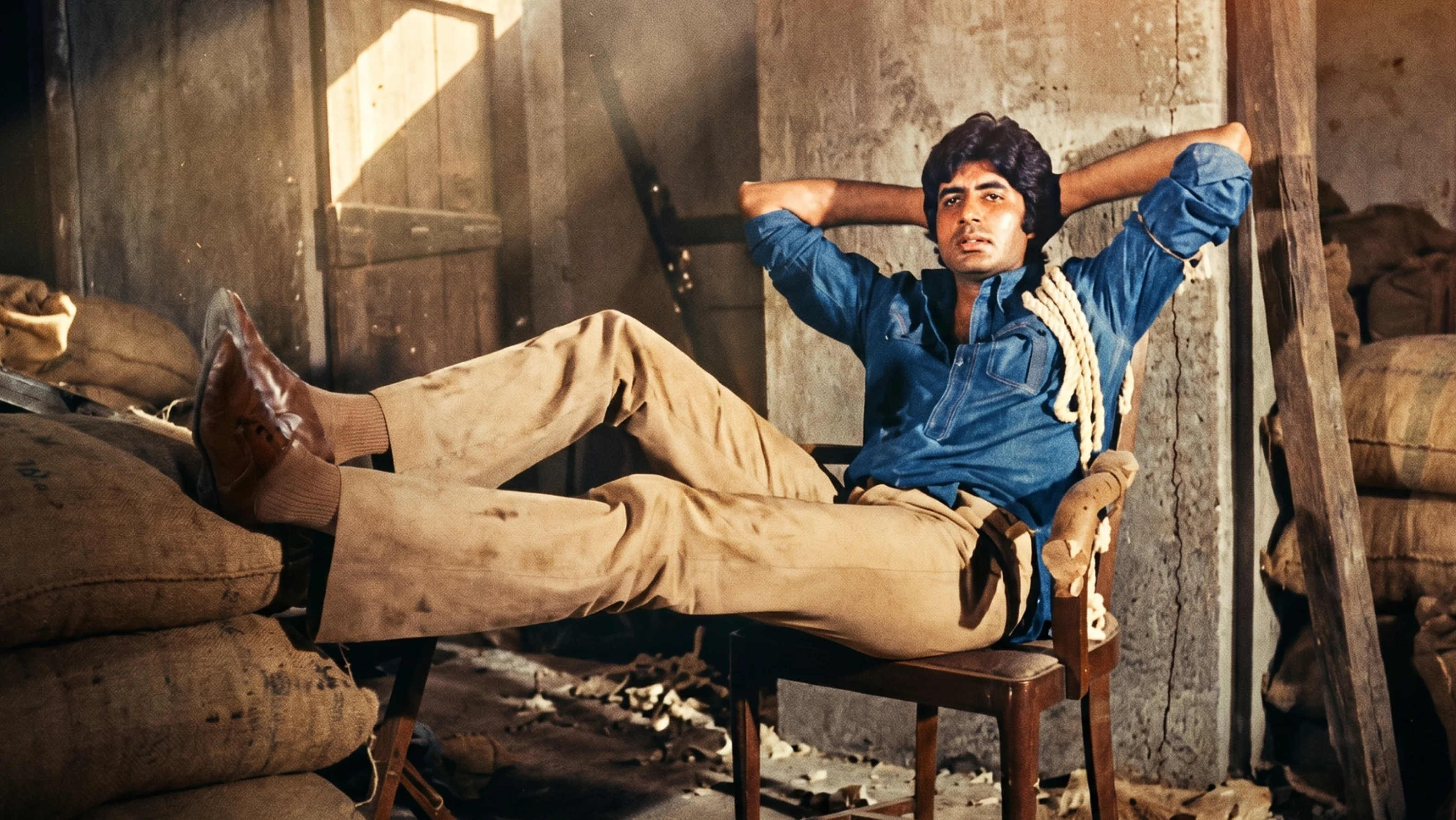
Amitabh Bachchan was the first superstar who gave this anger a hero's costume. Vijay in Deewar, the mill worker's son who turns his wound into a weapon. Vijay in Zanjeer, the cop who fights a system designed to crush him. An entire generation of Indian men and women watched these films and learned that anger served a purpose. If you grew up middle-class in India, anger made sense. You were angry at the system, at the injustice, at the gap between how hard you worked and what the world gave back. Anger wasn't a flaw. It was fuel. I carried that lesson into CreditVidya like a founding principle, proud of my intensity, wearing my impatience as proof that I cared more than anyone else in the room.
Then Sravan Samala joined the leadership team. IIM Ahmedabad, same fire, twice the volume. He'd walk into meetings charged, voice sharp, and for the first time I saw the performance from the outside. It didn't look like strength. He looked like a man who couldn't sit with his own pain, so he made everyone around him carry it instead.
I saw in him a mirror to look at myself.
What I did to Rajat
This story still haunts me because I hurt the one man I genuinely believed had my back.
It was a monthly catch-up during a fundraiser at one of the fancy hotels in Bangalore. Rajat, his partner Vikram, and me. I'd been fighting a battle with SBI, an enterprise deal that would have changed our trajectory. The sticking point was technical: they wanted us on their premises, which meant IBM contractors would have access to our source code. I couldn't agree to that, and SBI wouldn't budge. I was confident I'd resolve it before the investor update, but I couldn't. We were in the middle of the fundraiser, and I'd just lost a big one.
Rajat asked how the meeting went. I don't remember what he said next. My body had already decided this was a fight. The heat climbed through my chest, my voice went sharp, and I said things I didn't mean. I watched his face change: the slight pull back, the careful pause, the moment a kind man decides it's safer to stop being honest with you.
I regret it to this day.
What I couldn't see then was that I wasn't angry at Rajat. I was disappointed with myself. The SBI deal falling apart had cracked the machine I'd built over the years, the one that closed deals and earned respect through output. When Rajat stood in front of me, my brain didn't hear a friend. It heard a witness to my failure, so it turned my disappointment into aggression and aimed it at the person standing closest.
… and why the people closest to you bear the cost of your success
Rajat Agarwal is the kindest investor I have ever worked with. He is also my closest friend, and in our years together, he taught me a lesson that has made me a better founder and a better colleague. But I regret what I did to him. First, let me tell you how I got there.
For years, I lived my life angry. Angry at myself when I fell short of my own unrealistic expectations. Angry at others when they fell short of the unrealistic expectations I'd placed on them. Most of my CreditVidya family would attest to this, though I've improved over time. It was actually not anger, but disappointment. At that time, I couldn't tell the difference. And I can bet, neither can you differentiate yours. Marc Brackett at the Yale Center for Emotional Intelligence found that 95% of people cannot accurately differentiate between anger and disappointment. Nearly all of us are misreading our own signals, treating disappointment - which is quiet, vulnerable, and aimed inward - as anger, which is loud, protective, and aimed at whoever is standing closest.
Mere paas ‘anger’ hai
Amitabh Bachchan was the first superstar who gave this anger a hero's costume. Vijay in Deewar, the mill worker's son who turns his wound into a weapon. Vijay in Zanjeer, the cop who fights a system designed to crush him. An entire generation of Indian men and women watched these films and learned that anger served a purpose. If you grew up middle-class in India, anger made sense. You were angry at the system, at the injustice, at the gap between how hard you worked and what the world gave back. Anger wasn't a flaw. It was fuel. I carried that lesson into CreditVidya like a founding principle, proud of my intensity, wearing my impatience as proof that I cared more than anyone else in the room.
Then Sravan Samala joined the leadership team. IIM Ahmedabad, same fire, twice the volume. He'd walk into meetings charged, voice sharp, and for the first time I saw the performance from the outside. It didn't look like strength. He looked like a man who couldn't sit with his own pain, so he made everyone around him carry it instead.
I saw in him a mirror to look at myself.
What I did to Rajat
This story still haunts me because I hurt the one man I genuinely believed had my back.
It was a monthly catch-up during a fundraiser at one of the fancy hotels in Bangalore. Rajat, his partner Vikram, and me. I'd been fighting a battle with SBI, an enterprise deal that would have changed our trajectory. The sticking point was technical: they wanted us on their premises, which meant IBM contractors would have access to our source code. I couldn't agree to that, and SBI wouldn't budge. I was confident I'd resolve it before the investor update, but I couldn't. We were in the middle of the fundraiser, and I'd just lost a big one.
Rajat asked how the meeting went. I don't remember what he said next. My body had already decided this was a fight. The heat climbed through my chest, my voice went sharp, and I said things I didn't mean. I watched his face change: the slight pull back, the careful pause, the moment a kind man decides it's safer to stop being honest with you.
I regret it to this day.
What I couldn't see then was that I wasn't angry at Rajat. I was disappointed with myself. The SBI deal falling apart had cracked the machine I'd built over the years, the one that closed deals and earned respect through output. When Rajat stood in front of me, my brain didn't hear a friend. It heard a witness to my failure, so it turned my disappointment into aggression and aimed it at the person standing closest.
Angry Young Vijay’s Disappointment
… and why the people closest to you bear the cost of your success
Rajat Agarwal is the kindest investor I have ever worked with. He is also my closest friend, and in our years together, he taught me a lesson that has made me a better founder and a better colleague. But I regret what I did to him. First, let me tell you how I got there.
For years, I lived my life angry. Angry at myself when I fell short of my own unrealistic expectations. Angry at others when they fell short of the unrealistic expectations I'd placed on them. Most of my CreditVidya family would attest to this, though I've improved over time. It was actually not anger, but disappointment. At that time, I couldn't tell the difference. And I can bet, neither can you differentiate yours. Marc Brackett at the Yale Center for Emotional Intelligence found that 95% of people cannot accurately differentiate between anger and disappointment. Nearly all of us are misreading our own signals, treating disappointment - which is quiet, vulnerable, and aimed inward - as anger, which is loud, protective, and aimed at whoever is standing closest.
Mere paas ‘anger’ hai
Amitabh Bachchan was the first superstar who gave this anger a hero's costume. Vijay in Deewar, the mill worker's son who turns his wound into a weapon. Vijay in Zanjeer, the cop who fights a system designed to crush him. An entire generation of Indian men and women watched these films and learned that anger served a purpose. If you grew up middle-class in India, anger made sense. You were angry at the system, at the injustice, at the gap between how hard you worked and what the world gave back. Anger wasn't a flaw. It was fuel. I carried that lesson into CreditVidya like a founding principle, proud of my intensity, wearing my impatience as proof that I cared more than anyone else in the room.
Then Sravan Samala joined the leadership team. IIM Ahmedabad, same fire, twice the volume. He'd walk into meetings charged, voice sharp, and for the first time I saw the performance from the outside. It didn't look like strength. He looked like a man who couldn't sit with his own pain, so he made everyone around him carry it instead.
I saw in him a mirror to look at myself.
What I did to Rajat
This story still haunts me because I hurt the one man I genuinely believed had my back.
It was a monthly catch-up during a fundraiser at one of the fancy hotels in Bangalore. Rajat, his partner Vikram, and me. I'd been fighting a battle with SBI, an enterprise deal that would have changed our trajectory. The sticking point was technical: they wanted us on their premises, which meant IBM contractors would have access to our source code. I couldn't agree to that, and SBI wouldn't budge. I was confident I'd resolve it before the investor update, but I couldn't. We were in the middle of the fundraiser, and I'd just lost a big one.
Rajat asked how the meeting went. I don't remember what he said next. My body had already decided this was a fight. The heat climbed through my chest, my voice went sharp, and I said things I didn't mean. I watched his face change: the slight pull back, the careful pause, the moment a kind man decides it's safer to stop being honest with you.
I regret it to this day.
What I couldn't see then was that I wasn't angry at Rajat. I was disappointed with myself. The SBI deal falling apart had cracked the machine I'd built over the years, the one that closed deals and earned respect through output. When Rajat stood in front of me, my brain didn't hear a friend. It heard a witness to my failure, so it turned my disappointment into aggression and aimed it at the person standing closest.

Resonating with this philosophy?
Join the smartest founders mastering the inner game to face the unknown. Read by YC & Sequoia.

Shame in, blame out
Psychologist Helen Block Lewis gave this a clinical name in 1971: humiliated fury. When a threat lands on your identity - on your sense of who you are - shame fires before you're aware of it. And because shame is unbearable for someone whose worth is fused to their output, the brain runs a conversion: shame in, blame out.
For someone whose worth is contingent on flawless execution, sitting with disappointment is like sitting with a death sentence. You didn't choose this belief. Your parents chose it, or your school chose it, or your first boss chose it. Or growing up in a house where love was conditional, the report cards chose it. The belief was installed before you had the language to question it, and now your brain, to protect its self-image, will decide with absolute certainty that the other person is the problem.
David Chang built Momofuku from a tiny noodle bar into a Michelin-starred empire. One day at Momofuku Seiōbo in Sydney, a hotel maintenance man was whistling near the kitchen. Chang screamed at him and threatened him with a knife, all because of a whistle. His brain turned the sound into evidence of carelessness, carelessness into evidence of declining standards, and declining standards into proof that his empire was built on sand. He later wrote that the slightest error from a cook could turn him into "a convulsing, raging mass," and that the only thing that snapped him out of it was punching a wall.
Nir Eyal, the habit design expert, stayed up until one in the morning calling florists across multiple countries, comparing reviews, checking whether delivery vans were temperature-controlled. The flowers were for his mother. When they arrived half-dead, and she mentioned it, he snapped at her. Five seconds is all it took for his brain to swap out the disappointment, replace it with rage, and aim it at the person he was trying to impress. The person the entire operation was designed to delight became the target of the shame it was designed to prevent.
Jerry Colonna was a venture capitalist, one of the best. He rose from childhood poverty to the top of the tech industry with the same relentless drive, the same conditional worth, and the same conversion: when co-founder dynamics or market uncertainty threatened his sense of control, he would bite the hook of anger to maintain power. He used fury to mask a fear of financial ruin rooted in his youth, and the anger gave him a fleeting high while it drained everything else. Years later he named what he'd been doing: "My biggest regrets tend to be around the things I've done or said that hurt people. And in looking back, they were always rooted in the poor handling of my own fears." The fear was the real emotion. The anger was just the costume it wore.
A chef, a venture capitalist, a behavioural scientist. Three people who built their lives on the belief that their worth was their output and their brain ran the same conversion: disappointment in, blame out.
We convert our disappointment with ourselves into anger against others, often towards the people closest to us. They're the mirrors nearest to our face, and the closer the mirror, the harder it is to see past your own reflection.
The bar was never the problem
Here is the part that high achievers find most difficult to accept: the belief that makes you excellent ("my standards are what got me here") and the belief that makes you destructive ("any failure proves I am insufficient") are not two beliefs. They are the same, experienced from two angles. You cannot selectively keep the strength and discard the shadow because they share a single root.
My drive built everything. First in my family to graduate, carrying the family out of scarcity and into safety, and finally, CreditVidya. All this needed discipline, obsessive preparation, and refusal to accept mediocrity. But I didn’t stop there. I didn’t stop closing deals after Rajat, Chang didn't stop chasing Michelin stars after the whistling incident, and Colonna didn't stop investing after the boardroom rage. The bar stayed high because the bar was never the problem.
Perfectionism and high standards are not the same thing. Patrick Gaudreau calls alternative excellencism the pursuit of excellence without identity contingency. Kristin Neff's research showed self-compassion made perfectionists calmer, more motivated, and effective because they stopped wasting energy on redirected it toward their work.
Neuroscientist Jill Bolte Taylor found that the physiological lifespan of an emotional reaction is approximately 90 seconds. Every hour spent replaying the anger, rehearsing the prosecution, constructing the airtight case for why the other person was wrong is an hour gone. Every minute past the first minute-and-a-half is a minute you are voluntarily giving to a story your brain invented to protect you from a feeling you were too afraid to feel.
The only exit is to change your relationship to the belief itself, to treat it as a tool that is useful in context and swappable when it stops serving you, rather than a truth fused with your identity. You don't need a lower bar. You need to survive 90 seconds of discomfort before your brain turns your disappointment into someone else's fault.
The yoga tradition has a word for the fusion that makes this so hard. ‘Asmita’: the ego's collapse of the self into its roles and outputs. Patanjali lists it as the second ‘klesha’, the second root cause of suffering. I'd read that sutra dozens of times and didn't understand it until Rajat's face taught me what it looked like from the outside.
Asmita is what makes a collapsed deal feel like a collapsed self, what makes a suggestion sound like an accusation, what makes a whistle feel like a verdict.
The opposite of ‘asmita’ isn't low standards. It's ‘sakshi’: the witness, the part of you that can watch the pain arrive without becoming the pain, that can hold still long enough to ask whether this is about them or about you.
The angry young man grows up
Nir Eyal puts it well: "Beliefs are not truths, they're tools. Just like a carpenter wouldn't say, 'Oh, this is the hammer, it is the only true tool.”
The angry young man was a tool. He built everything I have: seven years of CreditVidya, the fundraise, the acquisition, my family's hopes carried across a decade. The problem was never the anger. The problem was that it had been welded to my hand, and I'd been swinging it at everyone who got close enough to see me miss.
The carpenter in me hasn't thrown away the hammer. He has learnt when to pick it up and when to put it down. I have learned to feel it in my grip before I swing. The tightness in the chest, the held breath, the microsecond where the rage is still sharpening into a story about what someone else did wrong. That's the window, and in that window I complete one sentence: "I am disappointed in myself because _."
I've been angry maybe five times in the last two years, and each time I caught the mislabel before it left my mouth. I don’t claim to be a better person than I was, but I have finally learned the difference between the emotion and the costume.
I think about Rajat's face sometimes - not what he said, but what he didn't say. The expression when I finished wasn't confusion about the SBI deal. It was the look of someone watching a friend fight a ghost he couldn't see.
He's still my closest friend. He taught me, without ever saying it, that the people who stay after you've shown them your worst are the ones worth learning from.
He knew my outrage was never the real emotion. It was disappointment, and that disappointment was never about him.

To be continued…
A small favor...
I don't run ads. If this brought clarity, the biggest favor you can do is subscribe below.

.webp)

.svg)

.svg)