
Fall in Love with 2026 sooner than later
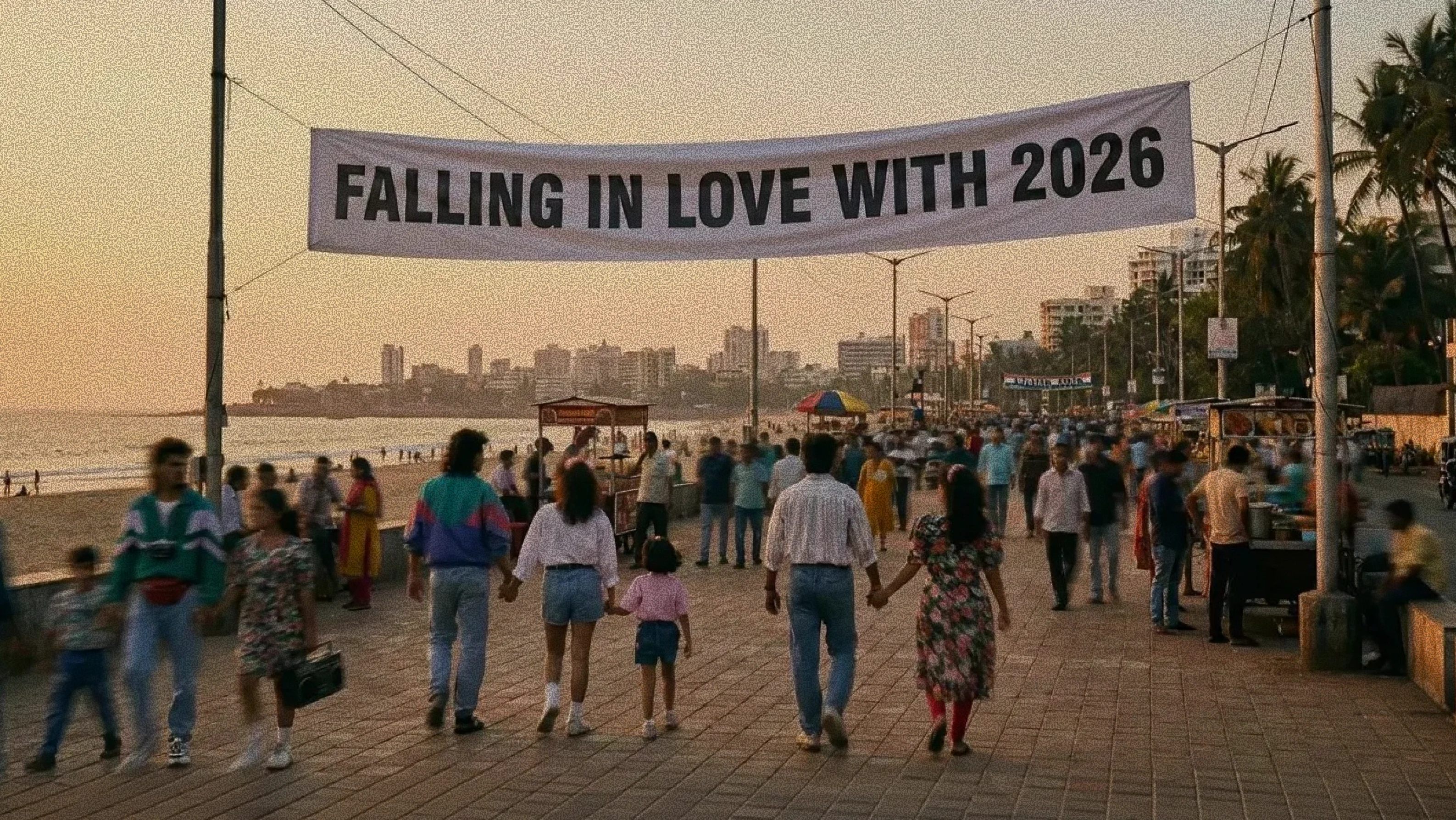
Happiness always lies in the future, or how else could we explain our perpetual longing for it? But, in reality, we lost it somewhere on the way.
When I was 5, my father declared that he would retire when he had 10 lacs in the bank account. Now he thinks he will be happy once I get married. Growing up in a modest household, happiness was an aspirational goal for me. Get to the US. Then get into a top undergradprogram. Then the MBA. Then the H1B. Then build the startup. Then the funding. Then the exit.
I executed the plan flawlessly - US undergrad, top MBA. H1B secured, startup launched. funding raised and exit achieved. But now, perhaps, a #1 bestselling book.
For thirty years, I treated my life like a waiting room. The real celebration, the real peace, the real permission to feel proud was always scheduled for later. After the next milestone. Above all, I never permitted myself to be happy because high achievers are always hustling. No?
However, I've planned something radically different now.
I will fall deeply in love with every moment of 2026.
Not conquer it. Not crush it. Not ‘beast mode’ my way through. Instead, I'll embrace 2026 - with the work, the process, and the daily art of building something that matters. Because here's the counterintuitive truth that neuroscience, ancient philosophy, and my own painful experience have taught me: falling in love with the journey isn't just emotionally healthier, it's the only reliable path to actually achieving the destination.
The Chinese call it wu wei - effortless effort. The Bhagavad Gita calls it karma yoga - action without attachment to results. Modern psychologists call it flow.
But before I explain why this works, let's talk about why we're designed to chase the mirage in the first place.
When happiness is in the future
We are culturally conditioned to live in the "If/Then" loop. If I get the funding, then I will be calm. If I get that promotion, then I will be happy. We treat happiness not as a state of being, but as a destination we earn through suffering. Psychologists call this cognitive glitch the Arrival Fallacy. It is the collective delusion that success is a permanent destination.
The problem is that your brain is not wired for arrival; it is wired for pursuit.
The Dopamine Trap (The ‘Wanting’ Glitch): We culturally misunderstand dopamine. We think it is the molecule of pleasure. Dr Robert Sapolsky and other neuroscientists have shown that dopamine is actually the molecule of anticipation. It is the fuel of ‘wanting, ’ not ‘liking’ . Dopamine spikes during the pursuit of the goal, but the moment the goal is achieved, dopamine crashes. The brain has no chemical reward for having, only for getting.
The 47% Void: Now to sustain the chase, we commit a profound error: we exit the present. We become mental time travellers. A landmark Harvard study by Killingsworth and Gilbert revealed that the average person spends 47% of their waking hours mind-wandering - mentally elsewhere. The kicker? The study found a direct correlation: "A wandering mind is an unhappy mind" . When we live in the future, we treat the present as a waiting room. We become ghosts inour own lives, missing our children’s childhoods and our own health while obsessing over a future that, by definition, is a fantasy.
The Stress Tax: This chronic future-orientation isn't just unhappy; it is physically destructive. Living in a state of anticipation keeps the body in a simmering state of fight-or-flight. This ‘allostatic load’ accelerates biological ageing by up to 36% and significantly increases the risk of cardiovascular disease. We are literally killing ourselves to get to a finish line that doesn't exist.
BUT.. We were told: ‘No pain, no gain!’
Argument 1: "I need anxiety to perform. If I'm happy, I'll stop grinding."
The Rebuttal: The opposite is true. Anxiety is a tax on your cognitive bandwidth. This is the Performance Paradox. When you are fixated on the result (the future), you introduce fear into the system. In high-pressure environments, this floods the prefrontal cortex with cortisol, impairing decision-making, creativity, and emotional regulation.
Longitudinal studies show that workaholism predicts worse job performance over time, not better. Conversely, Work Engagement - which is characterised by absorption in the process - predicts higher performance and better mental health. The most elite performers don’t win because they are terrified of losing; they win because they are deeply immersed in flow-state while doing so.
Argument 2: “Sacrifice is necessary. I have to be miserable now to be happy later.”
The Rebuttal: You are not banking happiness; you are incurring debt you cannot repay. We tell ourselves we are making a temporary trade. But the Planning Fallacy ensures that the ‘temporary’ sacrifice becomes a permanent lifestyle.
The most damning evidence comes from the deathbed. Palliative nurse Bronnie Ware recorded that the number one regret of high-achieving men was not “I wish I had built a bigger company.” It was: “I wish I hadn’t worked so hard. ” They realised too late that they had sacrificed the only asset that matters - time - for a future that, when it arrived, felt empty.
Argument 3: “But look at the winners. They are all obsessed with the destination.”
The Rebuttal: We only see the survivors, not the casualties. And even the survivors often feel like failures on the inside. We confuse obsessive goal-setting with outcome attachment. You can have high goals without anchoring your identity to them. Research on Identity Fusion shows that when you fuse your soul with your startup or job title, setbacks feel like death. This is whypost-exit founders spiral into depression.
As Silicon Valley ‘sage’ Naval Ravikant puts it: “Desire is a contract you make with yourself to be unhappy until you get what you want”. Why sign a contract that guarantees misery for 99% of the journey?
Caring about outcomes ≠ being dependent on outcomes for your identity.
What Falling in Love Actually Looks Like
The Science of Effortless Effort
Ancient Taoist philosophy calls it wu wei - action without forcing. It doesn't mean laziness. It means working without the ego-generated resistance of "I must succeed to be worthy."
Here's the mechanism:
- When you work from "I need this to be worthy," you activate the brain's threat circuitry (Cortisol, Narrowed thinking).
- When you work from "I love this problem, " you activate the brain's reward circuitry (Dopamine, expanded thinking).
Effortless effort doesn't mean no effort. It means effort without the psychological resistance of making your worth conditional on the outcome.
Questions you need to ask yourself
But what does truly loving the journey mean for me in 2026?
Each achievement has, till now, brought a brief high, then the familiar emptiness. So I'd set the next target.
This year, I'm asking different questions:
- Does writing bring me joy? Yes. The craft of taking a complex idea and making it clear, human, vulnerable - I could do that for hours and lose track of time.
- Does inspiring people bring me joy? Yes. When an entrepreneur tells me an article shifted how they think OR if they learned something from my journey that made a positive shift in their life, that feeling is why I do this. Not the applause. The impact.
- Finally, the hardest question: Would I still write if no one applauded? I'd write less for public consumption, but I'd still write, because I love thinking clearly about hard problems, and it requires writing.
So here's my process commitment for 2026:
- Four hours of deep writing daily. Like Darwin's four focused hours on problems that fascinated him. Not performing on Twitter. Not optimising headlines for clicks. Just the craft - researching, thinking, connecting patterns, making ideas clear.
- One weekly conversation with a founder or leader where I'm genuinely curious about their struggles, not positioning myself as an expert.
- Weekly newsletters, because they're vulnerable, counterintuitive, or challenge limiting beliefs I see (and have lived).
Will this make me a bestselling author?
Honestly? I don't know - and that's the adventure.
The bestselling author will take care of itself if I take care of the writing.
I'm not abandoning the ambition. I still want the book to succeed. But I'm decoupling my worth from whether that happens, because if I spend 2026 doing four hours of deep, honest, useful writing daily - if I fall in love with the craft itself - one of two things happens:
Either the bestseller arrives (because quality compounds and people recognise good work), or it doesn't, but I become a better writer in the process. Both outcomes are wins. The key takeaway: You don't have to sacrifice present happiness for future success. When you focus on the process, you gain fulfillment now and set yourself up for achievement.
The Paradox That Changes Everything
Let me end where I should have begun - with the only proof that matters: When you love the process, you create lasting happiness and sustainable results. That's the paradox worth embracing.
Dhoni wasn't just 'calm' by accident. He was - consciously or unconsciously - hacking his own dopamine. By refusing to look at the scoreboard (The Future/Reward), he shut down the anxiety loop. By focusing entirely on the bowler's hand (The Present/Process), he forced his brain into 'Flow State. ' His philosophy, repeated so often it became mantra: "The process is more important than the result. If you take care of the process, the result takes care of itself. "
But here's what most people miss: he didn't win despite falling in love with the process. He won because of it.
Here's the counterintuitive truth that took me thirty years to learn:
Falling in love with the process is the only reliable path to achieving great outcomes, because when you decouple your worth from the outcome, you:
- Think more clearly - no threat response, narrowing your cognition.
- Take better risks - your identity isn't on the line, so you can be bolder.
- Sustain effort longer - intrinsic motivation doesn't deplete as external validation does.
- Actually enjoy the journey - so even if the outcome shifts, you haven't wasted your life.
- Perform better under pressure - you stay loose, creative, and adaptive instead of tight and defensive.
Dhoni remains Captain Cool even if his team loses, because his worth isn't contingent on the trophy. The process makes him who he is. The outcome just makes headlines.
So here's my invitation to you:
Fall in love with 2026
Not the outcomes you hope to achieve in it. The work itself. The craft. The process. The daily practice of doing something that matters.
The bestselling book will take care of itself if you take care of the writing.
The promotion will take care of itself if you take care of the craft.
The successful company will take care of itself if you take care of the customer.
The goals will take care of themselves if you take care of the process.
Happiness always lies in the future, or how else could we explain our perpetual longing for it? But, in reality, we lost it somewhere on the way.
When I was 5, my father declared that he would retire when he had 10 lacs in the bank account. Now he thinks he will be happy once I get married. Growing up in a modest household, happiness was an aspirational goal for me. Get to the US. Then get into a top undergradprogram. Then the MBA. Then the H1B. Then build the startup. Then the funding. Then the exit.
I executed the plan flawlessly - US undergrad, top MBA. H1B secured, startup launched. funding raised and exit achieved. But now, perhaps, a #1 bestselling book.
For thirty years, I treated my life like a waiting room. The real celebration, the real peace, the real permission to feel proud was always scheduled for later. After the next milestone. Above all, I never permitted myself to be happy because high achievers are always hustling. No?
However, I've planned something radically different now.
I will fall deeply in love with every moment of 2026.
Not conquer it. Not crush it. Not ‘beast mode’ my way through. Instead, I'll embrace 2026 - with the work, the process, and the daily art of building something that matters. Because here's the counterintuitive truth that neuroscience, ancient philosophy, and my own painful experience have taught me: falling in love with the journey isn't just emotionally healthier, it's the only reliable path to actually achieving the destination.
The Chinese call it wu wei - effortless effort. The Bhagavad Gita calls it karma yoga - action without attachment to results. Modern psychologists call it flow.
But before I explain why this works, let's talk about why we're designed to chase the mirage in the first place.
When happiness is in the future
We are culturally conditioned to live in the "If/Then" loop. If I get the funding, then I will be calm. If I get that promotion, then I will be happy. We treat happiness not as a state of being, but as a destination we earn through suffering. Psychologists call this cognitive glitch the Arrival Fallacy. It is the collective delusion that success is a permanent destination.
The problem is that your brain is not wired for arrival; it is wired for pursuit.
The Dopamine Trap (The ‘Wanting’ Glitch): We culturally misunderstand dopamine. We think it is the molecule of pleasure. Dr Robert Sapolsky and other neuroscientists have shown that dopamine is actually the molecule of anticipation. It is the fuel of ‘wanting, ’ not ‘liking’ . Dopamine spikes during the pursuit of the goal, but the moment the goal is achieved, dopamine crashes. The brain has no chemical reward for having, only for getting.
The 47% Void: Now to sustain the chase, we commit a profound error: we exit the present. We become mental time travellers. A landmark Harvard study by Killingsworth and Gilbert revealed that the average person spends 47% of their waking hours mind-wandering - mentally elsewhere. The kicker? The study found a direct correlation: "A wandering mind is an unhappy mind" . When we live in the future, we treat the present as a waiting room. We become ghosts inour own lives, missing our children’s childhoods and our own health while obsessing over a future that, by definition, is a fantasy.
The Stress Tax: This chronic future-orientation isn't just unhappy; it is physically destructive. Living in a state of anticipation keeps the body in a simmering state of fight-or-flight. This ‘allostatic load’ accelerates biological ageing by up to 36% and significantly increases the risk of cardiovascular disease. We are literally killing ourselves to get to a finish line that doesn't exist.
BUT.. We were told: ‘No pain, no gain!’
Argument 1: "I need anxiety to perform. If I'm happy, I'll stop grinding."
The Rebuttal: The opposite is true. Anxiety is a tax on your cognitive bandwidth. This is the Performance Paradox. When you are fixated on the result (the future), you introduce fear into the system. In high-pressure environments, this floods the prefrontal cortex with cortisol, impairing decision-making, creativity, and emotional regulation.
Longitudinal studies show that workaholism predicts worse job performance over time, not better. Conversely, Work Engagement - which is characterised by absorption in the process - predicts higher performance and better mental health. The most elite performers don’t win because they are terrified of losing; they win because they are deeply immersed in flow-state while doing so.
Argument 2: “Sacrifice is necessary. I have to be miserable now to be happy later.”
The Rebuttal: You are not banking happiness; you are incurring debt you cannot repay. We tell ourselves we are making a temporary trade. But the Planning Fallacy ensures that the ‘temporary’ sacrifice becomes a permanent lifestyle.
The most damning evidence comes from the deathbed. Palliative nurse Bronnie Ware recorded that the number one regret of high-achieving men was not “I wish I had built a bigger company.” It was: “I wish I hadn’t worked so hard. ” They realised too late that they had sacrificed the only asset that matters - time - for a future that, when it arrived, felt empty.
Argument 3: “But look at the winners. They are all obsessed with the destination.”
The Rebuttal: We only see the survivors, not the casualties. And even the survivors often feel like failures on the inside. We confuse obsessive goal-setting with outcome attachment. You can have high goals without anchoring your identity to them. Research on Identity Fusion shows that when you fuse your soul with your startup or job title, setbacks feel like death. This is whypost-exit founders spiral into depression.
As Silicon Valley ‘sage’ Naval Ravikant puts it: “Desire is a contract you make with yourself to be unhappy until you get what you want”. Why sign a contract that guarantees misery for 99% of the journey?
Caring about outcomes ≠ being dependent on outcomes for your identity.
What Falling in Love Actually Looks Like
The Science of Effortless Effort
Ancient Taoist philosophy calls it wu wei - action without forcing. It doesn't mean laziness. It means working without the ego-generated resistance of "I must succeed to be worthy."
Here's the mechanism:
- When you work from "I need this to be worthy," you activate the brain's threat circuitry (Cortisol, Narrowed thinking).
- When you work from "I love this problem, " you activate the brain's reward circuitry (Dopamine, expanded thinking).
Effortless effort doesn't mean no effort. It means effort without the psychological resistance of making your worth conditional on the outcome.
Questions you need to ask yourself
But what does truly loving the journey mean for me in 2026?
Each achievement has, till now, brought a brief high, then the familiar emptiness. So I'd set the next target.
This year, I'm asking different questions:
- Does writing bring me joy? Yes. The craft of taking a complex idea and making it clear, human, vulnerable - I could do that for hours and lose track of time.
- Does inspiring people bring me joy? Yes. When an entrepreneur tells me an article shifted how they think OR if they learned something from my journey that made a positive shift in their life, that feeling is why I do this. Not the applause. The impact.
- Finally, the hardest question: Would I still write if no one applauded? I'd write less for public consumption, but I'd still write, because I love thinking clearly about hard problems, and it requires writing.
So here's my process commitment for 2026:
- Four hours of deep writing daily. Like Darwin's four focused hours on problems that fascinated him. Not performing on Twitter. Not optimising headlines for clicks. Just the craft - researching, thinking, connecting patterns, making ideas clear.
- One weekly conversation with a founder or leader where I'm genuinely curious about their struggles, not positioning myself as an expert.
- Weekly newsletters, because they're vulnerable, counterintuitive, or challenge limiting beliefs I see (and have lived).
Will this make me a bestselling author?
Honestly? I don't know - and that's the adventure.
The bestselling author will take care of itself if I take care of the writing.
I'm not abandoning the ambition. I still want the book to succeed. But I'm decoupling my worth from whether that happens, because if I spend 2026 doing four hours of deep, honest, useful writing daily - if I fall in love with the craft itself - one of two things happens:
Either the bestseller arrives (because quality compounds and people recognise good work), or it doesn't, but I become a better writer in the process. Both outcomes are wins. The key takeaway: You don't have to sacrifice present happiness for future success. When you focus on the process, you gain fulfillment now and set yourself up for achievement.
The Paradox That Changes Everything
Let me end where I should have begun - with the only proof that matters: When you love the process, you create lasting happiness and sustainable results. That's the paradox worth embracing.
Dhoni wasn't just 'calm' by accident. He was - consciously or unconsciously - hacking his own dopamine. By refusing to look at the scoreboard (The Future/Reward), he shut down the anxiety loop. By focusing entirely on the bowler's hand (The Present/Process), he forced his brain into 'Flow State. ' His philosophy, repeated so often it became mantra: "The process is more important than the result. If you take care of the process, the result takes care of itself. "
But here's what most people miss: he didn't win despite falling in love with the process. He won because of it.
Here's the counterintuitive truth that took me thirty years to learn:
Falling in love with the process is the only reliable path to achieving great outcomes, because when you decouple your worth from the outcome, you:
- Think more clearly - no threat response, narrowing your cognition.
- Take better risks - your identity isn't on the line, so you can be bolder.
- Sustain effort longer - intrinsic motivation doesn't deplete as external validation does.
- Actually enjoy the journey - so even if the outcome shifts, you haven't wasted your life.
- Perform better under pressure - you stay loose, creative, and adaptive instead of tight and defensive.
Dhoni remains Captain Cool even if his team loses, because his worth isn't contingent on the trophy. The process makes him who he is. The outcome just makes headlines.
So here's my invitation to you:
Fall in love with 2026
Not the outcomes you hope to achieve in it. The work itself. The craft. The process. The daily practice of doing something that matters.
The bestselling book will take care of itself if you take care of the writing.
The promotion will take care of itself if you take care of the craft.
The successful company will take care of itself if you take care of the customer.
The goals will take care of themselves if you take care of the process.
Fall in Love with 2026 sooner than later
Happiness always lies in the future, or how else could we explain our perpetual longing for it? But, in reality, we lost it somewhere on the way.
When I was 5, my father declared that he would retire when he had 10 lacs in the bank account. Now he thinks he will be happy once I get married. Growing up in a modest household, happiness was an aspirational goal for me. Get to the US. Then get into a top undergradprogram. Then the MBA. Then the H1B. Then build the startup. Then the funding. Then the exit.
I executed the plan flawlessly - US undergrad, top MBA. H1B secured, startup launched. funding raised and exit achieved. But now, perhaps, a #1 bestselling book.
For thirty years, I treated my life like a waiting room. The real celebration, the real peace, the real permission to feel proud was always scheduled for later. After the next milestone. Above all, I never permitted myself to be happy because high achievers are always hustling. No?
However, I've planned something radically different now.
I will fall deeply in love with every moment of 2026.
Not conquer it. Not crush it. Not ‘beast mode’ my way through. Instead, I'll embrace 2026 - with the work, the process, and the daily art of building something that matters. Because here's the counterintuitive truth that neuroscience, ancient philosophy, and my own painful experience have taught me: falling in love with the journey isn't just emotionally healthier, it's the only reliable path to actually achieving the destination.
The Chinese call it wu wei - effortless effort. The Bhagavad Gita calls it karma yoga - action without attachment to results. Modern psychologists call it flow.
But before I explain why this works, let's talk about why we're designed to chase the mirage in the first place.
When happiness is in the future
We are culturally conditioned to live in the "If/Then" loop. If I get the funding, then I will be calm. If I get that promotion, then I will be happy. We treat happiness not as a state of being, but as a destination we earn through suffering. Psychologists call this cognitive glitch the Arrival Fallacy. It is the collective delusion that success is a permanent destination.
The problem is that your brain is not wired for arrival; it is wired for pursuit.
The Dopamine Trap (The ‘Wanting’ Glitch): We culturally misunderstand dopamine. We think it is the molecule of pleasure. Dr Robert Sapolsky and other neuroscientists have shown that dopamine is actually the molecule of anticipation. It is the fuel of ‘wanting, ’ not ‘liking’ . Dopamine spikes during the pursuit of the goal, but the moment the goal is achieved, dopamine crashes. The brain has no chemical reward for having, only for getting.
The 47% Void: Now to sustain the chase, we commit a profound error: we exit the present. We become mental time travellers. A landmark Harvard study by Killingsworth and Gilbert revealed that the average person spends 47% of their waking hours mind-wandering - mentally elsewhere. The kicker? The study found a direct correlation: "A wandering mind is an unhappy mind" . When we live in the future, we treat the present as a waiting room. We become ghosts inour own lives, missing our children’s childhoods and our own health while obsessing over a future that, by definition, is a fantasy.
The Stress Tax: This chronic future-orientation isn't just unhappy; it is physically destructive. Living in a state of anticipation keeps the body in a simmering state of fight-or-flight. This ‘allostatic load’ accelerates biological ageing by up to 36% and significantly increases the risk of cardiovascular disease. We are literally killing ourselves to get to a finish line that doesn't exist.
BUT.. We were told: ‘No pain, no gain!’
Argument 1: "I need anxiety to perform. If I'm happy, I'll stop grinding."
The Rebuttal: The opposite is true. Anxiety is a tax on your cognitive bandwidth. This is the Performance Paradox. When you are fixated on the result (the future), you introduce fear into the system. In high-pressure environments, this floods the prefrontal cortex with cortisol, impairing decision-making, creativity, and emotional regulation.
Longitudinal studies show that workaholism predicts worse job performance over time, not better. Conversely, Work Engagement - which is characterised by absorption in the process - predicts higher performance and better mental health. The most elite performers don’t win because they are terrified of losing; they win because they are deeply immersed in flow-state while doing so.
Argument 2: “Sacrifice is necessary. I have to be miserable now to be happy later.”
The Rebuttal: You are not banking happiness; you are incurring debt you cannot repay. We tell ourselves we are making a temporary trade. But the Planning Fallacy ensures that the ‘temporary’ sacrifice becomes a permanent lifestyle.
The most damning evidence comes from the deathbed. Palliative nurse Bronnie Ware recorded that the number one regret of high-achieving men was not “I wish I had built a bigger company.” It was: “I wish I hadn’t worked so hard. ” They realised too late that they had sacrificed the only asset that matters - time - for a future that, when it arrived, felt empty.
Argument 3: “But look at the winners. They are all obsessed with the destination.”
The Rebuttal: We only see the survivors, not the casualties. And even the survivors often feel like failures on the inside. We confuse obsessive goal-setting with outcome attachment. You can have high goals without anchoring your identity to them. Research on Identity Fusion shows that when you fuse your soul with your startup or job title, setbacks feel like death. This is whypost-exit founders spiral into depression.
As Silicon Valley ‘sage’ Naval Ravikant puts it: “Desire is a contract you make with yourself to be unhappy until you get what you want”. Why sign a contract that guarantees misery for 99% of the journey?
Caring about outcomes ≠ being dependent on outcomes for your identity.
What Falling in Love Actually Looks Like
The Science of Effortless Effort
Ancient Taoist philosophy calls it wu wei - action without forcing. It doesn't mean laziness. It means working without the ego-generated resistance of "I must succeed to be worthy."
Here's the mechanism:
- When you work from "I need this to be worthy," you activate the brain's threat circuitry (Cortisol, Narrowed thinking).
- When you work from "I love this problem, " you activate the brain's reward circuitry (Dopamine, expanded thinking).
Effortless effort doesn't mean no effort. It means effort without the psychological resistance of making your worth conditional on the outcome.
Questions you need to ask yourself
But what does truly loving the journey mean for me in 2026?
Each achievement has, till now, brought a brief high, then the familiar emptiness. So I'd set the next target.
This year, I'm asking different questions:
- Does writing bring me joy? Yes. The craft of taking a complex idea and making it clear, human, vulnerable - I could do that for hours and lose track of time.
- Does inspiring people bring me joy? Yes. When an entrepreneur tells me an article shifted how they think OR if they learned something from my journey that made a positive shift in their life, that feeling is why I do this. Not the applause. The impact.
- Finally, the hardest question: Would I still write if no one applauded? I'd write less for public consumption, but I'd still write, because I love thinking clearly about hard problems, and it requires writing.
So here's my process commitment for 2026:
- Four hours of deep writing daily. Like Darwin's four focused hours on problems that fascinated him. Not performing on Twitter. Not optimising headlines for clicks. Just the craft - researching, thinking, connecting patterns, making ideas clear.
- One weekly conversation with a founder or leader where I'm genuinely curious about their struggles, not positioning myself as an expert.
- Weekly newsletters, because they're vulnerable, counterintuitive, or challenge limiting beliefs I see (and have lived).
Will this make me a bestselling author?
Honestly? I don't know - and that's the adventure.
The bestselling author will take care of itself if I take care of the writing.
I'm not abandoning the ambition. I still want the book to succeed. But I'm decoupling my worth from whether that happens, because if I spend 2026 doing four hours of deep, honest, useful writing daily - if I fall in love with the craft itself - one of two things happens:
Either the bestseller arrives (because quality compounds and people recognise good work), or it doesn't, but I become a better writer in the process. Both outcomes are wins. The key takeaway: You don't have to sacrifice present happiness for future success. When you focus on the process, you gain fulfillment now and set yourself up for achievement.
The Paradox That Changes Everything
Let me end where I should have begun - with the only proof that matters: When you love the process, you create lasting happiness and sustainable results. That's the paradox worth embracing.
Dhoni wasn't just 'calm' by accident. He was - consciously or unconsciously - hacking his own dopamine. By refusing to look at the scoreboard (The Future/Reward), he shut down the anxiety loop. By focusing entirely on the bowler's hand (The Present/Process), he forced his brain into 'Flow State. ' His philosophy, repeated so often it became mantra: "The process is more important than the result. If you take care of the process, the result takes care of itself. "
But here's what most people miss: he didn't win despite falling in love with the process. He won because of it.
Here's the counterintuitive truth that took me thirty years to learn:
Falling in love with the process is the only reliable path to achieving great outcomes, because when you decouple your worth from the outcome, you:
- Think more clearly - no threat response, narrowing your cognition.
- Take better risks - your identity isn't on the line, so you can be bolder.
- Sustain effort longer - intrinsic motivation doesn't deplete as external validation does.
- Actually enjoy the journey - so even if the outcome shifts, you haven't wasted your life.
- Perform better under pressure - you stay loose, creative, and adaptive instead of tight and defensive.
Dhoni remains Captain Cool even if his team loses, because his worth isn't contingent on the trophy. The process makes him who he is. The outcome just makes headlines.
So here's my invitation to you:
Fall in love with 2026
Not the outcomes you hope to achieve in it. The work itself. The craft. The process. The daily practice of doing something that matters.
The bestselling book will take care of itself if you take care of the writing.
The promotion will take care of itself if you take care of the craft.
The successful company will take care of itself if you take care of the customer.
The goals will take care of themselves if you take care of the process.

Resonating with this philosophy?
Join the smartest founders mastering the inner game to face the unknown. Read by YC & Sequoia.

To be continued…
A small favor...
I don't run ads. If this brought clarity, the biggest favor you can do is subscribe below.

.webp)

.svg)

.svg)