
Busy but Broke? Your Fake Work Is Keeping You Poor.

Your simple to-do list is not a guide to effectiveness, but a structural flaw that enables fake work
Have you been working 80 hours a week and still going broke? If putting in 90 hours did not work either, try breaking your cycle of busyness. I can say this with confidence because that was me as a founder before something changed (not intentionally), and completely redefined success for me.
There have been two versions of me as a founder.
Version 1 lived on airport floors, used expensive notebooks everywhere, panicked on every decision, and checked every email. Insufferable. Undateable.
Version 2 doesn't take calls before noon, has time for everything, and moves more in 90 minutes than Version 1 moved in 80-hour weeks
What differentiates the two versions is the length of their ‘to-do’ list.
We all create our 'to-do' lists to identify pressing tasks and manage time, as well as reduce work-related stress by decluttering our minds and giving a clear sense of control. However, most of the time, these lists grow overly long and lead to procrastination as people try to address too many tasks at once without realistic boundaries or prioritisation. The modern startup founders are no different. They work relentlessly, yet paradoxically often accomplish little that truly moves the business forward. Research calls this ‘fake work’: the intense motion that replaces meaningful action. The consequence is catastrophic: 42% of startups fail because they buildsomething nobody wants. This failure mode is directly tied not to insufficient hours but to avoiding the emotionally difficult work of engaging with customers, even as unnecessary tasks on the to-do list get ticked off. Lack of discipline is not the reason for this failure. In mycase, I realised the problem was busyness.
This article argues that the most trusted tool in the founder’s arsenal - the simple to-do list - is not a guide to effectiveness but a profound structural flaw that actively enables fake work and degrades strategic effectiveness. The to-do list is an emotional pacifier.
Your simple to-do list is not a guide to effectiveness, but a structural flaw that enables fake work
Have you been working 80 hours a week and still going broke? If putting in 90 hours did not work either, try breaking your cycle of busyness. I can say this with confidence because that was me as a founder before something changed (not intentionally), and completely redefined success for me.
There have been two versions of me as a founder.
Version 1 lived on airport floors, used expensive notebooks everywhere, panicked on every decision, and checked every email. Insufferable. Undateable.
Version 2 doesn't take calls before noon, has time for everything, and moves more in 90 minutes than Version 1 moved in 80-hour weeks
What differentiates the two versions is the length of their ‘to-do’ list.
We all create our 'to-do' lists to identify pressing tasks and manage time, as well as reduce work-related stress by decluttering our minds and giving a clear sense of control. However, most of the time, these lists grow overly long and lead to procrastination as people try to address too many tasks at once without realistic boundaries or prioritisation. The modern startup founders are no different. They work relentlessly, yet paradoxically often accomplish little that truly moves the business forward. Research calls this ‘fake work’: the intense motion that replaces meaningful action. The consequence is catastrophic: 42% of startups fail because they buildsomething nobody wants. This failure mode is directly tied not to insufficient hours but to avoiding the emotionally difficult work of engaging with customers, even as unnecessary tasks on the to-do list get ticked off. Lack of discipline is not the reason for this failure. In mycase, I realised the problem was busyness.
This article argues that the most trusted tool in the founder’s arsenal - the simple to-do list - is not a guide to effectiveness but a profound structural flaw that actively enables fake work and degrades strategic effectiveness. The to-do list is an emotional pacifier.
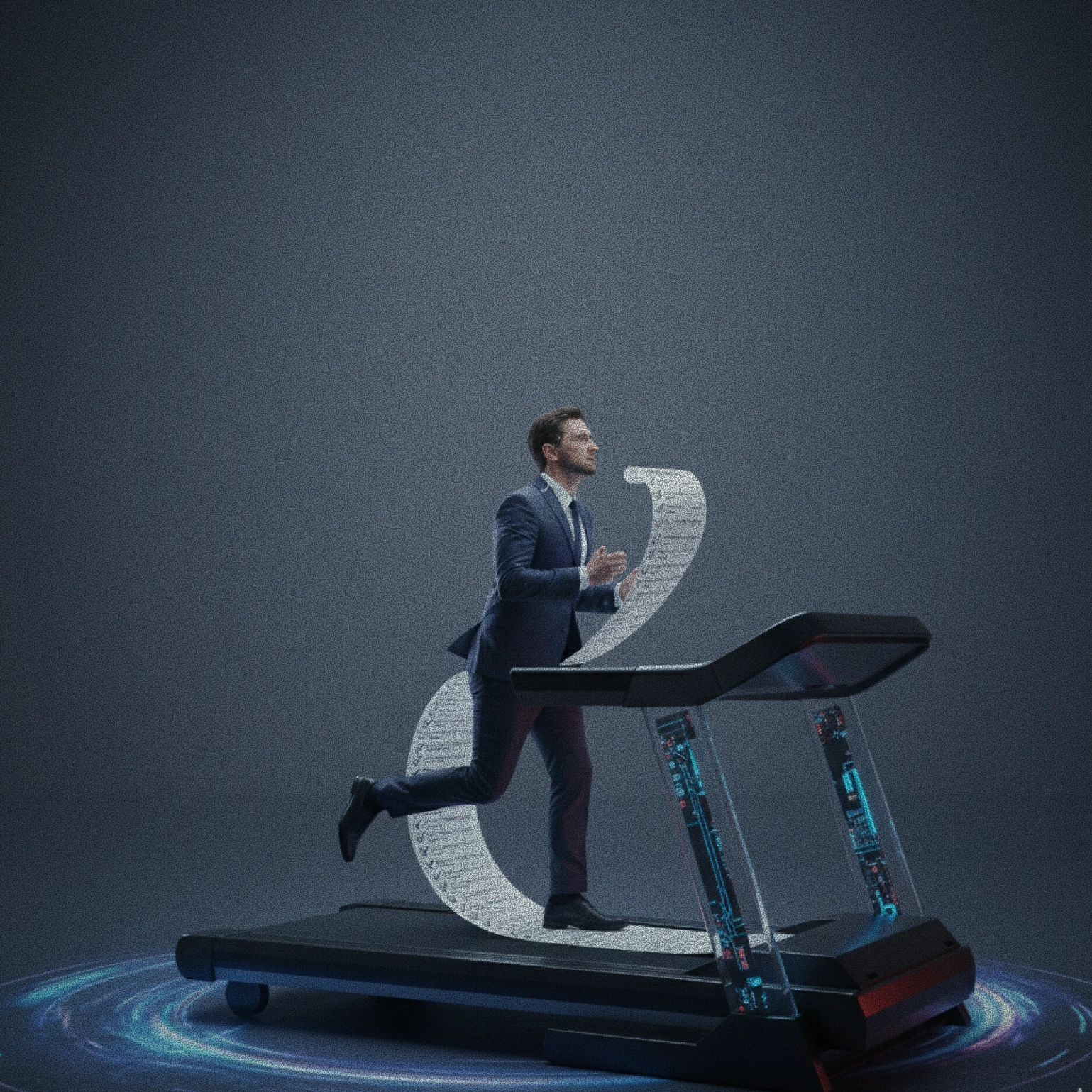
The physics of self-deception Explaining the above problem in scientific terms, we can say that most of the time we exert enormous force (try too hard), yet generate zero displacement (do not get the desired result), because in physics, Work = Force × Displacement. If the wall doesn’t move, you’ve done zerowork, regardless of how much effort was put in or how tired you feel. We call this the Treadmill Trap, where we run and sweat, but do not move an inch closer to solving the actual problem.
I learned this the hard way. I once lived the life of a martyr. I carried expensive notebooks, took 6 AM flights, and meticulously ticked off dozens of items, telling myself this was the grind of a great founder. I was "on every standup, in every product decision, copied on every email". But my body eventually broke. After years of 80-hour weeks, a period of health crisis forced me to slow down. On the third day of a forced rest, I sat down to rewrite my to-do list. My brain produced only three items: Fix core infrastructure, reduce revenue dependency, and have real conversations with fearful customers
The realisation was terrifying: these three mission-critical items had been priorities for weeks, yet my sprawling, unchecked to-do list had allowed me to delay acting on them, but kept me proud of how busy I was. What I had been doing was self-soothing.
The to-do list, in reality, ensures that the critical, uncertain, and necessary work languishes, contributing to the statistic that 41% of listed items are never completed. What gets left out are essential tasks, because in our effort to tick off as many items as possible on the to-do list, we end up focusing on the low-hanging fruit.
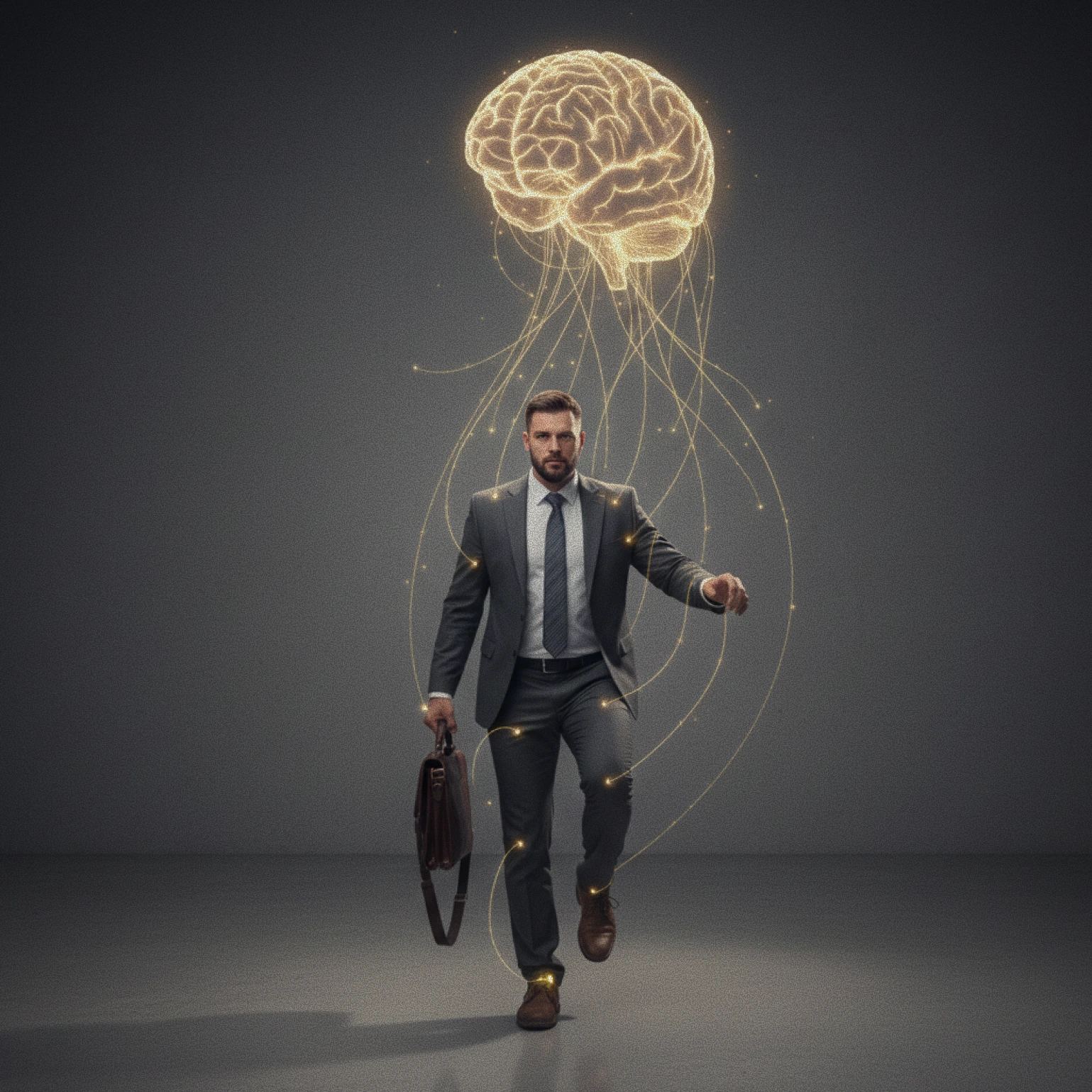
Why do smart people choose wrong Fake work is not a character flaw; it is an evolutionary and neurological trap. We are running outdated software.
1. Fake work as a survival mechanism
The phenomenon is rooted in displacement activity, coined by Dutch researchers in the 1940s. When animals face conflicting motivations, such as the urge to fight or flee, they often engage in seemingly irrelevant yet comforting actions. For example, a skylark suddenly pecking at the ground during combat, or primates engaging in self-grooming under stress. Founders often mirror this: high-stakes tasks, such as asking a rejected investor for feedback, threaten the ego and trigger a deep fear of inadequacy. The Amygdala (the fear centre)screams ‘danger’ . To protect us, the nervous system steers us toward low-stakes, repetitive tasks (Inbox triage, re-organising Notion, tweaking slide hex codes) that feel like preparing but avoid the emotional pain.Psychologists confirm this mechanism: procrastination is an emotion regulation failure, not a time management flaw. People avoid the negative emotions (anxiety and fear of failure) associated with the task, using busywork as a ‘quick and dirty’ mood regulation strategy. When you skip the terrifying sales call and answer twenty emails, your anxiety drops, and the brain rewards you with a tiny shot of relief, reinforcing the avoidance habit.
2. The neurological sabotage: Dopamine and urgency
Two biases chemically reinforce this avoidance mechanism:
The dopamine hijack: Your brain actively rewards the wrong things. Checking email mimics slot-machine dopamine patterns due to variable reward schedules. You keep checking for the maybe - the potential jackpot (a deal, a compliment). This completion bias makes it seem happier to clear an inbox than to engage in ambiguous, high-value customer discovery.
The mere urgency effect: We are irrationally drawn to urgency, regardless of objective value. Psychological experiments show participants chose tasks with tight deadlines over objectively more valuable work; 31.3% chose a low-payoff task (3 Hershey's Kisses) when it had a short deadline. A Slack notification or artificial EOD deadline will consistently hijack attention from long-term strategic work, simply because the limited time frame elicits attention.

The reframe Most founders define a good day as: "I worked a lot of hours."
"I cleared a lot of tasks."
These metrics keep you broke.
Here's what a good day actually looks like: I moved one thing that matters. Not ten. One. Something that, repeated for 90 days, changes revenue or customer truth.
I did one thing I've been avoiding. Not because I felt brave. Because I refused to let fear run the roadmap.
I protected one block of real work - sixty to ninety minutes where only the hardest problem exists.
Three questions: Did I move the wall?
Did I face the lion?
Did I protect time for real work?
If so, good day, even if your inbox overflows.
If no, it doesn't matter how tired you are; you were running in place.

What actually works You can't willpower your way out of this. You need a different system. Step 1: Timeboxing over lists Stop maintaining task lists. Start scheduling outcomes directly on your calendar.
Every Sunday: "If I could only work on three outcomes this week, and an investor evaluated me on those alone, what would they be?"
Not what's urgent, but what moves the wall. Schedule those three on your calendar as 90-minute blocks, before anything else. Non-negotiable.
9:00-10:30 AM: Call ten customers at risk of churn. That block is sacred. Phone gone. Notifications off. No negotiation.
Timeboxing imposes artificial scarcity. It makes important-but-not-urgent work feel urgent. McKinsey research shows 45-90 minute timeboxed sessions can double productivity compared to reactive patterns.
Step 2: Implementation intentions For difficult goals, create specific if-then plans. This bypasses depleted willpower by passingcontrol to the environment.
"When I arrive at my desk at 9 AM, I work on customer outreach for 90 minutes before checking email."
"If I feel the urge to check Slack during deep work, I note the question and return to priority work."
Research indicates that this approach can triple completion rates for difficult goals. It works because it automates the choice - you're not deciding at the moment whether to do the hard thing. You already decided.
Step 3: Prime your nervous system Before your deep-work block, practice two minutes of slow breathing. Ask yourself one question:"What am I actually afraid will happen if this goes badly?"
This is not to eliminate fear, but to expand your capacity to feel fear and still do the work.
This isn't soft. Chronic stress causes actual atrophy of your prefrontal cortex while enlarging your amygdala. You're being biologically rewired to prioritise urgent over important.
Rest isn't the reward for work. Rest is the prerequisite for facing scary work. The results: Before this system: 200+ tasks weekly, flat revenue.
After: Ten tasks. All three strategic outcomes hit.
Fixed infrastructure, reduced B2B dependency, and stopped churn. Everything else was optional.

The truth you already know. Here's what's going to happen.Here's what's going to happen.
You'll finish reading this article, relate to it, and be inspired. By tomorrow, you will start with a new resolve. Two more days and you'll be reorganising Notion again. Not because you're weak, but because fake work is comfortable. When you're scared, comfort feels like a matter of life or death. But while you're busy being busy, someone else is doing the three things that matter.Not smarter. Not more disciplined. Not working more hours. Just willing to face the lion while you're grooming feathers. The to-do list is an emotional armour, like a medieval knight polishing every rivet on his shield to feel prepared rather than facing the charging army. Armour is for defence. To advance, you must drop the shield.The market doesn't care about your to-do list. Doesn't care about 80-hour weeks or colour-coded boards
It only cares if you moved the wall.
So ask yourself right now:
What's the one thing you've been avoiding that, if you did it, would make everything else on your list irrelevant?
That's not a task.
That's your company.
Everything else is keeping you busy while you go broke.
The physics of self-deception Explaining the above problem in scientific terms, we can say that most of the time we exert enormous force (try too hard), yet generate zero displacement (do not get the desired result), because in physics, Work = Force × Displacement. If the wall doesn’t move, you’ve done zerowork, regardless of how much effort was put in or how tired you feel. We call this the Treadmill Trap, where we run and sweat, but do not move an inch closer to solving the actual problem.
I learned this the hard way. I once lived the life of a martyr. I carried expensive notebooks, took 6 AM flights, and meticulously ticked off dozens of items, telling myself this was the grind of a great founder. I was "on every standup, in every product decision, copied on every email". But my body eventually broke. After years of 80-hour weeks, a period of health crisis forced me to slow down. On the third day of a forced rest, I sat down to rewrite my to-do list. My brain produced only three items: Fix core infrastructure, reduce revenue dependency, and have real conversations with fearful customers
The realisation was terrifying: these three mission-critical items had been priorities for weeks, yet my sprawling, unchecked to-do list had allowed me to delay acting on them, but kept me proud of how busy I was. What I had been doing was self-soothing.
The to-do list, in reality, ensures that the critical, uncertain, and necessary work languishes, contributing to the statistic that 41% of listed items are never completed. What gets left out are essential tasks, because in our effort to tick off as many items as possible on the to-do list, we end up focusing on the low-hanging fruit.
Why do smart people choose wrong Fake work is not a character flaw; it is an evolutionary and neurological trap. We are running outdated software.
1. Fake work as a survival mechanism
The phenomenon is rooted in displacement activity, coined by Dutch researchers in the 1940s. When animals face conflicting motivations, such as the urge to fight or flee, they often engage in seemingly irrelevant yet comforting actions. For example, a skylark suddenly pecking at the ground during combat, or primates engaging in self-grooming under stress. Founders often mirror this: high-stakes tasks, such as asking a rejected investor for feedback, threaten the ego and trigger a deep fear of inadequacy. The Amygdala (the fear centre)screams ‘danger’ . To protect us, the nervous system steers us toward low-stakes, repetitive tasks (Inbox triage, re-organising Notion, tweaking slide hex codes) that feel like preparing but avoid the emotional pain.Psychologists confirm this mechanism: procrastination is an emotion regulation failure, not a time management flaw. People avoid the negative emotions (anxiety and fear of failure) associated with the task, using busywork as a ‘quick and dirty’ mood regulation strategy. When you skip the terrifying sales call and answer twenty emails, your anxiety drops, and the brain rewards you with a tiny shot of relief, reinforcing the avoidance habit.
2. The neurological sabotage: Dopamine and urgency
Two biases chemically reinforce this avoidance mechanism:
The dopamine hijack: Your brain actively rewards the wrong things. Checking email mimics slot-machine dopamine patterns due to variable reward schedules. You keep checking for the maybe - the potential jackpot (a deal, a compliment). This completion bias makes it seem happier to clear an inbox than to engage in ambiguous, high-value customer discovery.
The mere urgency effect: We are irrationally drawn to urgency, regardless of objective value. Psychological experiments show participants chose tasks with tight deadlines over objectively more valuable work; 31.3% chose a low-payoff task (3 Hershey's Kisses) when it had a short deadline. A Slack notification or artificial EOD deadline will consistently hijack attention from long-term strategic work, simply because the limited time frame elicits attention.
The reframe Most founders define a good day as: "I worked a lot of hours."
"I cleared a lot of tasks."
These metrics keep you broke.
Here's what a good day actually looks like: I moved one thing that matters. Not ten. One. Something that, repeated for 90 days, changes revenue or customer truth.
I did one thing I've been avoiding. Not because I felt brave. Because I refused to let fear run the roadmap.
I protected one block of real work - sixty to ninety minutes where only the hardest problem exists.
Three questions: Did I move the wall?
Did I face the lion?
Did I protect time for real work?
If so, good day, even if your inbox overflows.
If no, it doesn't matter how tired you are; you were running in place.
What actually works You can't willpower your way out of this. You need a different system. Step 1: Timeboxing over lists Stop maintaining task lists. Start scheduling outcomes directly on your calendar.
Every Sunday: "If I could only work on three outcomes this week, and an investor evaluated me on those alone, what would they be?"
Not what's urgent, but what moves the wall. Schedule those three on your calendar as 90-minute blocks, before anything else. Non-negotiable.
9:00-10:30 AM: Call ten customers at risk of churn. That block is sacred. Phone gone. Notifications off. No negotiation.
Timeboxing imposes artificial scarcity. It makes important-but-not-urgent work feel urgent. McKinsey research shows 45-90 minute timeboxed sessions can double productivity compared to reactive patterns.
Step 2: Implementation intentions For difficult goals, create specific if-then plans. This bypasses depleted willpower by passingcontrol to the environment.
"When I arrive at my desk at 9 AM, I work on customer outreach for 90 minutes before checking email."
"If I feel the urge to check Slack during deep work, I note the question and return to priority work."
Research indicates that this approach can triple completion rates for difficult goals. It works because it automates the choice - you're not deciding at the moment whether to do the hard thing. You already decided.
Step 3: Prime your nervous system Before your deep-work block, practice two minutes of slow breathing. Ask yourself one question:"What am I actually afraid will happen if this goes badly?"
This is not to eliminate fear, but to expand your capacity to feel fear and still do the work.
This isn't soft. Chronic stress causes actual atrophy of your prefrontal cortex while enlarging your amygdala. You're being biologically rewired to prioritise urgent over important.
Rest isn't the reward for work. Rest is the prerequisite for facing scary work. The results: Before this system: 200+ tasks weekly, flat revenue.
After: Ten tasks. All three strategic outcomes hit.
Fixed infrastructure, reduced B2B dependency, and stopped churn. Everything else was optional.
The truth you already know. Here's what's going to happen.Here's what's going to happen.
You'll finish reading this article, relate to it, and be inspired. By tomorrow, you will start with a new resolve. Two more days and you'll be reorganising Notion again. Not because you're weak, but because fake work is comfortable. When you're scared, comfort feels like a matter of life or death. But while you're busy being busy, someone else is doing the three things that matter.Not smarter. Not more disciplined. Not working more hours. Just willing to face the lion while you're grooming feathers. The to-do list is an emotional armour, like a medieval knight polishing every rivet on his shield to feel prepared rather than facing the charging army. Armour is for defence. To advance, you must drop the shield.The market doesn't care about your to-do list. Doesn't care about 80-hour weeks or colour-coded boards
It only cares if you moved the wall.
So ask yourself right now:
What's the one thing you've been avoiding that, if you did it, would make everything else on your list irrelevant?
That's not a task.
That's your company.
Everything else is keeping you busy while you go broke.
The physics of self-deception Explaining the above problem in scientific terms, we can say that most of the time we exert enormous force (try too hard), yet generate zero displacement (do not get the desired result), because in physics, Work = Force × Displacement. If the wall doesn’t move, you’ve done zerowork, regardless of how much effort was put in or how tired you feel. We call this the Treadmill Trap, where we run and sweat, but do not move an inch closer to solving the actual problem.
I learned this the hard way. I once lived the life of a martyr. I carried expensive notebooks, took 6 AM flights, and meticulously ticked off dozens of items, telling myself this was the grind of a great founder. I was "on every standup, in every product decision, copied on every email". But my body eventually broke. After years of 80-hour weeks, a period of health crisis forced me to slow down. On the third day of a forced rest, I sat down to rewrite my to-do list. My brain produced only three items: Fix core infrastructure, reduce revenue dependency, and have real conversations with fearful customers
The realisation was terrifying: these three mission-critical items had been priorities for weeks, yet my sprawling, unchecked to-do list had allowed me to delay acting on them, but kept me proud of how busy I was. What I had been doing was self-soothing.
The to-do list, in reality, ensures that the critical, uncertain, and necessary work languishes, contributing to the statistic that 41% of listed items are never completed. What gets left out are essential tasks, because in our effort to tick off as many items as possible on the to-do list, we end up focusing on the low-hanging fruit.
Why do smart people choose wrong Fake work is not a character flaw; it is an evolutionary and neurological trap. We are running outdated software.
1. Fake work as a survival mechanism
The phenomenon is rooted in displacement activity, coined by Dutch researchers in the 1940s. When animals face conflicting motivations, such as the urge to fight or flee, they often engage in seemingly irrelevant yet comforting actions. For example, a skylark suddenly pecking at the ground during combat, or primates engaging in self-grooming under stress. Founders often mirror this: high-stakes tasks, such as asking a rejected investor for feedback, threaten the ego and trigger a deep fear of inadequacy. The Amygdala (the fear centre)screams ‘danger’ . To protect us, the nervous system steers us toward low-stakes, repetitive tasks (Inbox triage, re-organising Notion, tweaking slide hex codes) that feel like preparing but avoid the emotional pain.Psychologists confirm this mechanism: procrastination is an emotion regulation failure, not a time management flaw. People avoid the negative emotions (anxiety and fear of failure) associated with the task, using busywork as a ‘quick and dirty’ mood regulation strategy. When you skip the terrifying sales call and answer twenty emails, your anxiety drops, and the brain rewards you with a tiny shot of relief, reinforcing the avoidance habit.
2. The neurological sabotage: Dopamine and urgency
Two biases chemically reinforce this avoidance mechanism:
The dopamine hijack: Your brain actively rewards the wrong things. Checking email mimics slot-machine dopamine patterns due to variable reward schedules. You keep checking for the maybe - the potential jackpot (a deal, a compliment). This completion bias makes it seem happier to clear an inbox than to engage in ambiguous, high-value customer discovery.
The mere urgency effect: We are irrationally drawn to urgency, regardless of objective value. Psychological experiments show participants chose tasks with tight deadlines over objectively more valuable work; 31.3% chose a low-payoff task (3 Hershey's Kisses) when it had a short deadline. A Slack notification or artificial EOD deadline will consistently hijack attention from long-term strategic work, simply because the limited time frame elicits attention.
The reframe Most founders define a good day as: "I worked a lot of hours."
"I cleared a lot of tasks."
These metrics keep you broke.
Here's what a good day actually looks like: I moved one thing that matters. Not ten. One. Something that, repeated for 90 days, changes revenue or customer truth.
I did one thing I've been avoiding. Not because I felt brave. Because I refused to let fear run the roadmap.
I protected one block of real work - sixty to ninety minutes where only the hardest problem exists.
Three questions: Did I move the wall?
Did I face the lion?
Did I protect time for real work?
If so, good day, even if your inbox overflows.
If no, it doesn't matter how tired you are; you were running in place.
What actually works You can't willpower your way out of this. You need a different system. Step 1: Timeboxing over lists Stop maintaining task lists. Start scheduling outcomes directly on your calendar.
Every Sunday: "If I could only work on three outcomes this week, and an investor evaluated me on those alone, what would they be?"
Not what's urgent, but what moves the wall. Schedule those three on your calendar as 90-minute blocks, before anything else. Non-negotiable.
9:00-10:30 AM: Call ten customers at risk of churn. That block is sacred. Phone gone. Notifications off. No negotiation.
Timeboxing imposes artificial scarcity. It makes important-but-not-urgent work feel urgent. McKinsey research shows 45-90 minute timeboxed sessions can double productivity compared to reactive patterns.
Step 2: Implementation intentions For difficult goals, create specific if-then plans. This bypasses depleted willpower by passingcontrol to the environment.
"When I arrive at my desk at 9 AM, I work on customer outreach for 90 minutes before checking email."
"If I feel the urge to check Slack during deep work, I note the question and return to priority work."
Research indicates that this approach can triple completion rates for difficult goals. It works because it automates the choice - you're not deciding at the moment whether to do the hard thing. You already decided.
Step 3: Prime your nervous system Before your deep-work block, practice two minutes of slow breathing. Ask yourself one question:"What am I actually afraid will happen if this goes badly?"
This is not to eliminate fear, but to expand your capacity to feel fear and still do the work.
This isn't soft. Chronic stress causes actual atrophy of your prefrontal cortex while enlarging your amygdala. You're being biologically rewired to prioritise urgent over important.
Rest isn't the reward for work. Rest is the prerequisite for facing scary work. The results: Before this system: 200+ tasks weekly, flat revenue.
After: Ten tasks. All three strategic outcomes hit.
Fixed infrastructure, reduced B2B dependency, and stopped churn. Everything else was optional.
The truth you already know. Here's what's going to happen.Here's what's going to happen.
You'll finish reading this article, relate to it, and be inspired. By tomorrow, you will start with a new resolve. Two more days and you'll be reorganising Notion again. Not because you're weak, but because fake work is comfortable. When you're scared, comfort feels like a matter of life or death. But while you're busy being busy, someone else is doing the three things that matter.Not smarter. Not more disciplined. Not working more hours. Just willing to face the lion while you're grooming feathers. The to-do list is an emotional armour, like a medieval knight polishing every rivet on his shield to feel prepared rather than facing the charging army. Armour is for defence. To advance, you must drop the shield.The market doesn't care about your to-do list. Doesn't care about 80-hour weeks or colour-coded boards
It only cares if you moved the wall.
So ask yourself right now:
What's the one thing you've been avoiding that, if you did it, would make everything else on your list irrelevant?
That's not a task.
That's your company.
Everything else is keeping you busy while you go broke.
Busy but Broke? Your Fake Work Is Keeping You Poor.
Your simple to-do list is not a guide to effectiveness, but a structural flaw that enables fake work
Have you been working 80 hours a week and still going broke? If putting in 90 hours did not work either, try breaking your cycle of busyness. I can say this with confidence because that was me as a founder before something changed (not intentionally), and completely redefined success for me.
There have been two versions of me as a founder.
Version 1 lived on airport floors, used expensive notebooks everywhere, panicked on every decision, and checked every email. Insufferable. Undateable.
Version 2 doesn't take calls before noon, has time for everything, and moves more in 90 minutes than Version 1 moved in 80-hour weeks
What differentiates the two versions is the length of their ‘to-do’ list.
We all create our 'to-do' lists to identify pressing tasks and manage time, as well as reduce work-related stress by decluttering our minds and giving a clear sense of control. However, most of the time, these lists grow overly long and lead to procrastination as people try to address too many tasks at once without realistic boundaries or prioritisation. The modern startup founders are no different. They work relentlessly, yet paradoxically often accomplish little that truly moves the business forward. Research calls this ‘fake work’: the intense motion that replaces meaningful action. The consequence is catastrophic: 42% of startups fail because they buildsomething nobody wants. This failure mode is directly tied not to insufficient hours but to avoiding the emotionally difficult work of engaging with customers, even as unnecessary tasks on the to-do list get ticked off. Lack of discipline is not the reason for this failure. In mycase, I realised the problem was busyness.
This article argues that the most trusted tool in the founder’s arsenal - the simple to-do list - is not a guide to effectiveness but a profound structural flaw that actively enables fake work and degrades strategic effectiveness. The to-do list is an emotional pacifier.

Resonating with this philosophy?
Join the smartest founders mastering the inner game to face the unknown. Read by YC & Sequoia.


To be continued…
A small favor...
I don't run ads. If this brought clarity, the biggest favor you can do is subscribe below.



.svg)

.svg)