
The Rehearsal Tax
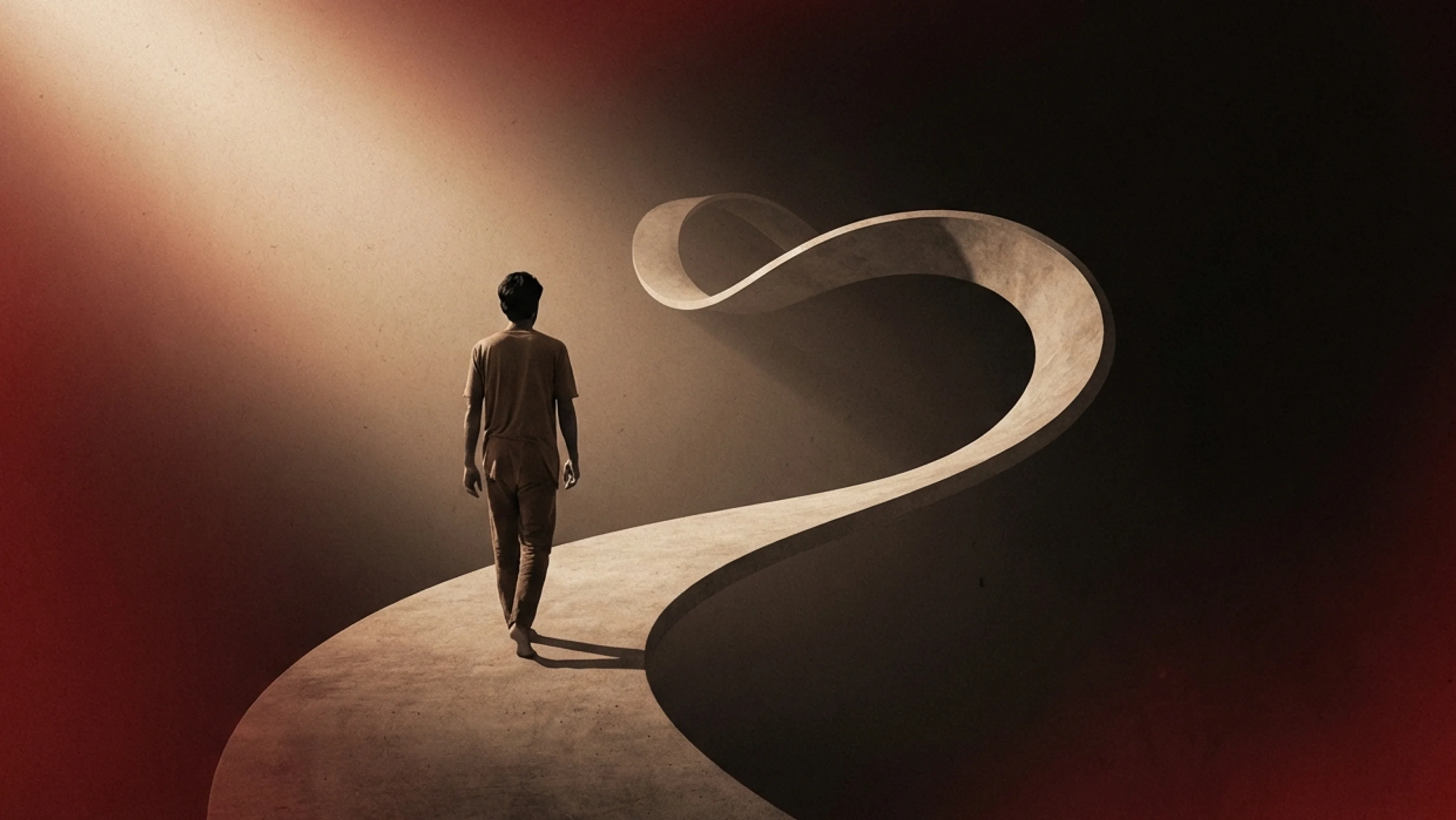
Why founders mistake replay for reflection, and pay for it with a lack of clarity
The pitch that changed how I raised capital during CreditVidya's fundraisers wasn't the one I nailed. It was the one I failed. Yes, enough rehearsals (failures) do make for a good show (success), but there is also a rehearsal tax to be paid, which keeps us tethered. I chose not to be taxed. After a particularly bad investor meeting, the kind where you can feel the room leave before you've finished, I sat down with a notebook and wrote one line. “Lost them at slide four. Next pitch: start with a working demo.”
That sentence stayed with me. The following week at the next pitch, I didn't open the PowerPoint at all. Instead, I walked in with a working demo. The product hadn't changed overnight. Neither had the market size. I hadn't become a better speaker. But I'd extracted something concrete from the wreckage of my failure, and I'd moved on. I had made reflection my choice. Brief. Specific. Finite. It ends when the lesson lands.
But that was not what I did most of the time.
Most evenings during that fundraiser, I wasn't reflecting; I was replaying. My brain kept replaying the VC partner staring at his phone and the associate, who knew nothing about lending, questioning my entire business model. I was replaying the feeling, the same emotional signature triggered on schedule, without a single new insight. I was reopening the wound night after night, mistaking it for analysis.
What I didn't understand then was that replay and reflection were not the same, even though they feel identical from the inside. On the contrary, they produce opposite results, and the confusion is costing high performers more than they know.

The Shadow of the Past
Years ago, I was robbed at gunpoint in New York. It was my first day in the city. I had taken a wrong turn outside a subway station and ended up in East Harlem. To this day, if I'm walking down a quiet street and hear footsteps closely behind me, my nervous system treats it as an attack. Heart rate spikes. Muscles lock. I know Bombay streets are safer, but the shadow, anyway, hijacks my biology.
That is unconscious replay - the nervous system runs a prediction from the past into the present. But the pattern didn't start with the robbery. In middle school, I'd skipped a grade. Everyone in the building was bigger than me. I learned early, in my body and not my mind, that the world could turn on you physically, without warning. The vigilance that was installed, the constant scanning for who might be a threat, was useful at twelve. It was survival.
You don't need to be mugged to know this pattern. A harmless remark from a board member, a throwaway comment from a friend, or even a family member can replay two hundred times in your head. You know how draining these moments become when they loop. You tell yourself you're processing, working through it, learning. You realise it's irrational. But that knowledge changes nothing.
We replay events consciously and unconsciously. We feel the pain as though the events are happening right now. That’s replay, not reflection at work. Reflection sits down, extracts the lesson, writes it in a notebook, and closes the notebook. Replay sits down and never gets up.
The Replays Become Your Identity
You were never taught how to close the loop on emotional pain. Not in school. Not at home. Not in any leadership programme or founder bootcamp. There is no protocol for what to do when a moment hurts, and you can't stop returning to it. Without a release mechanism, the mind defaults to a belief: my history is my identity.
This is how smart people stay stuck. Each replay doesn't just re-experience the pain. It converts the event into identity. Replay that ‘failed fundraiser’ enough times, and you don't just remember the rejection but become the founder who isn't good enough.
"I am not good enough" was never our first thought as children. It is the thought that replay builds, one loop at a time. And once it's installed as an identity, it shows up wearing different masks. "I'm not ready yet" before a big opportunity. "I should stick to what I know" before crossing into new territory. "I need to prepare more" before shipping anything. "That's not realistic for someone like me" before dreaming bigger. All of these sound like wisdom. All of them are the replay's output. The past failed you once. The replay turned it into a permanent verdict. And now every decision runs through that verdict first.
The past does build resilience, depth, and hard-won wisdom. But without closing the loop, the ‘shadow’ becomes the rehearsal tax, reducing your capacity to reach your potential because the identity never upgraded. That’s because childhood teaches you that your history is you; the achievement culture rewards the backwards-looking narrative; and the startup culture institutionalises replay and calls it a process. The replay finally feels like your live story because the belief underneath it was inherited. And nobody teaches you how to close the loop.
Why founders mistake replay for reflection, and pay for it with a lack of clarity
The pitch that changed how I raised capital during CreditVidya's fundraisers wasn't the one I nailed. It was the one I failed. Yes, enough rehearsals (failures) do make for a good show (success), but there is also a rehearsal tax to be paid, which keeps us tethered. I chose not to be taxed. After a particularly bad investor meeting, the kind where you can feel the room leave before you've finished, I sat down with a notebook and wrote one line. “Lost them at slide four. Next pitch: start with a working demo.”
That sentence stayed with me. The following week at the next pitch, I didn't open the PowerPoint at all. Instead, I walked in with a working demo. The product hadn't changed overnight. Neither had the market size. I hadn't become a better speaker. But I'd extracted something concrete from the wreckage of my failure, and I'd moved on. I had made reflection my choice. Brief. Specific. Finite. It ends when the lesson lands.
But that was not what I did most of the time.
Most evenings during that fundraiser, I wasn't reflecting; I was replaying. My brain kept replaying the VC partner staring at his phone and the associate, who knew nothing about lending, questioning my entire business model. I was replaying the feeling, the same emotional signature triggered on schedule, without a single new insight. I was reopening the wound night after night, mistaking it for analysis.
What I didn't understand then was that replay and reflection were not the same, even though they feel identical from the inside. On the contrary, they produce opposite results, and the confusion is costing high performers more than they know.
The Shadow of the Past
Years ago, I was robbed at gunpoint in New York. It was my first day in the city. I had taken a wrong turn outside a subway station and ended up in East Harlem. To this day, if I'm walking down a quiet street and hear footsteps closely behind me, my nervous system treats it as an attack. Heart rate spikes. Muscles lock. I know Bombay streets are safer, but the shadow, anyway, hijacks my biology.
That is unconscious replay - the nervous system runs a prediction from the past into the present. But the pattern didn't start with the robbery. In middle school, I'd skipped a grade. Everyone in the building was bigger than me. I learned early, in my body and not my mind, that the world could turn on you physically, without warning. The vigilance that was installed, the constant scanning for who might be a threat, was useful at twelve. It was survival.
You don't need to be mugged to know this pattern. A harmless remark from a board member, a throwaway comment from a friend, or even a family member can replay two hundred times in your head. You know how draining these moments become when they loop. You tell yourself you're processing, working through it, learning. You realise it's irrational. But that knowledge changes nothing.
We replay events consciously and unconsciously. We feel the pain as though the events are happening right now. That’s replay, not reflection at work. Reflection sits down, extracts the lesson, writes it in a notebook, and closes the notebook. Replay sits down and never gets up.
The Replays Become Your Identity
You were never taught how to close the loop on emotional pain. Not in school. Not at home. Not in any leadership programme or founder bootcamp. There is no protocol for what to do when a moment hurts, and you can't stop returning to it. Without a release mechanism, the mind defaults to a belief: my history is my identity.
This is how smart people stay stuck. Each replay doesn't just re-experience the pain. It converts the event into identity. Replay that ‘failed fundraiser’ enough times, and you don't just remember the rejection but become the founder who isn't good enough.
"I am not good enough" was never our first thought as children. It is the thought that replay builds, one loop at a time. And once it's installed as an identity, it shows up wearing different masks. "I'm not ready yet" before a big opportunity. "I should stick to what I know" before crossing into new territory. "I need to prepare more" before shipping anything. "That's not realistic for someone like me" before dreaming bigger. All of these sound like wisdom. All of them are the replay's output. The past failed you once. The replay turned it into a permanent verdict. And now every decision runs through that verdict first.
The past does build resilience, depth, and hard-won wisdom. But without closing the loop, the ‘shadow’ becomes the rehearsal tax, reducing your capacity to reach your potential because the identity never upgraded. That’s because childhood teaches you that your history is you; the achievement culture rewards the backwards-looking narrative; and the startup culture institutionalises replay and calls it a process. The replay finally feels like your live story because the belief underneath it was inherited. And nobody teaches you how to close the loop.
The Rehearsal Tax
Why founders mistake replay for reflection, and pay for it with a lack of clarity
The pitch that changed how I raised capital during CreditVidya's fundraisers wasn't the one I nailed. It was the one I failed. Yes, enough rehearsals (failures) do make for a good show (success), but there is also a rehearsal tax to be paid, which keeps us tethered. I chose not to be taxed. After a particularly bad investor meeting, the kind where you can feel the room leave before you've finished, I sat down with a notebook and wrote one line. “Lost them at slide four. Next pitch: start with a working demo.”
That sentence stayed with me. The following week at the next pitch, I didn't open the PowerPoint at all. Instead, I walked in with a working demo. The product hadn't changed overnight. Neither had the market size. I hadn't become a better speaker. But I'd extracted something concrete from the wreckage of my failure, and I'd moved on. I had made reflection my choice. Brief. Specific. Finite. It ends when the lesson lands.
But that was not what I did most of the time.
Most evenings during that fundraiser, I wasn't reflecting; I was replaying. My brain kept replaying the VC partner staring at his phone and the associate, who knew nothing about lending, questioning my entire business model. I was replaying the feeling, the same emotional signature triggered on schedule, without a single new insight. I was reopening the wound night after night, mistaking it for analysis.
What I didn't understand then was that replay and reflection were not the same, even though they feel identical from the inside. On the contrary, they produce opposite results, and the confusion is costing high performers more than they know.
The Shadow of the Past
Years ago, I was robbed at gunpoint in New York. It was my first day in the city. I had taken a wrong turn outside a subway station and ended up in East Harlem. To this day, if I'm walking down a quiet street and hear footsteps closely behind me, my nervous system treats it as an attack. Heart rate spikes. Muscles lock. I know Bombay streets are safer, but the shadow, anyway, hijacks my biology.
That is unconscious replay - the nervous system runs a prediction from the past into the present. But the pattern didn't start with the robbery. In middle school, I'd skipped a grade. Everyone in the building was bigger than me. I learned early, in my body and not my mind, that the world could turn on you physically, without warning. The vigilance that was installed, the constant scanning for who might be a threat, was useful at twelve. It was survival.
You don't need to be mugged to know this pattern. A harmless remark from a board member, a throwaway comment from a friend, or even a family member can replay two hundred times in your head. You know how draining these moments become when they loop. You tell yourself you're processing, working through it, learning. You realise it's irrational. But that knowledge changes nothing.
We replay events consciously and unconsciously. We feel the pain as though the events are happening right now. That’s replay, not reflection at work. Reflection sits down, extracts the lesson, writes it in a notebook, and closes the notebook. Replay sits down and never gets up.
The Replays Become Your Identity
You were never taught how to close the loop on emotional pain. Not in school. Not at home. Not in any leadership programme or founder bootcamp. There is no protocol for what to do when a moment hurts, and you can't stop returning to it. Without a release mechanism, the mind defaults to a belief: my history is my identity.
This is how smart people stay stuck. Each replay doesn't just re-experience the pain. It converts the event into identity. Replay that ‘failed fundraiser’ enough times, and you don't just remember the rejection but become the founder who isn't good enough.
"I am not good enough" was never our first thought as children. It is the thought that replay builds, one loop at a time. And once it's installed as an identity, it shows up wearing different masks. "I'm not ready yet" before a big opportunity. "I should stick to what I know" before crossing into new territory. "I need to prepare more" before shipping anything. "That's not realistic for someone like me" before dreaming bigger. All of these sound like wisdom. All of them are the replay's output. The past failed you once. The replay turned it into a permanent verdict. And now every decision runs through that verdict first.
The past does build resilience, depth, and hard-won wisdom. But without closing the loop, the ‘shadow’ becomes the rehearsal tax, reducing your capacity to reach your potential because the identity never upgraded. That’s because childhood teaches you that your history is you; the achievement culture rewards the backwards-looking narrative; and the startup culture institutionalises replay and calls it a process. The replay finally feels like your live story because the belief underneath it was inherited. And nobody teaches you how to close the loop.

Resonating with this philosophy?
Join the smartest founders mastering the inner game to face the unknown. Read by YC & Sequoia.

And It Costs You Your Sanity
I broke a bone in my left foot during taekwondo. It was excruciating at the time. I can think about it now and feel nothing. The memory is there. The pain is gone.
The VC partner who stared at his phone through my entire pitch? It was painful then. It still is. The humiliation, the smallness, the heat in my face. It arrives at full intensity, as though it's happening right now.
This is not a metaphor. Your brain processes social pain and physical pain through the same circuitry, but they differ in one cruel way. Physical pain fades in memory. Social pain doesn't. Meghan Meyer, Kipling Williams, and Naomi Eisenberger at UCLA found that physical pain can be relieved with genuine activation of pain circuitry. Social pain cannot. A broken bone heals in memory. A humiliating pitch, a public failure, a rejection by someone whose opinion mattered: these stay electrically live, recruitable at full intensity years after the event.
Social-evaluation threat is the specific trigger for social pain. Being judged. Failing in front of people who control your future. These are the exact conditions founders walk into every week. Intelligence offers no protection against social pain. High performers are more prone because they have more cognitive capacity for the replay to consume.
With repetition, replay transitions from deliberate thought to automatic habit. But the method you employ determines whether you're extracting a lesson or deepening a groove.
Wendy Treynor, Richard Gonzalez, and Susan Nolen-Hoeksema at the University of Michigan studied over 1,100 people over a year and found that "thinking about what went wrong" splits into two processes with opposite outcomes. Whereas brooding is moody, evaluative self-focus, reflective pondering is active, solution-oriented examination.
Abstract processing worsens emotional reactivity and impairs problem-solving. "Why does this keep happening to me?" Concrete processing reduces it. "What specifically happened at slide four, and what will I change next Tuesday?"
Reflection asks a question that has an answer. Replay asks a question that doesn't. "What will I do differently" terminates. "Why am I like this" loops. Replay is more damaging than avoidance. More damaging than suppression. It is the single most costly thing you can do with your own mind.
The Deliberate Pause Framework
What I learned came slowly, over months of travelling across India, reflecting on the person I'd become. I was trying to find ways to be happier and kept discovering I was still paying for events that had happened years ago. I still struggle to walk calmly on empty streets. I'm still not entirely myself in a room full of CEOs. But I've started closing loops.
When something goes wrong, before the loop has time to start, I sit down and write. Not the feeling. The lesson. What specifically happened. What I'll do differently. When. One entry. Concrete. Specific. Then I close the notebook.
The next time the event surfaces, and it will, I don't follow the pull. I pause. I go back to the notebook. If the lesson is already there, there is nothing left to extract. The loop isn't serving me. It's taxing me. I return to the present: to the pitch I'm preparing, the problem in front of me, the conversation I'm actually in. Because that is where the next decision lives.
Patanjali identified the root of this trap twenty-five centuries ago. He called it avidya: the fundamental misperception. Mistaking the impermanent for the permanent. Mistaking the changing for the unchanging. Every replay is avidya in action.
Oxford researcher John Teasdale and colleagues arrived at the same insight through clinical research. They found that the mechanism for breaking the loop is decentering: the capacity to experience thoughts as mental events rather than facts about the present. The thought "I'm going to fail" arrives. You see it arrive. You recognise it as a replay, not a forecast. The loop loses its authority, and you stop mistaking it for the truth.
Neuroscientists call it decentering. Patanjali called it Sakshi: the witness. The observation of thought without becoming it. The Bhagavad Gita draws the same line. Krishna doesn't tell Arjuna to stop feeling. He tells him to act from a place where the feeling doesn't govern.
That place is the pause. The notebook is how you find it. The lesson is what you extract. The present is where you return.
Reflect, and Not Replay, to Find Courage
For years, I believed I was the product of my past. The kid who got bullied. The founder who wasn't enough. The person whose worst moments proved something permanent about who he was. Every replay reinforced that belief. Every loop was another coat of paint on an identity I mistook for truth. But the past only shaped me. It doesn't run me. Instead of erasing memories, I have learned to pause long enough to see the difference between a lesson and a loop, between data and destiny, between the story and the one watching it.
Reflection is a lever. You pull it, extract what moves, and release.
Replay is a tax, levied every time you grip the lever and forget to let go.
You are not the product of your past. You are the awareness that can choose what to carry forward and what to set down.
The pause is where that choice lives.
The Deliberate Pause

To be continued…
A small favor...
I don't run ads. If this brought clarity, the biggest favor you can do is subscribe below.


.svg)

.svg)