
The Aliveness Paradox
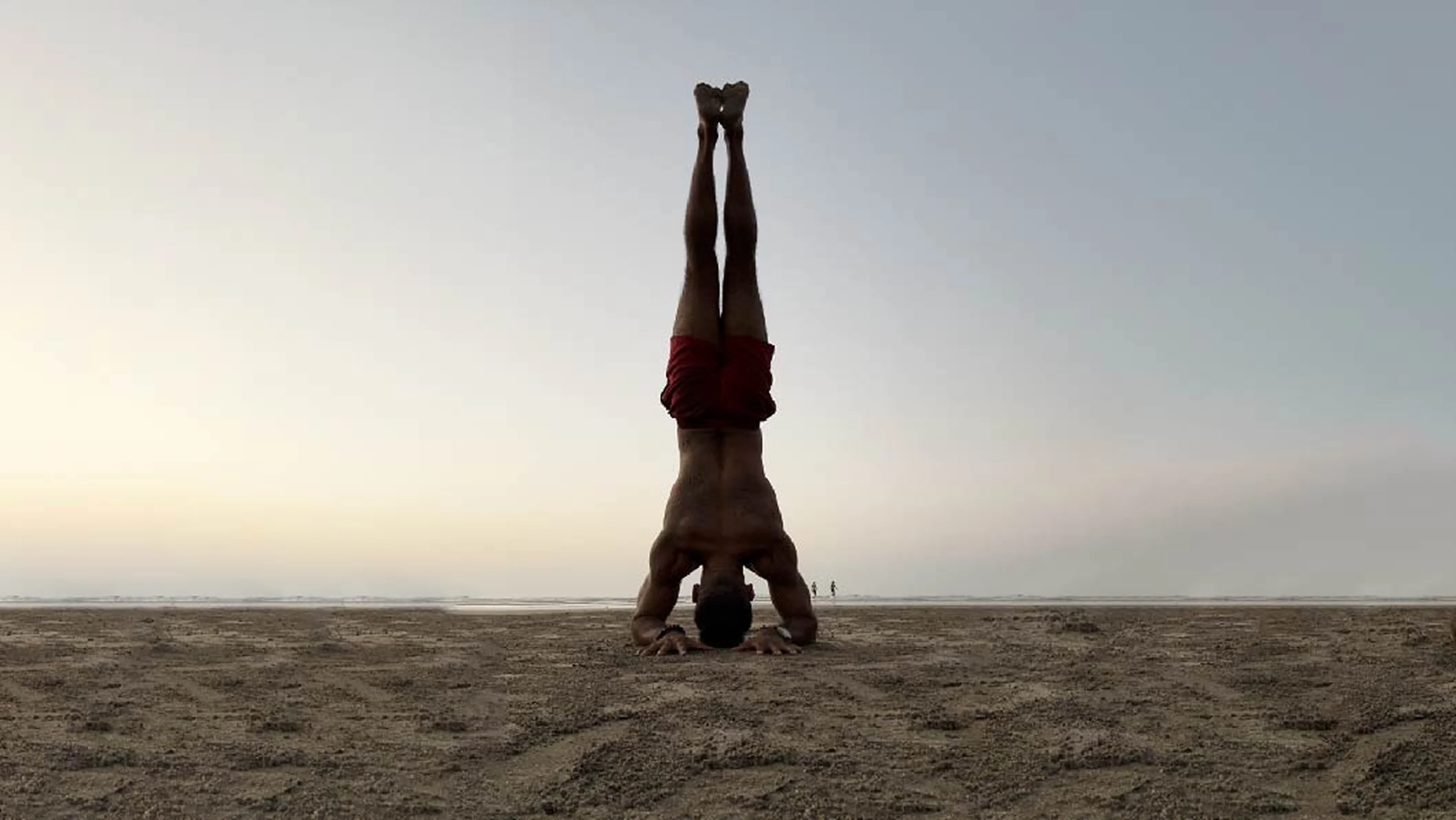
It is not the reward for excellence, but a prerequisite to excel
Hindsight is the rear-view mirror through which we judge our past, often with certainty, but mine is fogged by doubt. We built India's leading alternative data credit scoring company with minimal capital and got acquired by CRED, but a question keeps on nagging me - what could I have done differently to take CreditVidya to an IPO? Not that I'm bitter about the acquisition - by most measures, it worked. But the thought lingers on: What else could I have done?
A better hire? An earlier pivot? A sharper fundraiser? These are obvious answers, but I don't think they're right. To find the real answer, I had to go back in time further than I expected.
I was in fifth grade and had ranked second in class for the first time - second in the whole class! I ran home buzzing. My mother looked at me and said, "Jyada khush mat ho. Nazar lag jaayegi."
Don't be too happy. You'll attract the evil eye.
She wasn't being cruel, just protective by passing down a survival mechanism. Visible joy is dangerous in the game of survival. The safest thing to do is to be quietly grateful and keep striving. As the eldest son, I absorbed a deeper layer: My job was also to provide, which meant my own happiness came last. Put your head down and suffer now to earn aliveness as a reward later. I carried that into everything. Through school, through business school, through seven years of building CreditVidya. And the belief seemed to work. I never took a vacation. Not once in seven years.
But recently, reflecting on the journey, a terrifying question emerged: What if grinding through misery didn't pay the price of success but placed a ceiling on it? What if the decisions I made in a depleted state of mind were worse than the ones I would have made in a more cheerful state?
We've been taught that excellence produces happiness. What if the opposite is true - that happiness is the prerequisite for excellence?

The project manager who runs your life
That childhood belief - put your head down, your happiness can wait - didn't disappear when I grew up. It became a project manager that ran my entire life.
The project manager optimises your performance every waking hour. It scans every room, every relationship, every conversation and adjusts you accordingly for productivity. Confident here. Humble there. Impressive at this dinner. Relatable at that one. Available. Responsive. Never a burden. The one person it never checks on is the real you. Not because it forgot. Because it was trained - by my mother's warning, by the eldest son's code, by a culture that treats selflessness as the highest virtue - to believe that your needs come last. That attending to your own happiness is self-indulgence. That responsible people don't ask, "Do I feel alive?" They ask, "Is everyone else okay?"
But there are moments when aliveness breaks through anyway. An afternoon lost in a craft - writing, playing a sport, solving a problem - where time vanished because you were doing, not performing. A conversation so good you forgot your phone existed. A Saturday morning with nowhere to be.
And the project manager doesn't celebrate. It panics. Jyada khush mat ho. You're enjoying this too much. Someone needs something from you. You should be doing something productive.
The aliveness drains away before it has time to settle. Replaced by guilt. Replaced by the next obligation. Replaced by the familiar comfort of being useful to everyone except yourself.
Finding the signal underneath the noise
I didn't find aliveness through a framework. I found it by running out of options.
After CreditVidya, I got on my motorcycle and rode across India. I read the athletes and the spiritual masters and the people I genuinely believed had figured it out. What I learned would have shocked the kid who grew up believing that suffering was the only path to success.
I started doing something that felt painful in the beginning: I sat with myself. Fifteen minutes. No phone. No podcast. Just me. It was excruciating. Every cell in my body wanted to reach for something - a task, an input, a distraction. The project manager was screaming.
But slowly, over weeks, a quieter signal started coming through. Not what I should want, but what I actually wanted.
I started noticing what gave me energy and what drained me. Not what should energise me, but actually left me more alive at the end than at the beginning. I went on a diet - not just food, but people and information. I started saying no to everything. Everything that someone expected out of me. I stopped measuring the things I loved, because the moment I put a KPI on something enjoyable, it started feeling like work, and the aliveness bled out.
The project manager called this selfish. It wasn't. It was self-care. And it was the first honest thing I'd done in years.
What was left was writing. Writing not as a strategy or as brand-building but as the thing that made time disappear. The thing I'd do even if nobody read it.
The project manager hated this. No clear ROI. No revenue model. No path to approval. By every metric it tracks, writing was a waste of time.
But I had not felt more alive in years.
It is not the reward for excellence, but a prerequisite to excel
Hindsight is the rear-view mirror through which we judge our past, often with certainty, but mine is fogged by doubt. We built India's leading alternative data credit scoring company with minimal capital and got acquired by CRED, but a question keeps on nagging me - what could I have done differently to take CreditVidya to an IPO? Not that I'm bitter about the acquisition - by most measures, it worked. But the thought lingers on: What else could I have done?
A better hire? An earlier pivot? A sharper fundraiser? These are obvious answers, but I don't think they're right. To find the real answer, I had to go back in time further than I expected.
I was in fifth grade and had ranked second in class for the first time - second in the whole class! I ran home buzzing. My mother looked at me and said, "Jyada khush mat ho. Nazar lag jaayegi."
Don't be too happy. You'll attract the evil eye.
She wasn't being cruel, just protective by passing down a survival mechanism. Visible joy is dangerous in the game of survival. The safest thing to do is to be quietly grateful and keep striving. As the eldest son, I absorbed a deeper layer: My job was also to provide, which meant my own happiness came last. Put your head down and suffer now to earn aliveness as a reward later. I carried that into everything. Through school, through business school, through seven years of building CreditVidya. And the belief seemed to work. I never took a vacation. Not once in seven years.
But recently, reflecting on the journey, a terrifying question emerged: What if grinding through misery didn't pay the price of success but placed a ceiling on it? What if the decisions I made in a depleted state of mind were worse than the ones I would have made in a more cheerful state?
We've been taught that excellence produces happiness. What if the opposite is true - that happiness is the prerequisite for excellence?
The project manager who runs your life
That childhood belief - put your head down, your happiness can wait - didn't disappear when I grew up. It became a project manager that ran my entire life.
The project manager optimises your performance every waking hour. It scans every room, every relationship, every conversation and adjusts you accordingly for productivity. Confident here. Humble there. Impressive at this dinner. Relatable at that one. Available. Responsive. Never a burden. The one person it never checks on is the real you. Not because it forgot. Because it was trained - by my mother's warning, by the eldest son's code, by a culture that treats selflessness as the highest virtue - to believe that your needs come last. That attending to your own happiness is self-indulgence. That responsible people don't ask, "Do I feel alive?" They ask, "Is everyone else okay?"
But there are moments when aliveness breaks through anyway. An afternoon lost in a craft - writing, playing a sport, solving a problem - where time vanished because you were doing, not performing. A conversation so good you forgot your phone existed. A Saturday morning with nowhere to be.
And the project manager doesn't celebrate. It panics. Jyada khush mat ho. You're enjoying this too much. Someone needs something from you. You should be doing something productive.
The aliveness drains away before it has time to settle. Replaced by guilt. Replaced by the next obligation. Replaced by the familiar comfort of being useful to everyone except yourself.
Finding the signal underneath the noise
I didn't find aliveness through a framework. I found it by running out of options.
After CreditVidya, I got on my motorcycle and rode across India. I read the athletes and the spiritual masters and the people I genuinely believed had figured it out. What I learned would have shocked the kid who grew up believing that suffering was the only path to success.
I started doing something that felt painful in the beginning: I sat with myself. Fifteen minutes. No phone. No podcast. Just me. It was excruciating. Every cell in my body wanted to reach for something - a task, an input, a distraction. The project manager was screaming.
But slowly, over weeks, a quieter signal started coming through. Not what I should want, but what I actually wanted.
I started noticing what gave me energy and what drained me. Not what should energise me, but actually left me more alive at the end than at the beginning. I went on a diet - not just food, but people and information. I started saying no to everything. Everything that someone expected out of me. I stopped measuring the things I loved, because the moment I put a KPI on something enjoyable, it started feeling like work, and the aliveness bled out.
The project manager called this selfish. It wasn't. It was self-care. And it was the first honest thing I'd done in years.
What was left was writing. Writing not as a strategy or as brand-building but as the thing that made time disappear. The thing I'd do even if nobody read it.
The project manager hated this. No clear ROI. No revenue model. No path to approval. By every metric it tracks, writing was a waste of time.
But I had not felt more alive in years.
The Aliveness Paradox
It is not the reward for excellence, but a prerequisite to excel
Hindsight is the rear-view mirror through which we judge our past, often with certainty, but mine is fogged by doubt. We built India's leading alternative data credit scoring company with minimal capital and got acquired by CRED, but a question keeps on nagging me - what could I have done differently to take CreditVidya to an IPO? Not that I'm bitter about the acquisition - by most measures, it worked. But the thought lingers on: What else could I have done?
A better hire? An earlier pivot? A sharper fundraiser? These are obvious answers, but I don't think they're right. To find the real answer, I had to go back in time further than I expected.
I was in fifth grade and had ranked second in class for the first time - second in the whole class! I ran home buzzing. My mother looked at me and said, "Jyada khush mat ho. Nazar lag jaayegi."
Don't be too happy. You'll attract the evil eye.
She wasn't being cruel, just protective by passing down a survival mechanism. Visible joy is dangerous in the game of survival. The safest thing to do is to be quietly grateful and keep striving. As the eldest son, I absorbed a deeper layer: My job was also to provide, which meant my own happiness came last. Put your head down and suffer now to earn aliveness as a reward later. I carried that into everything. Through school, through business school, through seven years of building CreditVidya. And the belief seemed to work. I never took a vacation. Not once in seven years.
But recently, reflecting on the journey, a terrifying question emerged: What if grinding through misery didn't pay the price of success but placed a ceiling on it? What if the decisions I made in a depleted state of mind were worse than the ones I would have made in a more cheerful state?
We've been taught that excellence produces happiness. What if the opposite is true - that happiness is the prerequisite for excellence?
The project manager who runs your life
That childhood belief - put your head down, your happiness can wait - didn't disappear when I grew up. It became a project manager that ran my entire life.
The project manager optimises your performance every waking hour. It scans every room, every relationship, every conversation and adjusts you accordingly for productivity. Confident here. Humble there. Impressive at this dinner. Relatable at that one. Available. Responsive. Never a burden. The one person it never checks on is the real you. Not because it forgot. Because it was trained - by my mother's warning, by the eldest son's code, by a culture that treats selflessness as the highest virtue - to believe that your needs come last. That attending to your own happiness is self-indulgence. That responsible people don't ask, "Do I feel alive?" They ask, "Is everyone else okay?"
But there are moments when aliveness breaks through anyway. An afternoon lost in a craft - writing, playing a sport, solving a problem - where time vanished because you were doing, not performing. A conversation so good you forgot your phone existed. A Saturday morning with nowhere to be.
And the project manager doesn't celebrate. It panics. Jyada khush mat ho. You're enjoying this too much. Someone needs something from you. You should be doing something productive.
The aliveness drains away before it has time to settle. Replaced by guilt. Replaced by the next obligation. Replaced by the familiar comfort of being useful to everyone except yourself.
Finding the signal underneath the noise
I didn't find aliveness through a framework. I found it by running out of options.
After CreditVidya, I got on my motorcycle and rode across India. I read the athletes and the spiritual masters and the people I genuinely believed had figured it out. What I learned would have shocked the kid who grew up believing that suffering was the only path to success.
I started doing something that felt painful in the beginning: I sat with myself. Fifteen minutes. No phone. No podcast. Just me. It was excruciating. Every cell in my body wanted to reach for something - a task, an input, a distraction. The project manager was screaming.
But slowly, over weeks, a quieter signal started coming through. Not what I should want, but what I actually wanted.
I started noticing what gave me energy and what drained me. Not what should energise me, but actually left me more alive at the end than at the beginning. I went on a diet - not just food, but people and information. I started saying no to everything. Everything that someone expected out of me. I stopped measuring the things I loved, because the moment I put a KPI on something enjoyable, it started feeling like work, and the aliveness bled out.
The project manager called this selfish. It wasn't. It was self-care. And it was the first honest thing I'd done in years.
What was left was writing. Writing not as a strategy or as brand-building but as the thing that made time disappear. The thing I'd do even if nobody read it.
The project manager hated this. No clear ROI. No revenue model. No path to approval. By every metric it tracks, writing was a waste of time.
But I had not felt more alive in years.

Resonating with this philosophy?
Join the smartest founders mastering the inner game to face the unknown. Read by YC & Sequoia.

The equation in reverse
The world teaches: effort first, then excellence, then someday aliveness. It's the same promise my parents made - put your head down, life will be sorted one day.
My parents had it wrong. The equation is reversed - aliveness first, then absorption, then excellence - as a byproduct of years spent doing the thing that made you feel most alive.
But here's why that equation stays broken for most people. You're doing more than ever - reading, exercising, networking, meditating - and none of it is landing. Because you're eating without digesting. Your brain doesn't work like a hard drive. Growth is digestive. Past a certain rate, the food passes through without feeding you. The real absorption happens when you stop - when you walk, sleep, stare out the window. When you just be. The gaps are where transformation happens.
But the project manager can't tolerate gaps. It fills every one with another podcast at 2x, another book, another class. It mistakes fullness for progress. And you stay stuck - not because you're lazy, but because nothing has time to take root.
Excellence isn't about effort. Excellence requires absorption - the state where work is hard but doesn't register as hard. Where hours vanish. Where the doing feeds you rather than depletes you. Absorption only happens when you say no to enough things that space opens up. Every person who achieved genuine mastery - the kind that compounds across decades - said no to almost everything else. They protected their attention. They disappeared into their work while the world waited. They chose their thing over everyone else's expectations.
That's not a character flaw. It's self-care. And it's the prerequisite.
Be too happy
A few months ago, I was sitting at GShot cafe in Goa - open walls, lazy afternoon light. Writing a little. Thinking a little. Mostly just sitting.
A couple walked up to my table. Total strangers. The woman smiled and said, "What are you smoking? You look really happy."
I hadn't spoken a word to them.
Weeks later, at my farewell, my head of AI (Sanjib Panigrahi) pulled me aside. "Something's changed," he said. "You look happy. Like genuinely happy."
The answer was embarrassingly simple. I hadn't checked social media in weeks. I had no idea what was going on in the world. I hadn't called family out of obligation. I hadn't attended a single event I didn't want to attend. I had said no to almost everything - and the project manager called it selfish. And I was the most alive I had ever been. So visibly that strangers could see it from across a cafe.
Here's what I didn't expect: Saying no made me better for everyone around me. The writing sharpened. The ideas deepened. I was more present, more patient, more generous with the people I chose to see - not because I was trying to be, but because I finally had something real to give.
The person who never says no isn't generous. They're performing generosity while slowly disappearing. And everyone around them can feel it.
In my last article, I wrote about how self-love fails because it inflates the very thing that needs to get smaller. Love comes when the self loosens its hold. Aliveness works the same way. The things that matter the most - love, depth, mastery, aliveness - don't come from the self doing more. They come from the self getting out of the way.
That self got me through school. It built my career. It kept my family proud. It also kept me showing up at 7 AM after a stroke, wearing my own destruction as a badge of honour.
But it can't take me where I need to go next.
My mother told me not to be too happy. She was protecting me the way she knew how. I carried her warning for thirty years, and it became the voice that ran my life.
This article changes that advice.
Jyada khush ho. Be too happy. Let them look.
That's not selfish. That's self-care. And it's the only path to being fully, unapologetically, contagiously alive.
And being alive - it turns out - was always the path to excellence.

To be continued…
A small favor...
I don't run ads. If this brought clarity, the biggest favor you can do is subscribe below.

.svg)

.svg)