
Why Founders Can’t Feel Their Wins
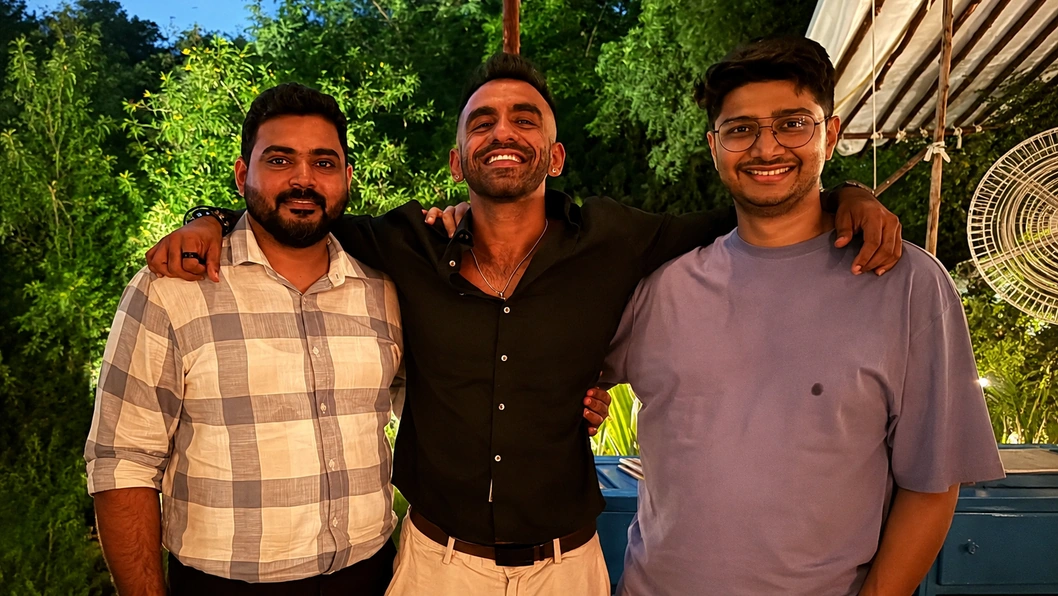
For founders who chose to carry everything alone and now can’t feel their own wins, because loneliness has quietly turned those wins into invisible failures.
“I don’t celebrate occasions. I celebrate victories,” I used to say to my family and colleagues whenever they wanted to mark a birthday or an anniversary. Why tie joy to a calendar when results were the only honest metric, I used to believe. I was twelve years old when I first imagined what a real result could look like after seeing my heroes on the covers of Forbes and GQ, and I concluded that I would get to celebrate when I landed there among them.
Twenty years later, I raised a startup, then funding came and then the acquisition. The milestones I had worked toward since childhood arrived one by one, almost exactly as I had planned. I got my victories. But I could not celebrate a single one. Not because I didn't want to. Because I had no one to celebrate with. The people who would have cheered didn't understand what it had cost. The few who knew the cost weren't there. So the moment I had rehearsed for two decades showed up and left without landing. I felt nothing and ended up doing the only thing I knew. I reached for the next problem. The culprit was loneliness.
We talk about founder loneliness as the heavy feeling you push through, the price of building alone. I want to say something harder. Loneliness for a founder is not the feeling of being emotionally, socially, or meaningfully disconnected from others. Loneliness is a bad decision. It’s a decision because the option is always yours. And if you choose to be lonely, it quietly starts making decisions for you, the wrong ones. Judging your victories to be failures is among those decisions. Loneliness makes you overthink, overanalyse, and blame yourself.

A Win Needs a Witness
A win may be an achievement, improvement, or positive outcome that has meaning for you personally, regardless of whether others notice it or consider it significant. But the win won’t land if there is no one on the other side to receive it. Professor Shelly Gable studied this, the act she calls capitalising: share a good thing with someone who understands what it costs, and the good thing grows. Keep it to yourself, and the same event barely registers. I spent twenty years building the result, but I failed to build the other person to share it with.
There is a moment in the early Buddhist texts that I came upon recently. Ananda, the Buddha's closest student, offers what he thinks is a humble observation. Good companions on the path, he says, must be about half of the spiritual life. The Buddha corrects him. “Do not say that, Ananda. Admirable friendship is not half of the holy life. It is the whole of it.” This conclusion comes from the tradition of people who gave up everything to sit alone with their own minds in caves and forests. The most self-reliant path human beings ever designed looked hard at the question and concluded that the friend who sees you is part of the work itself. You do not wake up alone no matter how disciplined you are, because a mind cannot finally be trusted to judge itself from inside itself.
The Unmonitored Mind
If loneliness is so destructive, why do capable people stay in it for years? Partly because of what loneliness does to the mind itself. John Cacioppo, founder of the field of social neuroscience, spent his career studying isolation, and what he found was not just sadness. It was something mechanical: an isolated brain tilts toward threat, reads ambiguity as danger, and treats the absence of reassurance as evidence of failure. It thinks “something is wrong” even when nothing bad has happened. A tiny comment can feel huge and hurtful, just because there’s nobody else there to say, “Hey, that’s not a big deal.”
When no other voices come in, the founder’s brain has to make up the story by itself. And when it does that alone, it usually decides, “I failed.” That’s the real danger of building alone: not just being by yourself, but letting a lonely brain tell the worst possible story and then believing it.
Almost everyone tries to fix the problem the same wrong way because it looks like a socialising problem. So you say yes to the founder dinners, join networking groups, and community-run clubs. But none of that really helps. The truth is, it was never about not having enough people around. One founder said, “I have lots of people around me, but no one I can really talk to.” He had a full team and a whole office of people who depended on him. But those events and dinners are places where you act strong and smart, tell safe stories, and hide the messy parts. You can meet nine new people and still not tell anyone what’s really going on. You go home, and the harsh voice in your head is the same - maybe even louder - because now you’ve proved you can be surrounded and still feel alone.
So if more people aren’t the answer, what is? Just one right person - the one who is always there to complete the feedback loop and validates your decisions honestly. Before his book Carrie made him famous, Stephen King thought it was terrible and threw the pages in the trash. He had judged his own work and decided it was worthless. Those pages only survived because his wife pulled them out, read them, and said, “You’re wrong. This is good.” He couldn’t have done that by himself, not because he wasn’t talented, but because no one can judge their own story clearly from the inside. It took one other person to see what his lonely mind had gotten completely wrong.
For founders who chose to carry everything alone and now can’t feel their own wins, because loneliness has quietly turned those wins into invisible failures.
“I don’t celebrate occasions. I celebrate victories,” I used to say to my family and colleagues whenever they wanted to mark a birthday or an anniversary. Why tie joy to a calendar when results were the only honest metric, I used to believe. I was twelve years old when I first imagined what a real result could look like after seeing my heroes on the covers of Forbes and GQ, and I concluded that I would get to celebrate when I landed there among them.
Twenty years later, I raised a startup, then funding came and then the acquisition. The milestones I had worked toward since childhood arrived one by one, almost exactly as I had planned. I got my victories. But I could not celebrate a single one. Not because I didn't want to. Because I had no one to celebrate with. The people who would have cheered didn't understand what it had cost. The few who knew the cost weren't there. So the moment I had rehearsed for two decades showed up and left without landing. I felt nothing and ended up doing the only thing I knew. I reached for the next problem. The culprit was loneliness.
We talk about founder loneliness as the heavy feeling you push through, the price of building alone. I want to say something harder. Loneliness for a founder is not the feeling of being emotionally, socially, or meaningfully disconnected from others. Loneliness is a bad decision. It’s a decision because the option is always yours. And if you choose to be lonely, it quietly starts making decisions for you, the wrong ones. Judging your victories to be failures is among those decisions. Loneliness makes you overthink, overanalyse, and blame yourself.
A Win Needs a Witness
A win may be an achievement, improvement, or positive outcome that has meaning for you personally, regardless of whether others notice it or consider it significant. But the win won’t land if there is no one on the other side to receive it. Professor Shelly Gable studied this, the act she calls capitalising: share a good thing with someone who understands what it costs, and the good thing grows. Keep it to yourself, and the same event barely registers. I spent twenty years building the result, but I failed to build the other person to share it with.
There is a moment in the early Buddhist texts that I came upon recently. Ananda, the Buddha's closest student, offers what he thinks is a humble observation. Good companions on the path, he says, must be about half of the spiritual life. The Buddha corrects him. “Do not say that, Ananda. Admirable friendship is not half of the holy life. It is the whole of it.” This conclusion comes from the tradition of people who gave up everything to sit alone with their own minds in caves and forests. The most self-reliant path human beings ever designed looked hard at the question and concluded that the friend who sees you is part of the work itself. You do not wake up alone no matter how disciplined you are, because a mind cannot finally be trusted to judge itself from inside itself.
The Unmonitored Mind
If loneliness is so destructive, why do capable people stay in it for years? Partly because of what loneliness does to the mind itself. John Cacioppo, founder of the field of social neuroscience, spent his career studying isolation, and what he found was not just sadness. It was something mechanical: an isolated brain tilts toward threat, reads ambiguity as danger, and treats the absence of reassurance as evidence of failure. It thinks “something is wrong” even when nothing bad has happened. A tiny comment can feel huge and hurtful, just because there’s nobody else there to say, “Hey, that’s not a big deal.”
When no other voices come in, the founder’s brain has to make up the story by itself. And when it does that alone, it usually decides, “I failed.” That’s the real danger of building alone: not just being by yourself, but letting a lonely brain tell the worst possible story and then believing it.
Almost everyone tries to fix the problem the same wrong way because it looks like a socialising problem. So you say yes to the founder dinners, join networking groups, and community-run clubs. But none of that really helps. The truth is, it was never about not having enough people around. One founder said, “I have lots of people around me, but no one I can really talk to.” He had a full team and a whole office of people who depended on him. But those events and dinners are places where you act strong and smart, tell safe stories, and hide the messy parts. You can meet nine new people and still not tell anyone what’s really going on. You go home, and the harsh voice in your head is the same - maybe even louder - because now you’ve proved you can be surrounded and still feel alone.
So if more people aren’t the answer, what is? Just one right person - the one who is always there to complete the feedback loop and validates your decisions honestly. Before his book Carrie made him famous, Stephen King thought it was terrible and threw the pages in the trash. He had judged his own work and decided it was worthless. Those pages only survived because his wife pulled them out, read them, and said, “You’re wrong. This is good.” He couldn’t have done that by himself, not because he wasn’t talented, but because no one can judge their own story clearly from the inside. It took one other person to see what his lonely mind had gotten completely wrong.
Why Founders Can’t Feel Their Wins
For founders who chose to carry everything alone and now can’t feel their own wins, because loneliness has quietly turned those wins into invisible failures.
“I don’t celebrate occasions. I celebrate victories,” I used to say to my family and colleagues whenever they wanted to mark a birthday or an anniversary. Why tie joy to a calendar when results were the only honest metric, I used to believe. I was twelve years old when I first imagined what a real result could look like after seeing my heroes on the covers of Forbes and GQ, and I concluded that I would get to celebrate when I landed there among them.
Twenty years later, I raised a startup, then funding came and then the acquisition. The milestones I had worked toward since childhood arrived one by one, almost exactly as I had planned. I got my victories. But I could not celebrate a single one. Not because I didn't want to. Because I had no one to celebrate with. The people who would have cheered didn't understand what it had cost. The few who knew the cost weren't there. So the moment I had rehearsed for two decades showed up and left without landing. I felt nothing and ended up doing the only thing I knew. I reached for the next problem. The culprit was loneliness.
We talk about founder loneliness as the heavy feeling you push through, the price of building alone. I want to say something harder. Loneliness for a founder is not the feeling of being emotionally, socially, or meaningfully disconnected from others. Loneliness is a bad decision. It’s a decision because the option is always yours. And if you choose to be lonely, it quietly starts making decisions for you, the wrong ones. Judging your victories to be failures is among those decisions. Loneliness makes you overthink, overanalyse, and blame yourself.
A Win Needs a Witness
A win may be an achievement, improvement, or positive outcome that has meaning for you personally, regardless of whether others notice it or consider it significant. But the win won’t land if there is no one on the other side to receive it. Professor Shelly Gable studied this, the act she calls capitalising: share a good thing with someone who understands what it costs, and the good thing grows. Keep it to yourself, and the same event barely registers. I spent twenty years building the result, but I failed to build the other person to share it with.
There is a moment in the early Buddhist texts that I came upon recently. Ananda, the Buddha's closest student, offers what he thinks is a humble observation. Good companions on the path, he says, must be about half of the spiritual life. The Buddha corrects him. “Do not say that, Ananda. Admirable friendship is not half of the holy life. It is the whole of it.” This conclusion comes from the tradition of people who gave up everything to sit alone with their own minds in caves and forests. The most self-reliant path human beings ever designed looked hard at the question and concluded that the friend who sees you is part of the work itself. You do not wake up alone no matter how disciplined you are, because a mind cannot finally be trusted to judge itself from inside itself.
The Unmonitored Mind
If loneliness is so destructive, why do capable people stay in it for years? Partly because of what loneliness does to the mind itself. John Cacioppo, founder of the field of social neuroscience, spent his career studying isolation, and what he found was not just sadness. It was something mechanical: an isolated brain tilts toward threat, reads ambiguity as danger, and treats the absence of reassurance as evidence of failure. It thinks “something is wrong” even when nothing bad has happened. A tiny comment can feel huge and hurtful, just because there’s nobody else there to say, “Hey, that’s not a big deal.”
When no other voices come in, the founder’s brain has to make up the story by itself. And when it does that alone, it usually decides, “I failed.” That’s the real danger of building alone: not just being by yourself, but letting a lonely brain tell the worst possible story and then believing it.
Almost everyone tries to fix the problem the same wrong way because it looks like a socialising problem. So you say yes to the founder dinners, join networking groups, and community-run clubs. But none of that really helps. The truth is, it was never about not having enough people around. One founder said, “I have lots of people around me, but no one I can really talk to.” He had a full team and a whole office of people who depended on him. But those events and dinners are places where you act strong and smart, tell safe stories, and hide the messy parts. You can meet nine new people and still not tell anyone what’s really going on. You go home, and the harsh voice in your head is the same - maybe even louder - because now you’ve proved you can be surrounded and still feel alone.
So if more people aren’t the answer, what is? Just one right person - the one who is always there to complete the feedback loop and validates your decisions honestly. Before his book Carrie made him famous, Stephen King thought it was terrible and threw the pages in the trash. He had judged his own work and decided it was worthless. Those pages only survived because his wife pulled them out, read them, and said, “You’re wrong. This is good.” He couldn’t have done that by himself, not because he wasn’t talented, but because no one can judge their own story clearly from the inside. It took one other person to see what his lonely mind had gotten completely wrong.

Resonating with this philosophy?
Join the smartest founders mastering the inner game to face the unknown. Read by YC & Sequoia.

Founder Myth That Keeps You There
If loneliness is so destructive, why do capable people stay in it for years? Because there’s a story in their head that tells them they’re supposed to. The story says a “real” founder carries everything alone, including their own thoughts and worries. So when loneliness shows up, they don’t see it as a problem. They see it as the price to be paid to be serious and successful. The pain starts to feel like proof that they’re doing it right, instead of a warning that something is broken.
I lived inside that story for a long time. Self-reliance was not a virtue I chose. For a middle-class kid in India, it was the only way out of the trap. When it felt like nobody was coming to help, I decided to become the kind of person who didn’t need anyone to come. That decision worked in some ways - I got things done, I hit goals. But in the end, it left me alone at the finish line with no one to share the moment with.
The data is sobering. 76% of founders report profound loneliness - 50% higher than corporate CEOs. 87.7% struggle with mental health issues. Founders are 4x to 10x more likely to face depression, ADHD, or bipolar disorder. The strongest predictor of founder loneliness is not network size but perceived connection with the immediate team. If you cannot delegate psychological weight, isolation skyrockets.
So now I’m doing something different. I’m going to start writing down my wins, big and small, in a private log for the days when I’m still building the rest of the support around me. And I’m going to build that support on purpose - not a big group, not another event, but one person or maybe two who know the full picture and with whom the truth can move both ways.
That’s what I’m asking you to do as well. Not another “vulnerable” social media post. Not a new kind of networking. Just one person. Someone who understands what your work really costs, or is willing to learn. Build the kind of relationship where honesty is normal, not a rare, brave act.
Nobody Outgrows It
The danger of solo building isn't isolation - it's that an unmonitored mind, deprived of input, fabricates the harshest possible reading and calls it information. A founder who constantly judges himself, tracks every flaw, and keeps trying to improve is still standing in the same mental courtroom. He’s acting as his own judge and jury at the same time. He never actually gets to step outside and just be a person who is seen and understood by someone else.
People sometimes say a half joke and half comfort: “You could be running the whole world and still need your mom.” It sounds funny, but it’s mostly just true. Wanting someone to see you and say, “I see what you did, and it matters,” was never a childish phase you were meant to grow out of. The role you stepped into quietly took that need away and then made you believe you chose to give it up. That’s the danger of solo building - an unmonitored mind, deprived of input, fabricating the harshest possible reading and calling it information.
That twelve-year-old Avi on the street staring at Ambani on a magazine cover didn't have a word for what he felt. He just wanted to get somewhere, and then spent the next three decades getting there. He didn't know that getting somewhere alone amounts to not getting there at all.
All he needed to do was to admit that a strong founder handling everything on his own, including his own head, was a myth. This myth brings in loneliness, but the choice is always yours. Admit that loneliness is a bad decision, and start feeling your wins.

To be continued…
A small favor...
I don't run ads. If this brought clarity, the biggest favor you can do is subscribe below.

.webp)
.svg)

.svg)