
The Thermostat Effect

Why Thinking Alone Can't Build a New Identity
By Avi Agarwal
My grandfather (nana) was no philosopher, nor a futurist. And yet he had willed or wished something unimaginable for me. Though I don’t remember much about him, as he died when I was still young, there was a single, cryptic directive from him for me that my mother repeated throughout my childhood like a mantra:
“Go live in the biggest city in the world.”
At that time, it looked like a heartfelt wish from a loving grandparent, so I did everything possible to honour it. But today, in hindsight, I understand it to be an authoritative directive, delivered with the absolute certainty of a man who understood something about life he didn’t quite have the vocabulary to explain.
When I eventually landed in New York City (the biggest city), I was the definition of an outsider. I was the kid from Kathmandu who had grown up with limited resources, working three odd jobs alongside my studies, sleeping on an empty stomach on airport floors, and shovelling snow in freezing temperatures as a 17-year-old just to make ends meet. In short, my self-image at that time was built entirely on scarcity and the desperate need for approval.
My colleagues in NYC, however, were different. It wasn’t just their bank accounts or their degrees. It was their terrifying clarity. They knew exactly where they wanted to go. They spoke about the future as if they already owned the title deeds to it. To sum up, their internal thermostat, as I call it today, was set to the deep belief that they were meant to win.
I realised what profound effect our immediate environment can have on us. That is when I realised why I felt so vulnerable. That is when I realised why I could never say “no”.
Sigmund Freud had argued that our early environment doesn’t just influence us but constructs us. When you grow up with limited opportunities, saying “yes” becomes a fundamental survival mechanism. You say yes to every crumb of opportunity because you don’t know when the next one will appear. You become a people-pleaser because you confuse “fitting in”- sacrificing your boundaries for external approval - with true belonging. Research in developmental neuroscience suggests this conditioning is shaped in childhood itself.
So, I carried this trauma-forged “Yes-Man” identity right into my professional life, even to NYC and beyond as well. I said yes to every opportunity, yes to dilutive partnerships, yes to the 11 PM email thread, and yes to every shiny new project. I thought my relentless “yes” was my superpower. I didn’t realise it was destroying my potential.

The Invisible Cost of Saying Yes
What keeps you alive in scarcity will kill you in abundance.
When you say “yes” to everything, you fall victim to a psychological trap called opportunity cost neglect. The irony is that you don’t realise being a “yes man” because it appears to be hard work. When I said yes to a new, low-value project, I felt highly productive because I felt busy. What I didn’t feel was the invisible cost: the deep, strategic thinking time I had just sacrificed, or the core problem I didn’t sit with long enough to actually solve. Every lukewarm “yes” silently crowds out the space needed for a life-changing opportunity.
Here is the hard truth of the business world: bouncing from one new idea to another feels like progress, but it is just perpetual exploration. Exploration generates options, but only deep, focused execution generates compounding returns. Founders who pivot every time things get hard just to feel the rush of a new beginning never allow their skills to compound. They remain perpetual beginners, generating perpetual noise.
As billionaire investor Warren Buffett points out, the difference between successful people and really successful people is that the latter have the agonising discipline to say no to almost everything. They wait patiently for the “fat pitch.” But you cannot swing at the fat pitch if your energy is exhausted fighting off bad pitches all day long.
The Willpower Fallacy
So, why don’t we just try harder to say no?
Because relying on willpower alone is a lost battle. The corporate world worships the myth of “Grit,” telling us that if we are distracted, we simply lack discipline. But neuroscience proves that willpower is not a muscle you can endlessly flex; it is a finite battery.
Every time you force yourself to ignore a phone notification or navigate the guilt of declining a favour, you drain the exact mental energy you need for high-level strategy. When you get tired, your brain’s executive control goes offline, and you default to your oldest, most impulsive habits.
In Psycho-Cybernetics, Dr. Maxwell Maltz explained that your self-image operates exactly like a thermostat. You can try to “white-knuckle” a “no” for a week using raw willpower. But the moment you get tired, your thermostat violently snaps you back to its original setting. If your internal identity is still set to “Scarcity-Driven People Pleaser,” saying “no” feels like a literal threat to your survival.
When you fail to say “no”, you aren’t fighting a bad habit. You are fighting the child who slept on the airport floor.
And that child has been winning for decades.
Designing Your Environment
If willpower is a finite battery, how do we permanently escape our childhood conditioning and protect our focus?
We do it by intentionally changing the room we are standing in.
We do it by exposing ourselves to environments that force the self-image to upgrade. We cannot think our way into a new identity. But when we move to a new city, travel to unfamiliar cultures, or immerse ourselves in profoundly challenging situations, we give ourselves an identity intervention. We insert new data into the thermostat. This is exactly what my nana was teaching me: design an environment that upgrades your self-image.
Here is what that looks like in practice.
1. Control Your Physical Space.
Your physical space determines your default behaviours. If a child is trying not to eat cookies before dinner, putting the cookies in an opaque jar instead of a clear one drastically reduces the demand on their self-control. Do the same for yourself. Research shows that just having a smartphone on your desk - even face-down - drains your brain’s capacity. A single physical decision - leaving your phone in another room, working from a coffee shop, or hanging a “Do Not Disturb” sign - eliminates the need to make thousands of exhausting willpower decisions over a year.
2. Curate Your Social Circle.
We unconsciously mimic the people around us. After my companies were acquired, I moved to Goa to write a book. I had a romantic vision - quiet beach, open laptop, words flowing. Instead, I sat in cafes for three weeks surrounded by digital nomads building apps they’d never ship and writers talking about writing instead of writing. The ambient identity of Goa was set to “Ease.” I wrote nothing. So I moved to Mumbai. The city’s restless energy demanded output, and I didn’t need willpower to work - the environment made hard work the natural default. If you surround yourself with people who wear 100-hour workweeks as a badge of honour, you will stay trapped in the “yes” cycle. But if you build a circle of peers who fiercely protect their deep work, strategic restraint becomes your new normal. You stop feeling guilty for saying no because no one in your room expects a yes.
3. Filter Your Information Diet.
Today, your most powerful environment is the algorithm on your screen. Constant exposure to others' curated wins on social media creates a sense of being permanently “behind”. I know this intimately. Six months after CreditVidya’s acquisition by CRED, I sat in a Bangalore coffee shop feeling like a failure - not because the outcome was bad, but because my feed was full of people who had built bigger. The information environment had so thoroughly reprogrammed my thermostat that an actual acquisition felt like a consolation prize. That is the power of an undesigned information environment: it can make a win feel like a loss. A leader who feels behind acts out of fear, chasing every new trend and saying yes to distractions. You must curate your digital feed as rigorously as you choose the city you live in. Design your inputs for learning and capability, not comparison.
Why Thinking Alone Can't Build a New Identity
By Avi Agarwal
My grandfather (nana) was no philosopher, nor a futurist. And yet he had willed or wished something unimaginable for me. Though I don’t remember much about him, as he died when I was still young, there was a single, cryptic directive from him for me that my mother repeated throughout my childhood like a mantra:
“Go live in the biggest city in the world.”
At that time, it looked like a heartfelt wish from a loving grandparent, so I did everything possible to honour it. But today, in hindsight, I understand it to be an authoritative directive, delivered with the absolute certainty of a man who understood something about life he didn’t quite have the vocabulary to explain.
When I eventually landed in New York City (the biggest city), I was the definition of an outsider. I was the kid from Kathmandu who had grown up with limited resources, working three odd jobs alongside my studies, sleeping on an empty stomach on airport floors, and shovelling snow in freezing temperatures as a 17-year-old just to make ends meet. In short, my self-image at that time was built entirely on scarcity and the desperate need for approval.
My colleagues in NYC, however, were different. It wasn’t just their bank accounts or their degrees. It was their terrifying clarity. They knew exactly where they wanted to go. They spoke about the future as if they already owned the title deeds to it. To sum up, their internal thermostat, as I call it today, was set to the deep belief that they were meant to win.
I realised what profound effect our immediate environment can have on us. That is when I realised why I felt so vulnerable. That is when I realised why I could never say “no”.
Sigmund Freud had argued that our early environment doesn’t just influence us but constructs us. When you grow up with limited opportunities, saying “yes” becomes a fundamental survival mechanism. You say yes to every crumb of opportunity because you don’t know when the next one will appear. You become a people-pleaser because you confuse “fitting in”- sacrificing your boundaries for external approval - with true belonging. Research in developmental neuroscience suggests this conditioning is shaped in childhood itself.
So, I carried this trauma-forged “Yes-Man” identity right into my professional life, even to NYC and beyond as well. I said yes to every opportunity, yes to dilutive partnerships, yes to the 11 PM email thread, and yes to every shiny new project. I thought my relentless “yes” was my superpower. I didn’t realise it was destroying my potential.
The Invisible Cost of Saying Yes
What keeps you alive in scarcity will kill you in abundance.
When you say “yes” to everything, you fall victim to a psychological trap called opportunity cost neglect. The irony is that you don’t realise being a “yes man” because it appears to be hard work. When I said yes to a new, low-value project, I felt highly productive because I felt busy. What I didn’t feel was the invisible cost: the deep, strategic thinking time I had just sacrificed, or the core problem I didn’t sit with long enough to actually solve. Every lukewarm “yes” silently crowds out the space needed for a life-changing opportunity.
Here is the hard truth of the business world: bouncing from one new idea to another feels like progress, but it is just perpetual exploration. Exploration generates options, but only deep, focused execution generates compounding returns. Founders who pivot every time things get hard just to feel the rush of a new beginning never allow their skills to compound. They remain perpetual beginners, generating perpetual noise.
As billionaire investor Warren Buffett points out, the difference between successful people and really successful people is that the latter have the agonising discipline to say no to almost everything. They wait patiently for the “fat pitch.” But you cannot swing at the fat pitch if your energy is exhausted fighting off bad pitches all day long.
The Willpower Fallacy
So, why don’t we just try harder to say no?
Because relying on willpower alone is a lost battle. The corporate world worships the myth of “Grit,” telling us that if we are distracted, we simply lack discipline. But neuroscience proves that willpower is not a muscle you can endlessly flex; it is a finite battery.
Every time you force yourself to ignore a phone notification or navigate the guilt of declining a favour, you drain the exact mental energy you need for high-level strategy. When you get tired, your brain’s executive control goes offline, and you default to your oldest, most impulsive habits.
In Psycho-Cybernetics, Dr. Maxwell Maltz explained that your self-image operates exactly like a thermostat. You can try to “white-knuckle” a “no” for a week using raw willpower. But the moment you get tired, your thermostat violently snaps you back to its original setting. If your internal identity is still set to “Scarcity-Driven People Pleaser,” saying “no” feels like a literal threat to your survival.
When you fail to say “no”, you aren’t fighting a bad habit. You are fighting the child who slept on the airport floor.
And that child has been winning for decades.
Designing Your Environment
If willpower is a finite battery, how do we permanently escape our childhood conditioning and protect our focus?
We do it by intentionally changing the room we are standing in.
We do it by exposing ourselves to environments that force the self-image to upgrade. We cannot think our way into a new identity. But when we move to a new city, travel to unfamiliar cultures, or immerse ourselves in profoundly challenging situations, we give ourselves an identity intervention. We insert new data into the thermostat. This is exactly what my nana was teaching me: design an environment that upgrades your self-image.
Here is what that looks like in practice.
1. Control Your Physical Space.
Your physical space determines your default behaviours. If a child is trying not to eat cookies before dinner, putting the cookies in an opaque jar instead of a clear one drastically reduces the demand on their self-control. Do the same for yourself. Research shows that just having a smartphone on your desk - even face-down - drains your brain’s capacity. A single physical decision - leaving your phone in another room, working from a coffee shop, or hanging a “Do Not Disturb” sign - eliminates the need to make thousands of exhausting willpower decisions over a year.
2. Curate Your Social Circle.
We unconsciously mimic the people around us. After my companies were acquired, I moved to Goa to write a book. I had a romantic vision - quiet beach, open laptop, words flowing. Instead, I sat in cafes for three weeks surrounded by digital nomads building apps they’d never ship and writers talking about writing instead of writing. The ambient identity of Goa was set to “Ease.” I wrote nothing. So I moved to Mumbai. The city’s restless energy demanded output, and I didn’t need willpower to work - the environment made hard work the natural default. If you surround yourself with people who wear 100-hour workweeks as a badge of honour, you will stay trapped in the “yes” cycle. But if you build a circle of peers who fiercely protect their deep work, strategic restraint becomes your new normal. You stop feeling guilty for saying no because no one in your room expects a yes.
3. Filter Your Information Diet.
Today, your most powerful environment is the algorithm on your screen. Constant exposure to others' curated wins on social media creates a sense of being permanently “behind”. I know this intimately. Six months after CreditVidya’s acquisition by CRED, I sat in a Bangalore coffee shop feeling like a failure - not because the outcome was bad, but because my feed was full of people who had built bigger. The information environment had so thoroughly reprogrammed my thermostat that an actual acquisition felt like a consolation prize. That is the power of an undesigned information environment: it can make a win feel like a loss. A leader who feels behind acts out of fear, chasing every new trend and saying yes to distractions. You must curate your digital feed as rigorously as you choose the city you live in. Design your inputs for learning and capability, not comparison.
The Thermostat Effect
Why Thinking Alone Can't Build a New Identity
By Avi Agarwal
My grandfather (nana) was no philosopher, nor a futurist. And yet he had willed or wished something unimaginable for me. Though I don’t remember much about him, as he died when I was still young, there was a single, cryptic directive from him for me that my mother repeated throughout my childhood like a mantra:
“Go live in the biggest city in the world.”
At that time, it looked like a heartfelt wish from a loving grandparent, so I did everything possible to honour it. But today, in hindsight, I understand it to be an authoritative directive, delivered with the absolute certainty of a man who understood something about life he didn’t quite have the vocabulary to explain.
When I eventually landed in New York City (the biggest city), I was the definition of an outsider. I was the kid from Kathmandu who had grown up with limited resources, working three odd jobs alongside my studies, sleeping on an empty stomach on airport floors, and shovelling snow in freezing temperatures as a 17-year-old just to make ends meet. In short, my self-image at that time was built entirely on scarcity and the desperate need for approval.
My colleagues in NYC, however, were different. It wasn’t just their bank accounts or their degrees. It was their terrifying clarity. They knew exactly where they wanted to go. They spoke about the future as if they already owned the title deeds to it. To sum up, their internal thermostat, as I call it today, was set to the deep belief that they were meant to win.
I realised what profound effect our immediate environment can have on us. That is when I realised why I felt so vulnerable. That is when I realised why I could never say “no”.
Sigmund Freud had argued that our early environment doesn’t just influence us but constructs us. When you grow up with limited opportunities, saying “yes” becomes a fundamental survival mechanism. You say yes to every crumb of opportunity because you don’t know when the next one will appear. You become a people-pleaser because you confuse “fitting in”- sacrificing your boundaries for external approval - with true belonging. Research in developmental neuroscience suggests this conditioning is shaped in childhood itself.
So, I carried this trauma-forged “Yes-Man” identity right into my professional life, even to NYC and beyond as well. I said yes to every opportunity, yes to dilutive partnerships, yes to the 11 PM email thread, and yes to every shiny new project. I thought my relentless “yes” was my superpower. I didn’t realise it was destroying my potential.
The Invisible Cost of Saying Yes
What keeps you alive in scarcity will kill you in abundance.
When you say “yes” to everything, you fall victim to a psychological trap called opportunity cost neglect. The irony is that you don’t realise being a “yes man” because it appears to be hard work. When I said yes to a new, low-value project, I felt highly productive because I felt busy. What I didn’t feel was the invisible cost: the deep, strategic thinking time I had just sacrificed, or the core problem I didn’t sit with long enough to actually solve. Every lukewarm “yes” silently crowds out the space needed for a life-changing opportunity.
Here is the hard truth of the business world: bouncing from one new idea to another feels like progress, but it is just perpetual exploration. Exploration generates options, but only deep, focused execution generates compounding returns. Founders who pivot every time things get hard just to feel the rush of a new beginning never allow their skills to compound. They remain perpetual beginners, generating perpetual noise.
As billionaire investor Warren Buffett points out, the difference between successful people and really successful people is that the latter have the agonising discipline to say no to almost everything. They wait patiently for the “fat pitch.” But you cannot swing at the fat pitch if your energy is exhausted fighting off bad pitches all day long.
The Willpower Fallacy
So, why don’t we just try harder to say no?
Because relying on willpower alone is a lost battle. The corporate world worships the myth of “Grit,” telling us that if we are distracted, we simply lack discipline. But neuroscience proves that willpower is not a muscle you can endlessly flex; it is a finite battery.
Every time you force yourself to ignore a phone notification or navigate the guilt of declining a favour, you drain the exact mental energy you need for high-level strategy. When you get tired, your brain’s executive control goes offline, and you default to your oldest, most impulsive habits.
In Psycho-Cybernetics, Dr. Maxwell Maltz explained that your self-image operates exactly like a thermostat. You can try to “white-knuckle” a “no” for a week using raw willpower. But the moment you get tired, your thermostat violently snaps you back to its original setting. If your internal identity is still set to “Scarcity-Driven People Pleaser,” saying “no” feels like a literal threat to your survival.
When you fail to say “no”, you aren’t fighting a bad habit. You are fighting the child who slept on the airport floor.
And that child has been winning for decades.
Designing Your Environment
If willpower is a finite battery, how do we permanently escape our childhood conditioning and protect our focus?
We do it by intentionally changing the room we are standing in.
We do it by exposing ourselves to environments that force the self-image to upgrade. We cannot think our way into a new identity. But when we move to a new city, travel to unfamiliar cultures, or immerse ourselves in profoundly challenging situations, we give ourselves an identity intervention. We insert new data into the thermostat. This is exactly what my nana was teaching me: design an environment that upgrades your self-image.
Here is what that looks like in practice.
1. Control Your Physical Space.
Your physical space determines your default behaviours. If a child is trying not to eat cookies before dinner, putting the cookies in an opaque jar instead of a clear one drastically reduces the demand on their self-control. Do the same for yourself. Research shows that just having a smartphone on your desk - even face-down - drains your brain’s capacity. A single physical decision - leaving your phone in another room, working from a coffee shop, or hanging a “Do Not Disturb” sign - eliminates the need to make thousands of exhausting willpower decisions over a year.
2. Curate Your Social Circle.
We unconsciously mimic the people around us. After my companies were acquired, I moved to Goa to write a book. I had a romantic vision - quiet beach, open laptop, words flowing. Instead, I sat in cafes for three weeks surrounded by digital nomads building apps they’d never ship and writers talking about writing instead of writing. The ambient identity of Goa was set to “Ease.” I wrote nothing. So I moved to Mumbai. The city’s restless energy demanded output, and I didn’t need willpower to work - the environment made hard work the natural default. If you surround yourself with people who wear 100-hour workweeks as a badge of honour, you will stay trapped in the “yes” cycle. But if you build a circle of peers who fiercely protect their deep work, strategic restraint becomes your new normal. You stop feeling guilty for saying no because no one in your room expects a yes.
3. Filter Your Information Diet.
Today, your most powerful environment is the algorithm on your screen. Constant exposure to others' curated wins on social media creates a sense of being permanently “behind”. I know this intimately. Six months after CreditVidya’s acquisition by CRED, I sat in a Bangalore coffee shop feeling like a failure - not because the outcome was bad, but because my feed was full of people who had built bigger. The information environment had so thoroughly reprogrammed my thermostat that an actual acquisition felt like a consolation prize. That is the power of an undesigned information environment: it can make a win feel like a loss. A leader who feels behind acts out of fear, chasing every new trend and saying yes to distractions. You must curate your digital feed as rigorously as you choose the city you live in. Design your inputs for learning and capability, not comparison.

Resonating with this philosophy?
Join the smartest founders mastering the inner game to face the unknown. Read by YC & Sequoia.

The Art of the Delivery
When your environment is designed correctly, fewer distractions will reach you. But when something does slip through, you need a system to handle it without draining your energy. First, automate your decision-making using entrepreneur Derek Sivers’ rule: “Hell Yeah or No”. If an opportunity doesn’t immediately make you think “Hell yeah!”, the answer is a firm no. This keeps your schedule completely clear for the rare, life-changing projects.
Second, when you must decline a request from a boss, colleague, or friend, use negotiation expert William Ury’s “Positive No” framework. The biggest mistake we make is basing our “no” on what we are against. Instead, base it on what you are protecting. Start by stating your deeper commitment: “I am entirely focused on finishing this critical project for the team.” Then, deliver a clear, respectful no: “Because of that, I cannot take on this new request.” Finally, propose an alternative solution to preserve the relationship: “But I can review it next month, or recommend someone else.”
The Mirror You Choose
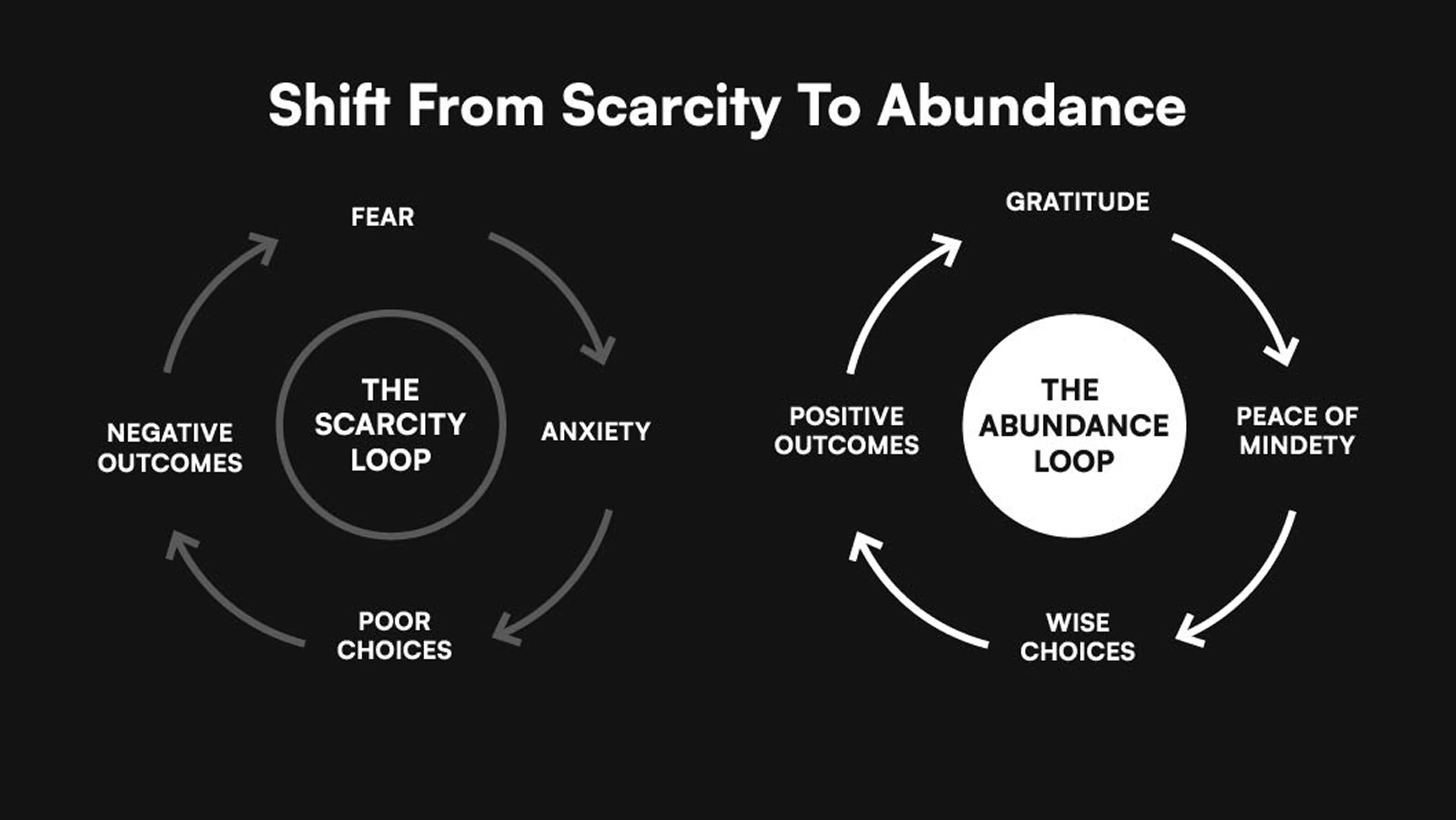
My nana knew that the beliefs I had internalised in Kathmandu would limit my potential. He knew that as long as I lived in an environment that reinforced a “scarcity” mindset, I would never be free. He knew that by placing me in the biggest city in the world, my internal thermostat would have no choice but to rise. He knew that the only way to outgrow the kid sleeping on the airport floor was to put him in a place where that identity no longer made sense.
I am no longer that street kid. I am a builder and a writer. Not because I worked harder than everyone else - there are people on the streets of Kathmandu working ten times harder than I ever have - but because I have finally learned to design the room I am standing in.
The most transformative advice doesn’t come from a management guru. It comes from the quiet realisation that you are the product of your environment, and your self-image is simply what it reflects.
If you are still saying “yes” when you know you should be saying “no,” stop looking for a new productivity hack. Look for a new city. Look for a new room. Look for the mirror that reflects the person you are meant to become.
Design your environment. Or it will design you.
Avi is the founder of The Deliberate Pause and the former co-founder of CreditVidya & Prefr (acquired by CRED). He writes about Inner Engineering for Founders—the psychology of sustainable high performance.

To be continued…
A small favor...
I don't run ads. If this brought clarity, the biggest favor you can do is subscribe below.

.webp)

.svg)

.svg)