


The Secret Inside the Brown Box
The world’s most competitive people are discovering a book the Apple founder read 40 times in 40 years.
At the 2011 memorial service for Steve Jobs, the world’s most powerful innovators were handed a small brown box as a farewell gift. It wasn’t a new Apple device. It wasn’t a design manifesto. It was a book. A paperback copy of ‘Autobiography of a Yogi’ by Paramhansa Yogananda. This was Jobs’s last message. He had read this book once a year for the last forty years of his life. He wasn’t the only one.
Virat Kohli says this book transformed how he plays the game. Novak Djokovic describes himself as an “inner athlete” and credits the book for his late-career renaissance. What do a tech visionary, a cricket legend, and a tennis champion all find in the writings of a 20th-century Indian mystic?
Jobs wasn’t sending a spiritual message. He was sending a performance message. These leaders discovered something that the rest of the business and startup worlds are still missing.
Sustaining greatness without breaking needs a completely different way to play the game. And it's centred around the story you tell yourself between falling and getting up.

Every master is first someone who fell apart.
The script we’ve been handed is: Success equals Talent plus Effort. But here’s what the script never prepares you for.
The fall.
Because success is never linear, the path to the top is muddled with failure, self-doubt, and moments where everything you’ve built feels like it’s collapsing. Talent doesn’t protect you from this. Neither does effort. And at whatever scale you’re operating, your ability to pick yourself up from the lowest points defines how far you will ultimately go.
Most of us are running on autopilot. 95% of who you are is a memorised set of behaviours, emotional reactions, and hardwired beliefs. You wake up and feel the same low-grade anxiety you felt yesterday. You react to today’s crisis the same way you reacted to last month’s. You make the same class of decisions wearing slightly different clothes. So what do you do when life hits you back despite your best efforts?
Jobs was fired from Apple at 30 - pushed out of the company he built from nothing. Kohli went nearly three years without a Test century while a billion people debated whether he was finished.
This is what ‘Autobiography of a Yogi’ is really about. Yogananda didn’t write about people at their peak. He wrote about people in their darkest moments - the student who wants to quit, the disciple who loses faith, the seeker who can’t find the door. The difference was never ‘talent’. It was never even ‘effort’. It was the ability to return to the centre after being knocked off it. Every founder gets knocked down. Every great athlete, every person building something real do hit the floor. The question that separates them is: how long do you stay there?
Your real opponent is never the competitor, the market, or the investor who said no. The real opponent is the story you tell yourself in the gap between falling and getting up.
Mind is the wielder of muscles
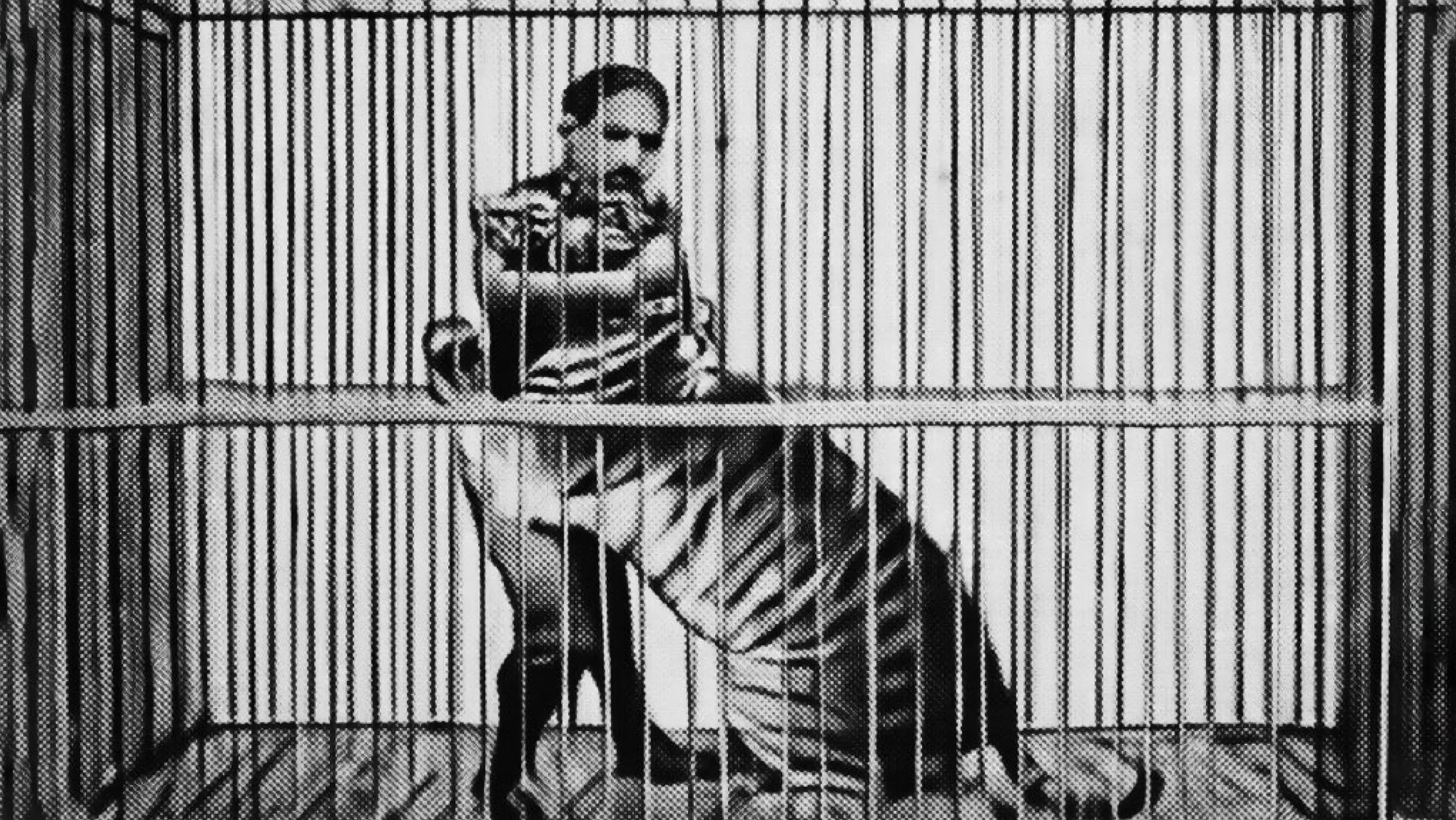
Early in the ‘Autobiography of a Yogi’, Yogananda describes a man known as the Tiger Swami. He fought wild tigers with his bare hands. Not as performance, but as practice. His thesis was simple: physical outcomes are determined by mental conviction, not physical capacity. He called it “mind is the wielder of muscles.” The body, he believed, does exactly what the mind instructs it to - and most people are giving their bodies instructions they never consciously chose.
This isn’t mysticism. It’s neuroscience.
In a study, one group physically practised piano scales two hours a day for five days. A second group only imagined practising - they never touched the keys. At the end, both groups had identical brain scans. Both had grown the same new neural connections.
The brain does not know the difference between a real experience and a vividly imagined one.
If you change your mind - truly change it - your biology will follow.
Djokovic uses this every day. He calls his pre-match preparation a full neurological rehearsal. “80 to 90 per cent of the match,” he says, “is won before I step on the court.” He feeds his subconscious the outcome because the subconscious, as he puts it, “doesn’t know what’s good for you or bad for you. It just knows what you tell it.”
I know this because I lived it too.
During the gloomiest days of my life - when the business felt like it was falling apart and effort had stopped working - I found breathwork. Not because I believed in it. Because I had run out of things to try.
Five minutes. That was all I could manage at first. But something that had been locked tight began to release, breath by breath. The negativity I had been carrying - the self-doubt, the reactivity, the story I kept telling myself about what was possible - started to loosen its grip. I wasn’t solving problems. I wasn’t grinding harder. For the first time, I was learning to return to the centre. With that came clarity. Not the forced clarity of a whiteboard session or a strategy offsite, but the quiet kind. The kind where the right answer arrives because you’ve finally stopped drowning it out. That’s when I understood what the masters had found. Not a technique. Not a hack. But a practice. Something you return to every day, especially on the days when everything in you says it won’t work.
At the highest levels, everyone is disciplined. Everyone works hard. The variable that separates winners is the inner state they bring to that effort - the signal they’re sending their own nervous system before the work even begins. It means that the performance isn’t about adding more. It’s about what we are willing to sacrifice to reach our highest potential.
The Secret Inside
the Brown Box
The world’s most competitive people are discovering a book the Apple founder read 40 times in 40 years.
At the 2011 memorial service for Steve Jobs, the world’s most powerful innovators were handed a small brown box as a farewell gift. It wasn’t a new Apple device. It wasn’t a design manifesto. It was a book. A paperback copy of ‘Autobiography of a Yogi’ by Paramhansa Yogananda. This was Jobs’s last message. He had read this book once a year for the last forty years of his life. He wasn’t the only one.
Virat Kohli says this book transformed how he plays the game. Novak Djokovic describes himself as an “inner athlete” and credits the book for his late-career renaissance. What do a tech visionary, a cricket legend, and a tennis champion all find in the writings of a 20th-century Indian mystic?
Jobs wasn’t sending a spiritual message. He was sending a performance message. These leaders discovered something that the rest of the business and startup worlds are still missing.
Sustaining greatness without breaking needs a completely different way to play the game. And it's centred around the story you tell yourself between falling and getting up.
Every master is first someone who fell apart.
The script we’ve been handed is: Success equals Talent plus Effort. But here’s what the script never prepares you for.
The fall.
Because success is never linear, the path to the top is muddled with failure, self-doubt, and moments where everything you’ve built feels like it’s collapsing. Talent doesn’t protect you from this. Neither does effort. And at whatever scale you’re operating, your ability to pick yourself up from the lowest points defines how far you will ultimately go.
Most of us are running on autopilot. 95% of who you are is a memorised set of behaviours, emotional reactions, and hardwired beliefs. You wake up and feel the same low-grade anxiety you felt yesterday. You react to today’s crisis the same way you reacted to last month’s. You make the same class of decisions wearing slightly different clothes. So what do you do when life hits you back despite your best efforts?
Jobs was fired from Apple at 30 - pushed out of the company he built from nothing. Kohli went nearly three years without a Test century while a billion people debated whether he was finished.
This is what ‘Autobiography of a Yogi’ is really about. Yogananda didn’t write about people at their peak. He wrote about people in their darkest moments - the student who wants to quit, the disciple who loses faith, the seeker who can’t find the door. The difference was never ‘talent’. It was never even ‘effort’. It was the ability to return to the centre after being knocked off it. Every founder gets knocked down. Every great athlete, every person building something real do hit the floor. The question that separates them is: how long do you stay there?
Your real opponent is never the competitor, the market, or the investor who said no. The real opponent is the story you tell yourself in the gap between falling and getting up.
Mind is the wielder of muscles
Early in the ‘Autobiography of a Yogi’, Yogananda describes a man known as the Tiger Swami. He fought wild tigers with his bare hands. Not as performance, but as practice. His thesis was simple: physical outcomes are determined by mental conviction, not physical capacity. He called it “mind is the wielder of muscles.” The body, he believed, does exactly what the mind instructs it to - and most people are giving their bodies instructions they never consciously chose.
This isn’t mysticism. It’s neuroscience.
In a study, one group physically practised piano scales two hours a day for five days. A second group only imagined practising - they never touched the keys. At the end, both groups had identical brain scans. Both had grown the same new neural connections.
The brain does not know the difference between a real experience and a vividly imagined one.
If you change your mind - truly change it - your biology will follow.
Djokovic uses this every day. He calls his pre-match preparation a full neurological rehearsal. “80 to 90 per cent of the match,” he says, “is won before I step on the court.” He feeds his subconscious the outcome because the subconscious, as he puts it, “doesn’t know what’s good for you or bad for you. It just knows what you tell it.”
I know this because I lived it too.
During the gloomiest days of my life - when the business felt like it was falling apart and effort had stopped working - I found breathwork. Not because I believed in it. Because I had run out of things to try.
Five minutes. That was all I could manage at first. But something that had been locked tight began to release, breath by breath. The negativity I had been carrying - the self-doubt, the reactivity, the story I kept telling myself about what was possible - started to loosen its grip. I wasn’t solving problems. I wasn’t grinding harder. For the first time, I was learning to return to the centre. With that came clarity. Not the forced clarity of a whiteboard session or a strategy offsite, but the quiet kind. The kind where the right answer arrives because you’ve finally stopped drowning it out. That’s when I understood what the masters had found. Not a technique. Not a hack. But a practice. Something you return to every day, especially on the days when everything in you says it won’t work.
At the highest levels, everyone is disciplined. Everyone works hard. The variable that separates winners is the inner state they bring to that effort - the signal they’re sending their own nervous system before the work even begins. It means that the performance isn’t about adding more. It’s about what we are willing to sacrifice to reach our highest potential.
The world’s most competitive people are discovering a book the Apple founder read 40 times in 40 years.
At the 2011 memorial service for Steve Jobs, the world’s most powerful innovators were handed a small brown box as a farewell gift. It wasn’t a new Apple device. It wasn’t a design manifesto. It was a book. A paperback copy of ‘Autobiography of a Yogi’ by Paramhansa Yogananda. This was Jobs’s last message. He had read this book once a year for the last forty years of his life. He wasn’t the only one.
Virat Kohli says this book transformed how he plays the game. Novak Djokovic describes himself as an “inner athlete” and credits the book for his late-career renaissance. What do a tech visionary, a cricket legend, and a tennis champion all find in the writings of a 20th-century Indian mystic?
Jobs wasn’t sending a spiritual message. He was sending a performance message. These leaders discovered something that the rest of the business and startup worlds are still missing.
Sustaining greatness without breaking needs a completely different way to play the game. And it's centred around the story you tell yourself between falling and getting up.
Every master is first someone who fell apart.
The script we’ve been handed is: Success equals Talent plus Effort. But here’s what the script never prepares you for.
The fall.
Because success is never linear, the path to the top is muddled with failure, self-doubt, and moments where everything you’ve built feels like it’s collapsing. Talent doesn’t protect you from this. Neither does effort. And at whatever scale you’re operating, your ability to pick yourself up from the lowest points defines how far you will ultimately go.
Most of us are running on autopilot. 95% of who you are is a memorised set of behaviours, emotional reactions, and hardwired beliefs. You wake up and feel the same low-grade anxiety you felt yesterday. You react to today’s crisis the same way you reacted to last month’s. You make the same class of decisions wearing slightly different clothes. So what do you do when life hits you back despite your best efforts?
Jobs was fired from Apple at 30 - pushed out of the company he built from nothing. Kohli went nearly three years without a Test century while a billion people debated whether he was finished.
This is what ‘Autobiography of a Yogi’ is really about. Yogananda didn’t write about people at their peak. He wrote about people in their darkest moments - the student who wants to quit, the disciple who loses faith, the seeker who can’t find the door. The difference was never ‘talent’. It was never even ‘effort’. It was the ability to return to the centre after being knocked off it. Every founder gets knocked down. Every great athlete, every person building something real do hit the floor. The question that separates them is: how long do you stay there?
Your real opponent is never the competitor, the market, or the investor who said no. The real opponent is the story you tell yourself in the gap between falling and getting up.
Mind is the wielder of muscles
Early in the ‘Autobiography of a Yogi’, Yogananda describes a man known as the Tiger Swami. He fought wild tigers with his bare hands. Not as performance, but as practice. His thesis was simple: physical outcomes are determined by mental conviction, not physical capacity. He called it “mind is the wielder of muscles.” The body, he believed, does exactly what the mind instructs it to - and most people are giving their bodies instructions they never consciously chose.
This isn’t mysticism. It’s neuroscience.
In a study, one group physically practised piano scales two hours a day for five days. A second group only imagined practising - they never touched the keys. At the end, both groups had identical brain scans. Both had grown the same new neural connections.
The brain does not know the difference between a real experience and a vividly imagined one.
If you change your mind - truly change it - your biology will follow.
Djokovic uses this every day. He calls his pre-match preparation a full neurological rehearsal. “80 to 90 per cent of the match,” he says, “is won before I step on the court.” He feeds his subconscious the outcome because the subconscious, as he puts it, “doesn’t know what’s good for you or bad for you. It just knows what you tell it.”
I know this because I lived it too.
During the gloomiest days of my life - when the business felt like it was falling apart and effort had stopped working - I found breathwork. Not because I believed in it. Because I had run out of things to try.
Five minutes. That was all I could manage at first. But something that had been locked tight began to release, breath by breath. The negativity I had been carrying - the self-doubt, the reactivity, the story I kept telling myself about what was possible - started to loosen its grip. I wasn’t solving problems. I wasn’t grinding harder. For the first time, I was learning to return to the centre. With that came clarity. Not the forced clarity of a whiteboard session or a strategy offsite, but the quiet kind. The kind where the right answer arrives because you’ve finally stopped drowning it out. That’s when I understood what the masters had found. Not a technique. Not a hack. But a practice. Something you return to every day, especially on the days when everything in you says it won’t work.
At the highest levels, everyone is disciplined. Everyone works hard. The variable that separates winners is the inner state they bring to that effort - the signal they’re sending their own nervous system before the work even begins. It means that the performance isn’t about adding more. It’s about what we are willing to sacrifice to reach our highest potential.
The Secret Inside
the Brown Box
The world’s most competitive people are discovering a book the Apple founder read 40 times in 40 years.
At the 2011 memorial service for Steve Jobs, the world’s most powerful innovators were handed a small brown box as a farewell gift. It wasn’t a new Apple device. It wasn’t a design manifesto. It was a book. A paperback copy of ‘Autobiography of a Yogi’ by Paramhansa Yogananda. This was Jobs’s last message. He had read this book once a year for the last forty years of his life. He wasn’t the only one.
Virat Kohli says this book transformed how he plays the game. Novak Djokovic describes himself as an “inner athlete” and credits the book for his late-career renaissance. What do a tech visionary, a cricket legend, and a tennis champion all find in the writings of a 20th-century Indian mystic?
Jobs wasn’t sending a spiritual message. He was sending a performance message. These leaders discovered something that the rest of the business and startup worlds are still missing.
Sustaining greatness without breaking needs a completely different way to play the game. And it's centred around the story you tell yourself between falling and getting up.
Every master is first someone who fell apart.
The script we’ve been handed is: Success equals Talent plus Effort. But here’s what the script never prepares you for.
The fall.
Because success is never linear, the path to the top is muddled with failure, self-doubt, and moments where everything you’ve built feels like it’s collapsing. Talent doesn’t protect you from this. Neither does effort. And at whatever scale you’re operating, your ability to pick yourself up from the lowest points defines how far you will ultimately go.
Most of us are running on autopilot. 95% of who you are is a memorised set of behaviours, emotional reactions, and hardwired beliefs. You wake up and feel the same low-grade anxiety you felt yesterday. You react to today’s crisis the same way you reacted to last month’s. You make the same class of decisions wearing slightly different clothes. So what do you do when life hits you back despite your best efforts?
Jobs was fired from Apple at 30 - pushed out of the company he built from nothing. Kohli went nearly three years without a Test century while a billion people debated whether he was finished.
This is what ‘Autobiography of a Yogi’ is really about. Yogananda didn’t write about people at their peak. He wrote about people in their darkest moments - the student who wants to quit, the disciple who loses faith, the seeker who can’t find the door. The difference was never ‘talent’. It was never even ‘effort’. It was the ability to return to the centre after being knocked off it. Every founder gets knocked down. Every great athlete, every person building something real do hit the floor. The question that separates them is: how long do you stay there?
Your real opponent is never the competitor, the market, or the investor who said no. The real opponent is the story you tell yourself in the gap between falling and getting up.
Mind is the wielder of muscles
Early in the ‘Autobiography of a Yogi’, Yogananda describes a man known as the Tiger Swami. He fought wild tigers with his bare hands. Not as performance, but as practice. His thesis was simple: physical outcomes are determined by mental conviction, not physical capacity. He called it “mind is the wielder of muscles.” The body, he believed, does exactly what the mind instructs it to - and most people are giving their bodies instructions they never consciously chose.
This isn’t mysticism. It’s neuroscience.
In a study, one group physically practised piano scales two hours a day for five days. A second group only imagined practising - they never touched the keys. At the end, both groups had identical brain scans. Both had grown the same new neural connections.
The brain does not know the difference between a real experience and a vividly imagined one.
If you change your mind - truly change it - your biology will follow.
Djokovic uses this every day. He calls his pre-match preparation a full neurological rehearsal. “80 to 90 per cent of the match,” he says, “is won before I step on the court.” He feeds his subconscious the outcome because the subconscious, as he puts it, “doesn’t know what’s good for you or bad for you. It just knows what you tell it.”
I know this because I lived it too.
During the gloomiest days of my life - when the business felt like it was falling apart and effort had stopped working - I found breathwork. Not because I believed in it. Because I had run out of things to try.
Five minutes. That was all I could manage at first. But something that had been locked tight began to release, breath by breath. The negativity I had been carrying - the self-doubt, the reactivity, the story I kept telling myself about what was possible - started to loosen its grip. I wasn’t solving problems. I wasn’t grinding harder. For the first time, I was learning to return to the centre. With that came clarity. Not the forced clarity of a whiteboard session or a strategy offsite, but the quiet kind. The kind where the right answer arrives because you’ve finally stopped drowning it out. That’s when I understood what the masters had found. Not a technique. Not a hack. But a practice. Something you return to every day, especially on the days when everything in you says it won’t work.
At the highest levels, everyone is disciplined. Everyone works hard. The variable that separates winners is the inner state they bring to that effort - the signal they’re sending their own nervous system before the work even begins. It means that the performance isn’t about adding more. It’s about what we are willing to sacrifice to reach our highest potential.
Sacrifice self-doubt, reactivity, and negative thinking
Startup culture has trained you to sacrifice sleep, health, relationships, and peace - all in the name of effort. But you’ve been sacrificing the wrong things.
Here’s what actually needs to go.
Sacrifice self-doubt.
Self-doubt is the voice that tells you your inner work isn’t the real work. That sitting quietly before a big meeting is an indulgence. That trusting something you can’t put on a spreadsheet is naive. But that voice isn’t wisdom. It’s your old script protecting itself.
Yogananda wrote about his own moment of crippling self-doubt before leaving India for America. He had never spoken in English to a large audience. He was unknown. Every rational signal said he wasn’t ready. His teacher Sri Yukteswar looked at him and said simply, “The heart of the world needs your words.” He went. He filled Carnegie Hall.
Self-doubt isn’t protection. It’s just noise dressed as caution.
Sacrifice reactivity.
Yogananda describes his teacher as a man who was never disturbed - not by crisis, not by loss, not by chaos around him. Not because he was detached from life, but because he had trained himself to respond in stillness rather than react in fear. When a student came to him in panic, Sri Yukteswar would slow down, not speed up. The room would calm because he was calm.
Most founders do the opposite. Every problem pulls them into reaction. They confuse urgency with importance and motion with progress.
Sacrifice negative thinking.
In one of the book’s most striking passages, Yogananda describes a student being told by doctors he had an incurable illness. He came to his teacher in despair. Sri Yukteswar refused to accept the diagnosis - not out of denial, but out of a deep conviction that the mind’s verdict over the body is final. He told the student: “The only way out is to stop agreeing with the disease.” The student recovered.
Negative thinking isn’t realism. It’s a choice - one most of us make unconsciously, hundreds of times a day, about what we’re capable of, what’s possible, what the market will bear, what we deserve. Each thought is a vote for the old script or the new one.
When you sacrifice these three things, something shifts. You stop taking the temperature of every room you walk into. You start setting it. You stop being a thermometer. You become a thermostat.
The brain you bring to the work changes what the work produces.
But only if you stay in it long enough.
Steve Jobs read the same book every year for forty years. Not because he forgot it. Because trust in the inner game isn’t something you build once.
The secret
Steve Jobs didn’t hand out that book because he wanted his friends to become monks.
He handed it out because he wanted them to understand one thing:
The state you bring into every room, the lens through which you see every problem, the inner voice you’re listening to - that is what separates the top 1% from the rest.
Djokovic’s late-career dominance wasn’t built on better technique. It was built on the recognition that he had hit the ceiling of what outer work could achieve. “Our consciousness expands infinitely,” he has said. “We are more than we think or feel with our five senses.”
Kohli proved it with his career. Jobs proved it with everything he built after coming back to Apple.
The final frontier of performance isn’t physical. It isn’t even strategic.
It’s internal.
You got into this to build something that matters. The market will test you. The investors will test you. Your own mind will test you hardest of all. The founders who last aren’t the ones who never fall. They’re the ones who know how to get back up.
Stop sacrificing your inner world to feed the outer one. Start protecting the signal. Start maintaining the state. That’s the secret inside the brown box.
And it was the most valuable thing Steve Jobs ever learned.
The question isn’t whether you can afford to play the Inner Game.
The question is whether you can afford to keep ignoring it.
Start with five minutes. Just breathe.

To be continued…
A small favor...
I don't run ads. If this brought clarity, the biggest favor you can do is subscribe to the Monday letters.
Subscribe to Monday Letters →